Explore our flagship OEM stick welding gloves, hybrid split-leather jackets, safety spats, and specialized foundry protective apparel crafted at our Gaozhou manufacturing facility.
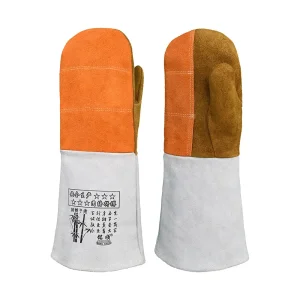
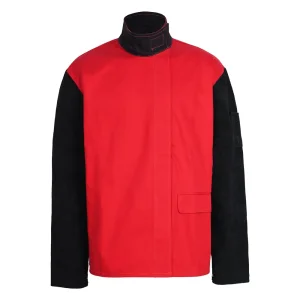
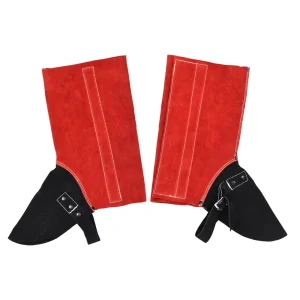
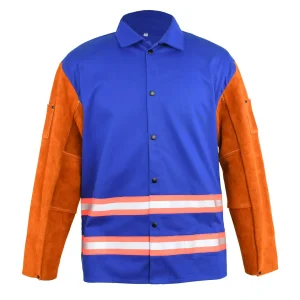
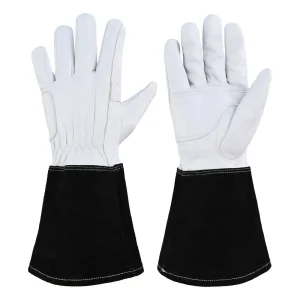
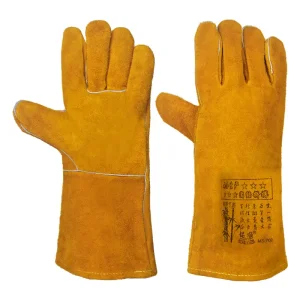
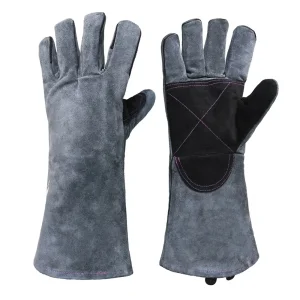
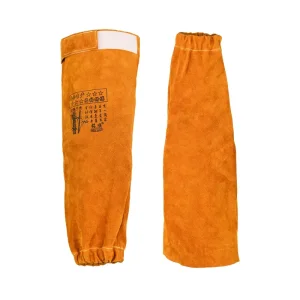
Shielded Metal Arc Welding (SMAW / Stick) presents the most aggressive combination of radiant heat flux, ballistic molten droplet spatter, and sustained arc radiation among manual welding methods. Standard protective gloves deteriorate rapidly under these operational realities.
In high-deposition stick welding, consumable covered electrodes operate across an intense parameter window: current densities often exceed 180 to 350 Amperes with open-circuit voltages reaching 80 Volts. The electric arc column produces concentrated core temperatures ranging between 6,000°C and 10,000°C, ejecting liquid iron and silicate slag droplets at velocities exceeding 12 meters per second. For protective gloves, this delivers acute thermal conduction spikes combined with pervasive infrared (IR) and ultraviolet (UV) electromagnetic radiation.
Unlike Gas Tungsten Arc Welding (TIG), which demands micro-tactile dexterity with negligible spatter, or Gas Metal Arc Welding (MIG), which involves continuous wire feed under gas shielding, stick welding exposes the operator's forward guide hand directly to intense radiative flareback and constant falling slag. When procurement teams supply generic split cowhide gloves or lightweight leather apparel to stick welding lines, three failure modes quickly emerge: seam carbonization caused by standard organic or cotton threads, thermal shrinkage and hardening of non-stabilized leather matrixes, and contact burns through compacted or non-laminated cotton linings.
| Failure Phenomenon | Standard Commercial Leather Glove | Ming Shun OEM Industrial Stick Glove Architecture | Operational Consequence in High-Amp SMAW |
|---|---|---|---|
| Thread Seam Burn-Through | Polyester / Cotton-core synthetic thread (Melts at 220°C - 260°C) | DuPont™ Kevlar® 4-ply aramid yarn (Resists direct heat > 425°C without melting) | Eliminates structural seam bursting along thumb crotch and finger sidewalls. |
| Collagen Hardening & Shrinkage | Random tannery scrap split (Inconsistent moisture & chromium distribution) | Selected A/AB Grade heavy split cowhide (1.2mm - 1.4mm) with thermal chromium retannage | Prevents brittle stiffening; retains hand ergonomics after repeated slag contact. |
| Direct Slag Pocketing | Exposed un-welted topstitch seams | Full-grain cowhide cow split continuous welting along all finger seams and seams | Deflects high-velocity molten metal droplets; shields load-bearing stitch filaments. |
| Radiant Heat Transfer | Single unbrushed 120 gsm cotton sheet lining | Multi-layer composite: Brushed flame-retardant fleece + flame-bonded thermal foam | Extends conductive heat transfer threshold beyond 15 seconds at 250°C (EN 407 Level 2/3). |
International safety brands, wholesale master distributors, and EPC procurement executives face unprecedented market dynamics: raw material price volatility, stringent ESG mandates, and tightening regional import compliance.
Gaozhou, Guangdong, is recognized as the world's primary manufacturing cluster for industrial split cowhide PPE. Guangdong Ming Shun Labour Protective Products Co., Ltd. operates with over 25 years of vertically integrated experience in this industrial epicenter.
By executing chrome-tanning quality control, chemical conditioning, precision split grading, and dye matching directly in-house, Ming Shun shields international brand partners from the quality dispersion common when sourcing through intermediate trading companies.
Global cattle hide pricing fluctuates dramatically based on meat consumption cycles, trade tariffs, and cross-border environmental regulations. Ming Shun maintains strategic stockpiles of prime cow split leather, dampening market swings.
For high-volume distributors operating under annual tender contracts, this vertical integration locks in stable unit pricing and eliminates sudden mid-contract surcharges, ensuring predictable landed margins across long-term procurement programs.
With an active floor of over 1,000 skilled operators and specialized industrial sewing cells, Ming Shun delivers a monthly capacity exceeding 500,000 pairs of welding gloves alongside complete lines of FR cotton jackets and protective spats.
Container-level fulfillment averages a 45-day turnaround after sample lock-in, providing the scale and certainty needed by master safety distributors replenishing regional distribution centers in Europe, the Americas, and the Middle East.
A superior stick welding glove balances impenetrable thermal defense against operator fatigue. Our R&D center analyzes tensile yield, fiber orientation, and biomechanical hand articulation.
We select dense-fiber shoulder and side splits measuring 1.2mm to 1.4mm in uniform caliper. This fiber-dense layer exhibits exceptional tensile yield (>15 MPa) and high abrasion endurance under severe mechanical friction.
Every seam is double-stitched using 100% genuine Kevlar® aramid thread, enclosed within leather welts. This prevents thread exposure from direct abrasion against rough carbon steel structural members and bevel cuts.
The Gunn pattern places the seam along the natural crease of the hand, minimizing inner palm chafing. The ergonomic keystone or wing thumb design follows anatomical arc motion, lowering grip tension during 10-hour shifts.
Heavy split leather gauntlet cuffs safeguard the lower forearm and radial artery. Rigid canvas or twill cuff interlinings keep the gauntlet open for immediate emergency glove-shedding (flick-off) if molten slag enters.
Navigating global safety regulations requires verified test documentation. Ming Shun produces welding gloves and protective clothing aligned with European CE, American ANSI, and international ISO safety criteria.
A frequent error among commercial distributors is sourcing Type B gloves (tailored for high-dexterity TIG welding with lower heat resistance) for SMAW stick welding operations. European standard EN 12477 classifies gloves into two operational categories, with Stick welding strictly requiring Type A certification.
| Test Parameter / Standard | EN 12477 Minimum Requirement (Type A) | EN 12477 Minimum Requirement (Type B) | Ming Shun MS-702 / MS-767 Benchmark Level |
|---|---|---|---|
| EN 388: Abrasion Resistance | Level 2 (500 cycles) | Level 1 (100 cycles) | Level 3 - 4 (>2,000 cycles) |
| EN 388: Blade Cut Resistance | Level 1 (Index 1.2) | Level 1 (Index 1.2) | Level 2 (Index 2.5) |
| EN 388: Tear Resistance | Level 2 (25 N) | Level 1 (10 N) | Level 3 - 4 (>75 N) |
| EN 388: Puncture Resistance | Level 2 (60 N) | Level 1 (20 N) | Level 3 - 4 (>100 N) |
| EN 407: Burning Behaviour | Level 3 (Afterflame ≤2s, afterglow ≤10s) | Level 2 (Afterflame ≤10s, no afterglow) | Level 4 (Afterflame ≤2s, afterglow ≤5s) |
| EN 407: Contact Heat (100°C - 250°C) | Level 1 (Threshold time ≥15s at 100°C) | Level 1 (Threshold time ≥15s at 100°C) | Level 2 (≥15s threshold at 250°C) |
| EN 407: Convective Heat | Level 2 (Heat transfer index HTI ≥7s) | No requirement | Level 3 (HTI ≥10s) |
| EN 407: Small Splashes of Molten Metal | Level 3 (≥25 droplets to raise temp by 40°C) | Level 1 (≥15 droplets) | Level 4 (>35 droplets) |
| EN 420: Dexterity Level | Level 1 (Pin diameter 11 mm) | Level 4 (Pin diameter 6.5 mm) | Level 2 (Pin diameter 9.5 mm) |
For import partners distributing across the United States, Canada, and Mexico, Ming Shun formats batch testing under ANSI/ISEA 105 criteria. Gloves achieve Conductive Heat Resistance Level 3 (>200°C / 392°F) to Level 4 (>260°C / 500°F) under ASTM F1060 testing protocols, paired with puncture resistance Level 3 under ASTM F2878. Full technical files, Declaration of Conformity (DoC) packets, and laboratory certificate verification are supplied before batch shipment.
Different industrial environments subject stick welding PPE to distinct mechanical and environmental stressors. Our OEM glove and apparel configurations are engineered for field performance across global project sites.
Welders operating inside double-bottom ship hull compartments encounter constant contact with cold, humid steel plates alongside high-amperage positional stick welds. Gloves require oil/moisture-resistant tanning to prevent fiber saturation, combined with reinforced thumb-crotch padding for heavy structural carbon-arc gouging.
Cellulosic root-pass and hot-pass pipe welding demands all-weather durability under wind, dust, and extreme temperature variations. Gloves feature split cowhide with continuous welted fingers, preventing seam blowout during fast electrode cycling under high-production mainline pipeline schedules.
Ironworkers connecting multi-story structural columns work at elevated heights, alternating between stick welding, oxy-fuel cutting, and heavy bolted joint assembly. Our hybrid patterns incorporate abrasion-resistant palm zones and flexible knuckle breaks to facilitate climbing and equipment rigging safely.
Continuous radiant heat from furnace gates and molten metal pouring ladles demands exceptional thermal shielding. We manufacture stick gloves featuring aluminized fiberglass back-of-hand inserts (such as the MS-3005 series) that reflect up to 95% of radiant heat while split cowhide protects the working palm.
From initial design sheets and custom tooling through rapid prototyping and multi-container sea shipments, our engineering division controls each production phase with documented precision.
We analyze customer technical drawings, CAD files, or reference glove samples. Our pattern room establishes seam allowances, thread tensile criteria, lining selections, and leather caliper tolerances.
Physical prototypes are built in our dedicated sample workshop within 5-7 business days. Sizing sets spanning XS to 3XL are verified for ergonomic hand clearance and gauntlet cuff dimensions.
Precision brand embossing, silk-screen high-temperature ink stamping, woven hem labeling, barcoded retail hangtags, and custom master carton branding are prepared per customer graphic manuals.
Upon sample sign-off, bulk hydraulic clicking presses cut leather hides with matched grain alignment. Automated stitching cells assemble gloves using 100% DuPont™ Kevlar® aramid yarn.
Quality engineers inspect leather thickness, seam spacing, stitch integrity, and welt enclosure across cutting, assembly, and finishing stages. Substandard parts are rejected before reaching final inspection.
Batch samples undergo random contact heat testing, seam break pulling, pH chemical checks, and chromium VI extraction testing in our on-site lab to verify regulatory safety thresholds.
Gloves are steam-ironed for neat presentation, bundled in moisture-barrier polybags with silica desiccant, and packaged into reinforced double-wall corrugated export cartons designed for container shipping.
Our dedicated export department coordinates container stuffing, customs clearance, Bill of Lading documentation, and vessel booking via major ports including Guangzhou, Shenzhen, and Hong Kong.
The manual welding sector is advancing with higher duty-cycle inverters, mixed-gas shielded stick variants, and tighter eco-regulations. Ming Shun is investing in new thermal barrier materials and eco-conscious tanning methods.
We are engineering ultra-thin nano-silica aerogel composite felt linings measuring just 1.5mm in thickness. These aerogels deliver thermal conductivity ratings below 0.018 W/(m·K), reducing glove bulk while protecting against high-temperature conductive heat spikes up to 350°C.
In response to European REACH restrictions and corporate ESG initiatives, our tannery engineers are introducing heavy split cowhides tanned with modified vegetable syntans, zero hexavalent chromium (Cr VI), and neutral wastewater recirculation systems, reducing ecological impact.
Transitioning from traditional manual die clicking to automated CNC multi-ply laser cutting cells achieves millimeter-accurate cutting consistency across every glove panel, eliminating irregular seam tensions and optimizing yield across raw split hides.
Key information on minimum order quantities, compliance documentation, material traceability, and custom private-label branding for international buyers.
Stick welding gloves require thicker split cowhide (1.2mm - 1.4mm), a heavier insulating fleece lining, and full welted seams to withstand continuous direct spatter and high radiant heat. In contrast, TIG gloves prioritize thinner goatskin (0.8mm - 1.0mm) for sensitive fingertip dexterity with zero lining, while MIG gloves offer a middle ground often using grain cowhide or pigskin with medium insulation.
EN 12477 Type A specifies higher mechanical ratings (abrasion, cut, tear, puncture) and elevated thermal thresholds (burning behavior, contact heat, small molten splashes) compared to Type B. Stick welding projects significant molten slag volumes that breach the lighter thermal barriers permitted under Type B.
Standard minimum order quantity for custom branded stick welding gloves (custom leather dye color, logo stamping, customized gauntlet trim, and branded retail hangtags) is typically 1,200 to 2,400 pairs per style. Flexible mixed-container options are supported for multi-SKU orders spanning jackets, sleeves, and spats.
Yes. We provide comprehensive test reports issued by accredited testing bodies (such as CTC, SATRA, and SGS) covering EN 388, EN 407, and EN 12477, alongside formal EU-Type Examination Certificates and Declarations of Conformity mapped to specific private-label SKUs.
Standard lead time is approximately 40 to 45 business days following final sample and packaging approval. Repeat production runs benefit from rolling leather inventory buffers, enabling 30 to 35-day dispatch times for ongoing scheduled program orders.
Many glove workshops purchase miscellaneous crust scrap from secondary dealers, resulting in fluctuating leather thickness, oil content, and stiffness across orders. Ming Shun controls hide splitting, retanning, and dyeing directly, guaranteeing consistent hand feel, tensile strength, and appearance on every repeat order.
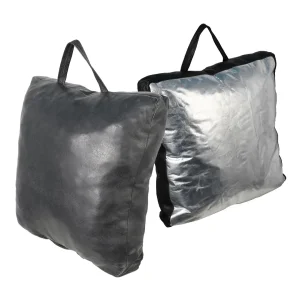
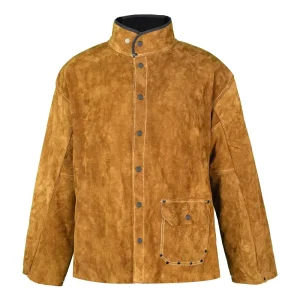
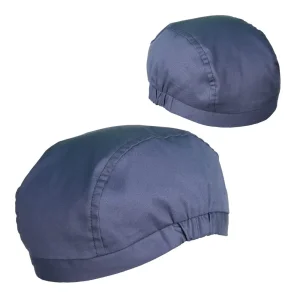
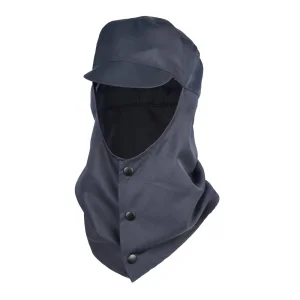
Complete your catalog with full-coverage split leather jackets, aluminized heat-reflective pads, cable protectors, heavy-duty aprons, and flame-resistant headwear.
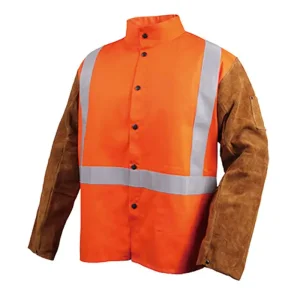
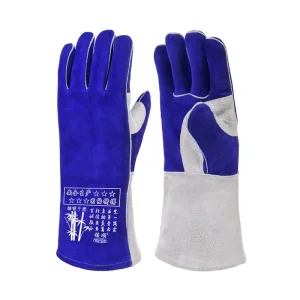
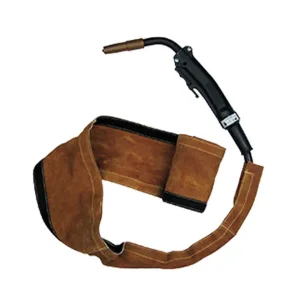
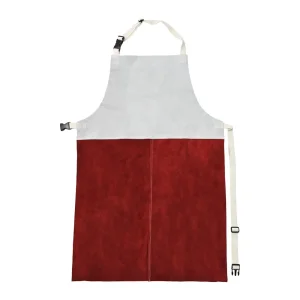
Eliminate trading intermediaries and establish a reliable direct factory supply line. Guangdong Ming Shun Labour Protective Products Co., Ltd. provides certified production, pattern engineering, private-label branding, and container-level capacity from our manufacturing facility in Gaozhou, Guangdong, China.

