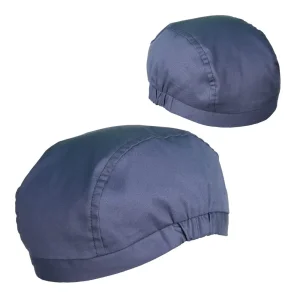
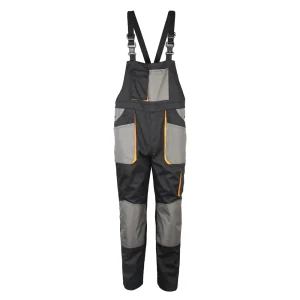
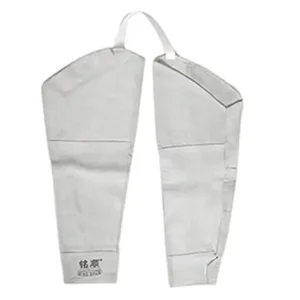
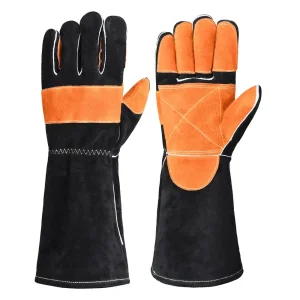
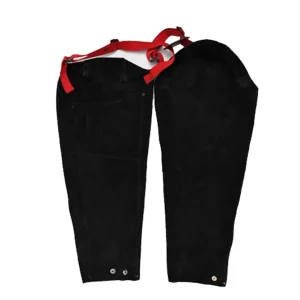
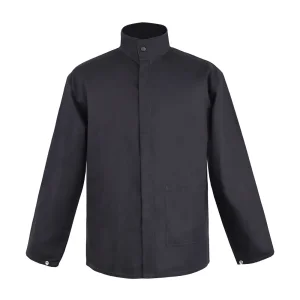
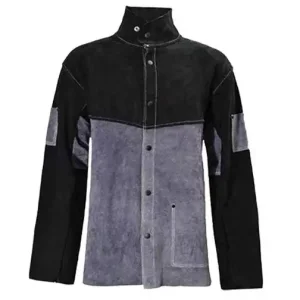
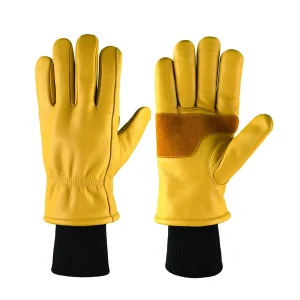
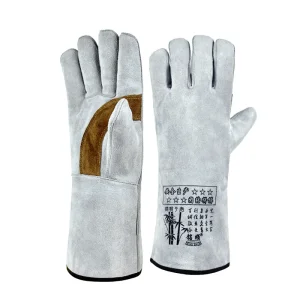
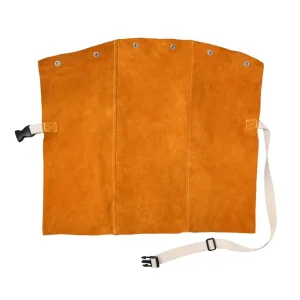
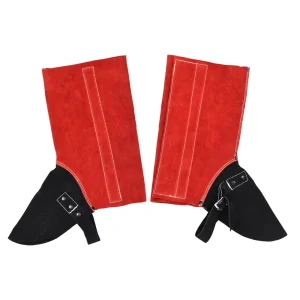
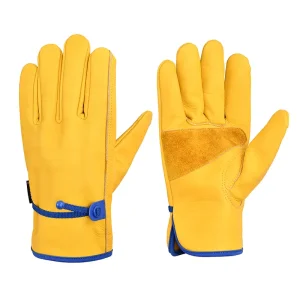
Direct manufacturer supply from our integrated leather tannery and assembly facilities in Gaozhou. Built for severe industrial conditions, thermal radiation deflection, and heavy-duty arc spatter resistance.
Understanding why grade-A bovine split leather remains the definitive standard for industrial welders facing continuous slag, molten metal drop-off, and heavy abrasion.
Split leather is extracted from the middle and flesh layers of bovine hides after removing the grain surface. In specialized arm protective sleeves, tensile tear resistance is fundamentally determined by the interlacing density of collagen bundles within the reticular dermis.
At our Guangdong manufacturing facilities, hides undergo precision splitting at strict 1.2mm to 1.4mm gauges. This specific thickness window preserves maximum natural flexibility while presenting an impenetrable barrier against molten slag and acute thermal puncture.
Standard commercial leathers stiffen, harden, and crack when exposed to the high radiant temperatures typical of high-amperage GMAW (MIG) or SMAW (Stick) operations. Our tanneries apply specialized mineral-salt tanning agents combined with deep-penetrating fatliquors.
This formulation neutralizes moisture loss upon contact with heated spatter droplets up to 450°C. Rather than degrading the structural collagen, the treated surface forms a sacrificial carbonized crust that prevents catastrophic garment burn-through.
A protective sleeve is only as resilient as its weakest thread. Standard cotton, polyester, or nylon threads incinerate instantaneously under direct molten droplet impact, resulting in catastrophic seam unzipping.
Every sleeve produced in our ISO-compliant facility is bound exclusively with genuine DuPont™ Kevlar® continuous filament thread. Reinforced stress-points feature bar-tacking, welted seams, and heavy-duty steel rivets shielded by sacrificial leather flaps to eliminate electrical arcing risks.
Evaluating international PPE safety regulations, distributor inventory models, and the decisive factors driving large-scale institutional purchasing across North America, Europe, and the Middle East.
| Evaluation Parameter | EN ISO 11611:2015 (EU Class 2) | ANSI / ISEA 105:2024 (US Benchmark) | Ming Shun Factory OEM Specification |
|---|---|---|---|
| Flame Spread / Afterflame | Afterflame ≤ 2s; No hole formation | ASTM D6413 Flame Resistance Standard | Zero ignition; instantaneous self-extinguishing |
| Molten Drop Impact Test | ≥ 25 drops to reach 40K temperature rise | ASTM F955-15 Molten Metal Splash rating | ≥ 38 drops average (Enhanced heavy-spatter protection) |
| Radiant Heat Transfer Index | RHTI 24 ≥ 16s (Heat Flux: 20 kW/m²) | NFPA 70E Thermal Arc Rating cross-benchmark | RHTI 24 ≥ 21.4s (High safety buffer for heavy hot work) |
| Tear & Tensile Strength | Tear Force ≥ 20N; Tensile ≥ 150N | ASTM D2261 Tongue Tear Test Level 4 | Tear Force ≥ 45N; Tensile ≥ 280N (High-density corium) |
| Bicep Anchoring Integrity | Standardized strap pull-out force limits | OSHA 1910.138 Ergonomic Retention standard | Reinforced elasticated harness + hook-and-loop options |
Procurement directors at international EPC contractors increasingly reject low-grade, reconstituted split leather products that exhibit dry-rot, irregular thickness, and rapid seam degradation after 10-15 work shifts.
Ming Shun’s OEM split leather welding sleeves offer an extended operational lifespan that reduces replacement frequencies by 42%, drastically driving down per-man-hour PPE expenditures across long-term industrial projects.
Institutional safety directors in the European Union require exhaustive Declarations of Conformity (DoC) and CE Module B/C2 certification chains. Each export batch leaving our dock is cataloged by raw skin origin, chemical vat formulation number, and physical mechanical testing report.
This systematic chain-of-custody documentation shields importing wholesalers from catastrophic product recalls and strict regulatory non-compliance liabilities.
We empower private-label safety distributors with end-to-end configuration: adjustable shoulder harness straps (leather, elastic webbing, or FR cotton), dual-end elastic cuffs vs knitted Kevlar® wristlets, hot-stamped logos, customized barcoding, and retail-ready packaging.
Our agile production lines support seamless transitional batch scaling from initial 1,000-pair pilot runs up to multiple 40ft high-cube container programs.
How Guangdong Ming Shun utilizes computerized material optimization, vertical tannery control, and intelligent assembly mechanics to eliminate manufacturing variability.
Gaozhou, Guangdong represents the world's foremost concentrated ecosystem for heavy-duty industrial leather manufacturing. By situating our multi-acre manufacturing complex at the center of this raw hide, mineral tanning, and machinery hub, we insulate buyers from raw hide supply shocks and logistical delays.
Traditional manual die cutting often yields uneven dimensional cuts and hide micro-flaws. We utilize automated computer vision scanners to map surface blemishes, while digital nesting algorithms maximize hide yield and high-speed multi-axis CNC lasers ensure dimensional tolerances within ±0.5mm.
Because we do not rely on spot-market leather buying, our chemical technicians control the exact pH, chromium distribution, fat content, and color shade of every hide. This guarantees that reorders placed twelve months apart match in weight, tactile hand-feel, scent, and safety performance.
With an experienced manufacturing workforce exceeding 1,000 operators across dedicated leather garment, glove, and sleeve lines, Ming Shun offers stable lead times of ~45 days for massive container programs, supporting seamless global vendor distribution networks without seasonal bottlenecks.
Where split leather welding sleeves outshine bulky full-body jackets, providing targeted protection against localized thermal threats, restricted postures, and high-heat environments.
In narrow double-bottom bilge compartments, ballast tanks, and structural bulkheads, maritime welders operate in cramped, unventilated zones where full cowhide jackets cause severe thermal exhaustion and restrict upper-body maneuvering.
Combining lightweight breathable FR cotton coveralls with our MS-335 or MS-342 split cowhide leather sleeves provides modular, impenetrable forearm protection against continuous overhead Flux-Cored Arc Welding (FCAW) spatter without burdening core stamina.
High-cycle automotive robotic welding cells require manual operators to enter tight fixturing jigs to clean spatter, re-align clamps, or carry out rapid manual touch-up welds. Forearms are constantly vulnerable to hot steel edges, stamping burrs, and intense high-cycle resistance welding sparks.
Our sleeves offer EN 388 Level 4 mechanical abrasion resistance, safeguarding assembly line technicians against sharp lacerations and friction wear while executing high-cadence production sequences.
Field pipeline welders performing root-pass and hot-pass stick welding on large-diameter transmission lines operate exposed to fluctuating desert, arctic, or tropical environments. Sleeves must remain pliable at freezing sub-zero temperatures and resist moisture absorption in humid trench conditions.
Our custom oil-treated and silicone-infused split leather variants repel field moisture, grease, and hydrocarbons while withstanding abrasive friction against pipe bevels and rough concrete surfaces.
Tailor every dimension, closure, material blend, and branding feature to address targeted occupational market sectors and regional brand identities.
Option A: Premium adjustable cowhide cross-shoulder harness with non-conductive, fire-retardant quick-release buckles (Ideal for overhead fabrication where slippage is impermissible).
Option B: High-tension enclosed elastic bands engineered for quick slip-on deployment during intermitted grinding operations.
Option C: Industrial hook-and-loop (Velcro™) cinch straps allowing customized snugness over bulky thermal undergarments.
Option 1: Elasticized leather gathering to maintain a closed profile under welding glove gauntlets, blocking bouncing sparks from dropping down the operator's arm.
Option 2: Double-layer flame-retardant rib-knit cotton cuffs providing form-fitting wrist comfort and sweat absorption for high-precision TIG craftsmen.
Option 3: Extended flare bell cuffs featuring heavy brass snap fasteners for variable circumference adjustment over heavy-duty gauntlet gloves.
We execute precision branding via high-pressure hot-iron debossing, durable multi-color screen printing with heat-resistant pigments, or high-definition woven damask labels.
Packaging options include polybags with printed Euro-hang slots, moisture-proof desiccated master cartons, and custom EAN/UPC retail barcoding formatted to individual global distributor EDI logistics systems.
Clear, direct answers regarding material certifications, factory testing, minimum order volumes, and long-term procurement management from Ming Shun Safety.
While heavy 9 oz or 12 oz Flame-Retardant (FR) cotton sleeves provide breathability and lower unit costs for light assembly and light TIG operations, they fail rapidly under high-amperage stick welding, carbon arc gouging, or continuous flux-cored applications. Molten spatter tends to rest against cotton fabrics; even if flame-resistant, the intense localized heat transfers directly through the weave, causing second-degree contact burns. In contrast, split cowhide leather possesses natural dense cellular collagen structures that absorb thermal energy and deflect molten droplets instantly. For industrial environments where spatter drop frequency is continuous, split cowhide is mandatory under international occupational safety directives (EN ISO 11611 Class 2).
Under EN ISO 11611, Class 2 garments are engineered for manual welding techniques with heavy spatter and drop formation (such as MMAW, GMAW with high currents, plasma cutting, and gouging). To comply, the split leather must withstand at least 25 droplets of molten metal without the sensor beneath rising in temperature by more than 40K. It must also achieve a Radiant Heat Transfer Index (RHTI 24) of at least 16 seconds when exposed to a 20 kW/m² heat flux. In laboratory tests, Ming Shun's 1.2–1.4mm calibrated split cowhide typically exceeds 38 droplets and delivers RHTI 24 results above 21.4 seconds, providing an ample safety cushion for harsh working conditions.
For standard split cowhide welding sleeve patterns in our catalog, our typical baseline MOQ starts at 1,000 pairs (2,000 individual sleeves) per SKU. For bespoke OEM/ODM projects requiring custom leather dye lots, special width dimensions, branded hardware, or unique harness configurations, our baseline is generally 2,000 pairs. Prototype samples are built and dispatched within 7–10 working days following tech pack sign-off. Bulk container production (such as a 20ft or 40ft container) typically completes within 35 to 45 calendar days after pre-production sample sign-off, supported by our 1,000+ member production team.
Moisture and mold prevention represent crucial quality control factors for international ocean transit. In our Gaozhou tannery, leathers are treated with non-toxic, eco-compliant bactericidal and anti-fungal agents during final re-tanning. Finished goods pass through controlled drying tunnels to stabilize internal moisture content strictly between 12% and 14%. Prior to packing into heavy corrugated export cartons, products are sealed in polyethylene inner bags along with high-capacity silica desiccants. We also conduct container seal checks to prevent container rain during trans-equatorial maritime freight.
Absolutely. Because Ming Shun owns and controls internal leather dyeing and drumming machinery, we can execute specific color specifications including industrial golden yellow, steel grey, dark navy, deep bourbon, and hi-vis neon orange. Standard sleeve lengths range from 18 inches (45 cm) to 23 inches (58 cm) for full shoulder-to-wrist coverage. You can select between heavy elastic upper bicep cuffs, fully adjustable cross-back leather shoulder harnesses, or hook-and-loop adjustable fasteners depending on your target customer’s field requirements.
Cotton threads incinerate at approximately 200°C, and synthetic nylon or polyester threads melt and shrink into plastic beads between 210°C and 260°C. When a hot spark or molten spatter slag ball contacts a standard seam, the thread burns away immediately, causing the sleeve to burst open at the main seam while the leather hide is still intact. DuPont™ Kevlar® para-aramid fiber does not melt; it chars only at temperatures exceeding 425°C and retains immense tensile strength under direct thermal stress. This ensures that the structural integrity of the sleeve remains intact throughout its operational lifecycle.
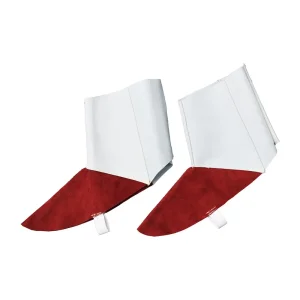
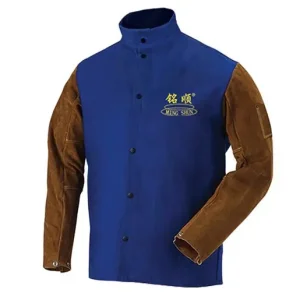
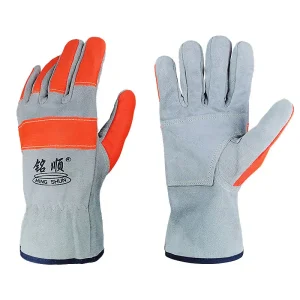
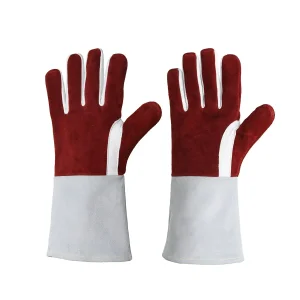
Explore our complete manufacturing ecosystem: from split cowhide spats and full-grain work gloves to hybrid protective jackets and high-temp foundry bibs.