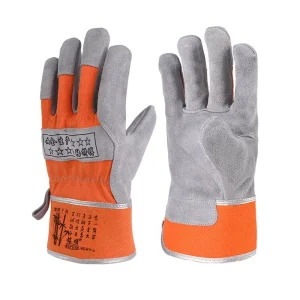
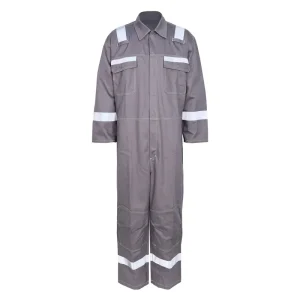
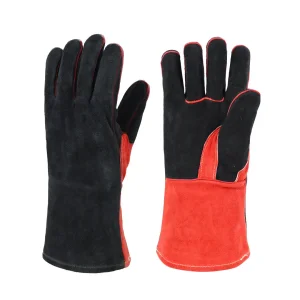
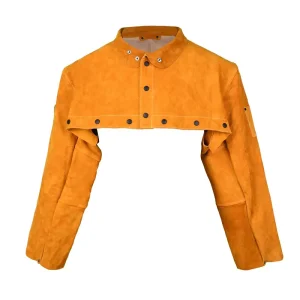
Direct factory production lines covering heavy-duty leather jackets, flame-resistant workwear, and protective hand wear engineered under strict process controls.
How tier-1 engineering consortia, commercial shipyards, and heavy fabrication operations streamline supplier compliance, total cost of ownership, and lifecycle longevity.
International supply chains for welding apparel face persistent challenges: erratic hide thickness variations, uneven chrome-tanning quality leading to premature seam hardening, and post-delivery sizing drift. Guangdong Ming Shun addresses this through vertical raw hide preparation, ensuring uniform fiber thickness across every panel batch.
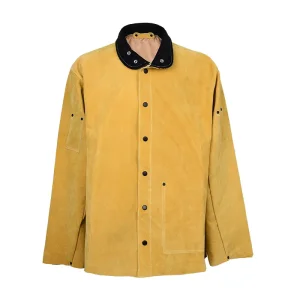
Purchasing split leather welding jackets based solely on FOB unit price results in inflated replacement expenses. By implementing premium split cowhide (1.2mm - 1.4mm thickness), reinforced Kevlar aramid stitching, and insulated anti-arc hardware, our garments yield up to a 42% longer operational lifespan under harsh duty cycles.
With dedicated production centers across Pukang Industrial Park, Gaozhou, we maintain an agile buffer system for raw splits and export trims. Importers avoid inventory dryouts through staged container releases, customized carton marking protocols, and full export compliance validation.
An engineering breakdown of material selection, heat dissipation characteristics, and mechanical tensile metrics designed for heavy manufacturing.
We utilize selected side-split cowhide for the critical chest, collar, and forearm zones. Side splits provide denser collagen structural alignment, ensuring resistance against molten slag burn-through compared to looser shoulder cuts.
Engineered split leather incorporates microporous grain structures that decelerate conduction spikes. In high-amperage stick and flux-cored welding, this internal thermal barrier shields operatives from high radiant exposure.
All structural seams are stitched with 100% DuPont Kevlar or high-denier meta-aramid threads, augmented by reinforced leather welting. This construction arrests thread embrittlement and stitch rupture caused by radiant heat.
Our front plackets and collar closures feature dual-ply leather storm flaps concealing dielectric, corrosion-resistant brass snaps, preventing electrical arc arcing and molten debris intrusion along the center closure.
| Technical Characteristic | Standard Industrial Grade | Ming Shun OEM Premium Spec | Compliance Verification |
|---|---|---|---|
| Raw Leather Caliber | Mixed belly/shoulder split (0.9 - 1.1mm) | Selected side split cowhide (1.2 - 1.4mm) | ISO 2589 Gauged Consistency |
| Tensile & Tear Resistance | ≥ 20 N/mm² tear strength | ≥ 35 N/mm² dynamic tear resistance | EN 388: 4X44 Mechanical Testing |
| Molten Splash Resistance | Class 1 (15 - 20 drops) | Class 2 (≥ 25 drops molten iron) | EN ISO 11611:2015 Clause 6.8 |
| Thread & Seam Integrity | Cotton-polyester core thread | 5-ply aramid thread with leather welting | EN ISO 13935-2 Seam Strength |
| Chemical Safety & Chrome VI | Basic neutralization | Chrome VI < 3 mg/kg, azo-dye certified free | EU REACH Annex XVII Compliant |
Tailored configurations answering the structural safety demands of varied global enterprise operations.
In confined vessel hulls and vertical stringer welding environments, operators encounter dense spatter rebounds. Our marine-spec split jackets combine heavy split cowhide bodies with vented underarm panels, mitigating heat stress while securing Class 2 hot-work shielding.
Cross-country pipeline tie-ins require ergonomic flexibility during positional welding (5G/6G). We configure split cowhide welding jackets with gusseted action backs and pre-curved sleeves, preventing garment ride-up when reaching around pipe circumferences.
High-cadence automated and semi-automatic robotic cell maintenance requires PPE that resists both mechanical abrasion against stamped parts and continuous spatter exposure. Ming Shun’s reinforced hybrid jackets integrate split cowhide sleeves with 9 oz FR cotton bodies.
Direct oversight across every production gate ensures your private-label garments precisely conform to target markets and brand technical parameters.
Digital CAD pattern generation from reference samples or physical master garments. Sizing matrices tailored for European, American, or Australasian industrial worker anthropometrics.
In-house leather splitting, custom pigmentation (safety golden-brown, industrial grey, hi-vis red/navy), and softness optimization to match specific welding climate conditions.
Debossed leather chest emblems, woven multi-language care labels, laser-engraved hardware, barcoded hangtags, and retail carton packaging ready for enterprise distribution channels.
Multi-point inspection verifying seam rupture forces, dimensional precision, snap tension, and packaging integrity prior to consolidated container drayage.
Complete documentation packets, accredited third-party test reports, and factory audits supporting direct market importation without regulatory delays.
Our leather welding jackets and garments are engineered to fulfill Class 1 and Class 2 requirements under Regulation (EU) 2016/425. We provide Module B examination certificates, technical files, and validated Declarations of Conformity (DoC).
Manufactured to satisfy OSHA 29 CFR 1910.252 protective clothing regulations and ASTM performance guidelines for secondary thermal protective wear, including non-conductive snaps and flame propagation resistance.
Tannery operations in Gaozhou adhere strictly to eco-responsible wastewater treatment standards. Hides are certified to be free of Pentachlorophenol (PCP), restricted aromatic amines, and hazardous dispersants.
How advanced tanning chemistry and ergonomic composite hybridization are reshaping industrial hot-work protection.
Traditional split cowhide absorbs water, cutting fluids, and lubricating oils, which decreases electrical insulation and hardens fibers upon drying. Our R&D line incorporates fluorocarbon-free water- and oil-repellent polymers during retannage.
By strategically coupling split cowhide leather across primary strike areas (chest, arms, shoulders) with lightweight 9 oz or 7 oz inherently flame-resistant stretch textiles on the back, we reduce overall jacket weight by up to 28% without sacrificing safety.
To support industrial leasing and commercial laundering services, we integrate vulcanized, flexible UHF RFID heat tags into seam piping. This enables tracking of wear cycles, industrial cleaning exposures, and retirement timing across workforces.
Core operational criteria for global supply directors, quality managers, and safety apparel brands.
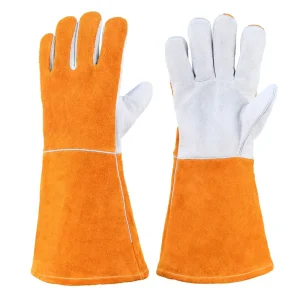
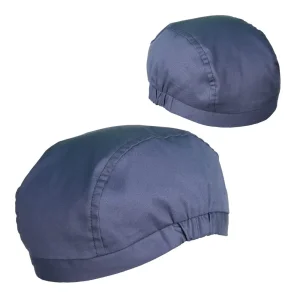
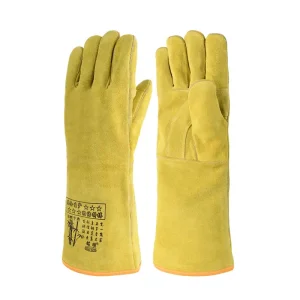
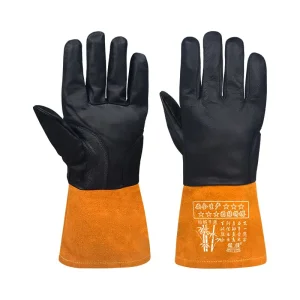
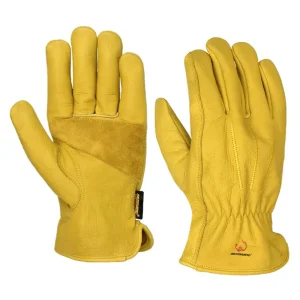
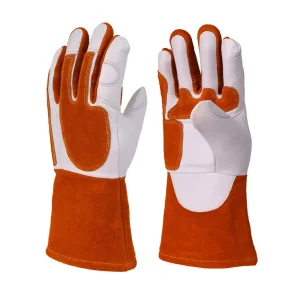
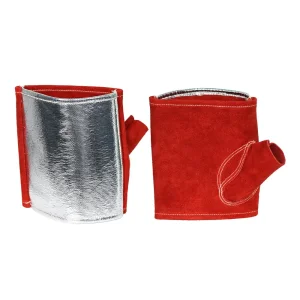
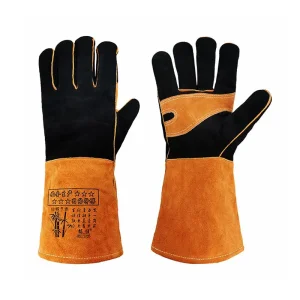
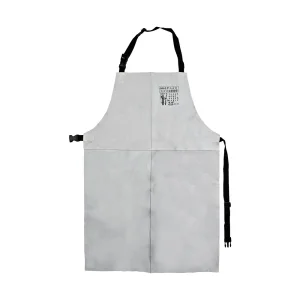
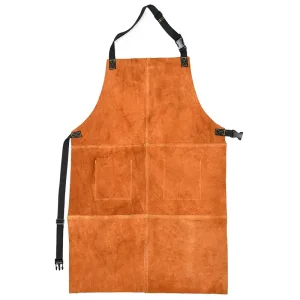
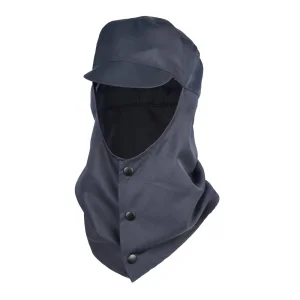
Complete welder body protection: heavy-duty leather aprons, precision TIG & MIG gloves, heat shields, and protective headwear.