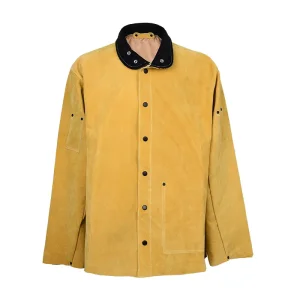
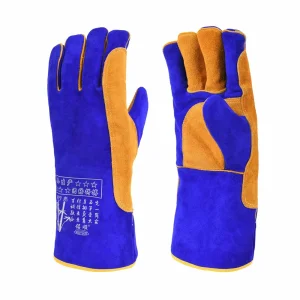
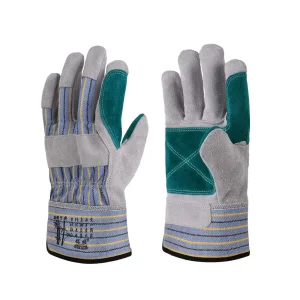
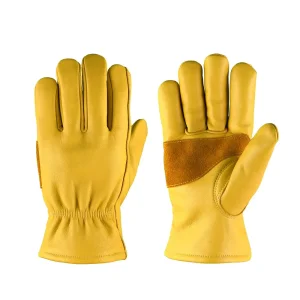
Precision-engineered leather welding garments, Kevlar-stitched gloves, and site safety barriers built directly at our Gaozhou facility.
An engineering breakdown of extended cuff thermal PPE: leather fiber density, insulation thresholds, and tensile welt durability designed for extreme molten arc exposures.
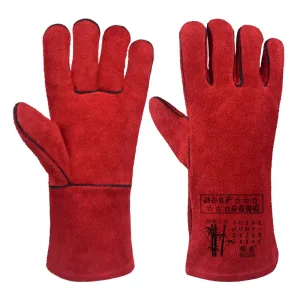
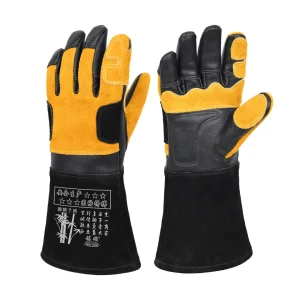
Utilizing high-tensile chrome-tanned bovine split leather (1.2mm - 1.4mm thickness) providing unmatched structural defense against convective sparks, mechanical abrasion, and slag spatter.
Continuous thermal seams stitched exclusively with multi-ply Kevlar aramid threads reinforced with genuine leather welting to eliminate open seam ruptures from molten droplets.
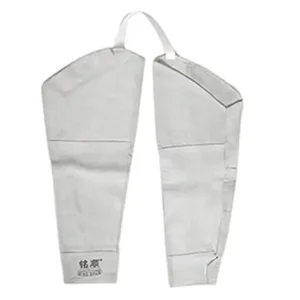
Full forearm and antebrachial protection shielding peripheral vascular branches from thermal radiant burn vectors, high-amperage UV radiation, and severe cutting edges.
Composite insulation integrating soft combed cotton with non-woven flame-retardant air-gap fleeces to maximize contact heat attenuation at temperatures exceeding 350°C (662°F).
Macroeconomic shifts driving specialized high-durability thermal hand PPE procurement across tier-1 infrastructure projects, naval shipbuilding, and offshore platforms.
Global regulatory bodies including OSHA (USA), EU-OSHA, and safe work agencies across the Middle East are heavily enforcing EN 12477 Type A thresholds, eliminating uncertified cut-rate handwear from heavy construction.
The transition toward high-deposition submerged arc welding, FCAW (Flux-Cored Arc Welding), and automated orbital pipeline operations increases localized radiative thermal loads, making 14-inch to 16-inch protective gauntlets a job-site mandatory minimum.
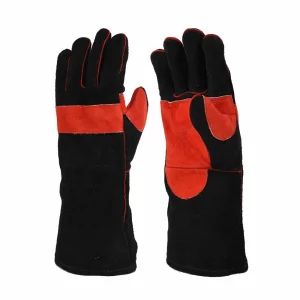
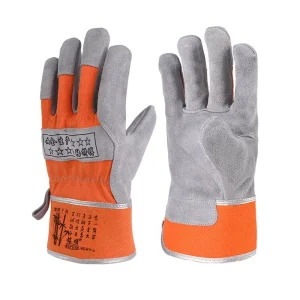
Commercial EPC contractors are moving away from disposable single-shift gloves to heavy-duty, double-palm reinforced leather models capable of withstanding 40+ operational hours of severe abrasion and slag contact without mechanical failure.
How our long welding glove configurations adapt to regional climate demands, specialized metallurgy, and industrial field requirements.
Deployment: North Sea and Gulf of Mexico oil platforms.
Engineering: Oil-resistant and water-repellent pre-treated cowhide with specialized moisture barrier interlinings to prevent steam-scald burns when handling wet structural steel joints.
Deployment: Middle Eastern cross-country natural gas pipelines.
Engineering: Ultra-breathable sweat-absorbing combed terrycloth linings, coupled with reflective aluminized back pads to deflect intense ambient radiant heat and direct desert sun exposure.
Deployment: Sub-zero mining, railway maintenance, and structural casting.
Engineering: Dual-layer Thinsulate™ or polar thermal fleeces integrated with pliable high-grade grain pigskin/cowhide outers that maintain flexural modulus without cracking at -30°C.
Full vertical integration from raw hide selection to finished container shipments guarantees scale, cost efficiency, and zero production disruptions.
Unlike trading assemblers, Ming Shun controls the raw hide beamhouse processing, chroming, and drum dyeing. This prevents batch-to-batch color drift, regulates pH levels, and guarantees non-detectable Chromium VI (<3 ppm).
Computer-assisted laser and hydraulic nesting presses ensure tight dimensional tolerance of palm inserts, thumb keystone patterns, and cuff skirts, reducing material waste and optimizing pricing stability for OEM brands.
Located in Western Guangdong with rapid highway access to Guangzhou, Shenzhen, and Hong Kong ports, facilitating seamless container dispatch, streamlined customs declarations, and minimized FOB shipping lead times.
Comparative benchmark illustrating compliance thresholds across internationally recognized EN and ANSI standards.
| Testing Metric | Standard Protocol | Standard MIG / Stick (Type A) | Precision TIG Long (Type B) | Ming Shun Heavy OEM Spec |
|---|---|---|---|---|
| Burning Behavior | EN 407:2020 Clause 4.1 | Afterflame ≤ 2s, Afterglow ≤ 5s | Afterflame ≤ 3s, Afterglow ≤ 20s | Zero Afterflame, Zero Melt Drop |
| Contact Heat Resistance | EN 407 (100°C to 500°C) | Threshold Time ≥ 15s @ 100°C | Threshold Time ≥ 15s @ 100°C | Threshold Time ≥ 15s @ 350°C (Level 3) |
| Small Splashes of Molten Metal | EN 407 Clause 4.5 | ≥ 25 Droplets (Level 3) | ≥ 15 Droplets (Level 1) | ≥ 35 Droplets (Maximum Protection) |
| Mechanical Abrasion | EN 388:2016 + A1:2018 | ≥ 500 Cycles (Level 2) | ≥ 100 Cycles (Level 1) | ≥ 2000 Cycles (Level 3 - 4) |
| Dexterity Rating | EN 420 / ISO 21420 | Pin Test Level 1 (11mm) | Pin Test Level 4 - 5 (6.5mm - 5mm) | Ergonomic Wing Thumb (Level 2 - 3) |
| Tensile Tear Resistance | ISO 13937 / EN 388 | ≥ 25 Newtons | ≥ 10 Newtons | ≥ 50 Newtons (Welted Seams) |
Eliminate import liability with factory-backed CE Module B/C certificates, technical construction files, and direct customs documentation support.
Complete Category II certification portfolio verified by accredited notified bodies (SATRA, CTC, TUV) covering EN ISO 21420, EN 388, and EN 12477:2001+A1:2005.
Standardized North American testing verification for conductive heat transfer resistance (Level 3-4), puncture resistance, and ASTM F2992-15 cut levels for US and Canadian markets.
Continuous testing for restricted hazardous chemicals ensuring strict conformity with Annex XVII of REACH: Azo dye free, pentachlorophenol (PCP) free, and non-detectable DMFu.
We supply our distribution partners with full Declarations of Conformity (DoC), multi-lingual User Instructions (IFUs), and high-resolution packaging artwork files ready for import clearance.
Direct answers for purchasing directors, supply chain managers, and industrial safety brand distributors.
Split cowhide represents the optimal thermodynamic barrier for heavy-duty welding. The corium layer of bovine leather features a densely interwoven collagen fiber network that does not easily shrink, harden, or conduct thermal energy when exposed to molten spatter or open flame. It delivers superior puncture and tear resistance compared to sheepskin or goatskin, while maintaining structural integrity across thousands of high-temperature cycles.
Standard 10-inch work gloves terminate at the wrist joint, exposing the distal forearm to slag roll-down and intense infrared radiation when an operator holds a continuous MIG gun or stick electrode. A 14-inch (35 cm) to 18-inch (45 cm) gauntlet bridges the gap between the glove and the leather jacket sleeve, preventing molten droplets from lodging in wrist creases or entering garment cuffs during vertical and overhead welds.
In standard stitch configurations, sewing threads are exposed directly on the external surface of the glove, where molten spatter drops can burn through them and cause seam blowout. Welted seams incorporate a narrow strip of genuine leather folded over and inserted between the joining leather panels. This leather welt encases the Kevlar® thread, protecting it from direct contact with molten sparks, sharp metal burrs, and severe friction.
Our OEM capabilities cover every aspect of private label branding: hot foil stamping, debossed leather logos on cuffs, high-density heat transfer printing, custom woven side seam labels, barcoded hangtags, printed polybags, and heavy-duty master cartons. We also tailor palm reinforcements, lining types (cotton, fleece, aramid), cuff rigidity, and color dyeing to match your brand's unique specifications.
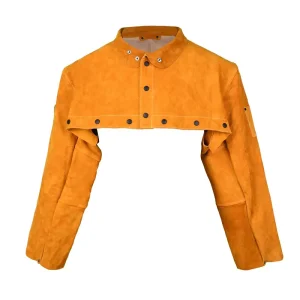
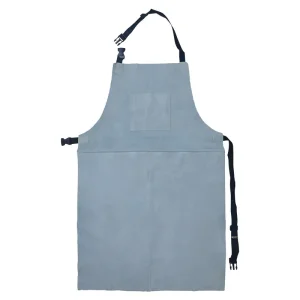
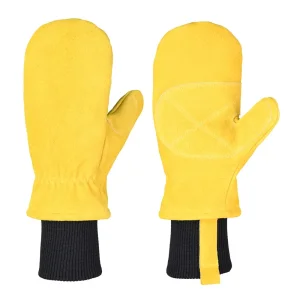
Explore our extended series of heavy-duty leather capes, full aprons, and multi-purpose industrial gloves manufactured for global importers.