Engineered for high-amperage MIG, precision TIG, heavy ARC gouging, and foundry splash environments.
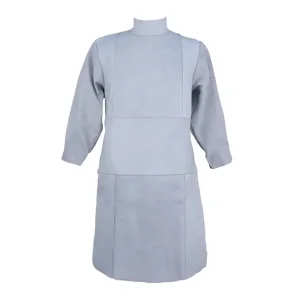
Deconstructing metallurgical hazards, thermal barriers, and precision supply chain execution.
In modern structural fabrication, naval dockyards, petrochemical piping installations, and heavy rail assembly, leather welding jackets function as the foundational defense barrier between dangerous thermal hazards and human skin. An industrial welding arc operates at core plasma temperatures ranging from 6,000°C to well over 10,000°C. While ambient convective heat dissipates rapidly through surrounding air, high-energy ultraviolet (UV) radiation, localized infrared (IR) loading, molten weld spatter (droplets of steel exceeding 1,500°C), and slag ejections demand personal protective equipment (PPE) that cannot melt, char through, or transmit thermal energy rapidly.
Selecting an OEM leather welding jacket factory requires analyzing parameters far beyond surface aesthetics or generic product descriptions. It demands thorough verification of the facility's raw material sourcing, chemical tanning control, stitching thermodynamics, tensile burst resistance, and standard certifications. A reputable leather welding jackets factory must bridge raw hide processing with technical apparel pattern making, providing scalable consistency for international safety brands, contract industrial distributors, and enterprise safety procurement teams.
Complete control over hide processing prevents oil saturation variances and chemical residues, ensuring stable flame retardancy, low odor, and uniform tensile strength across production runs.
Every stress boundary, armhole junction, and pocket gusset is stitched with genuine 3-ply to 5-ply para-aramid thread, preventing seam failure caused by spark erosion and spatter accumulation.
All frontal snaps, stand-up mandarin collar fasteners, and wrist closures are insulated with reinforced leather flaps and non-conductive backings to eliminate arc-flash electric pathway risks.
Ecosystem synergy: vertical tannery consolidation, skilled master artisans, and deep supply chain integration.
China remains the uncontested powerhouse of the worldwide leather workwear sector, with Guangdong Province—specifically the Gaozhou industrial hub—commanding the premier share of export-grade welding safety apparel. This concentrated geographic dominance is not merely an advantage of labor volume; it is a structural supply chain phenomenon that cannot be replicated easily:
Raw hides from select cattle and goat herds are split, tumbled, treated, and dyed within dedicated, regulated tannery lines. Raw material lead times are cut from weeks to mere hours, mitigating global commodity price spikes.
High-integrity cowhide cannot be processed like thin polyester fabric. It requires specialized heavy-arm walking-foot sewing machinery and veteran operators who master leather stretch grain, blade angle, and thread tensioning.
Factories are directly equipped with calibrated internal test benches for tear strength (ISO 13937), flame spread (ISO 15025), dimensional stability, and chrome VI spectrophotometry before export sign-off.
From CAD tech-pack files to finished leather prototypes in 5 to 7 business days. Fully customized branding options: laser etching, hot stamping, embossed leather labels, barcodes, and retail hangtags.
Beyond traditional monolithic split hide: Ergonomics, hybrid breathability, and weight optimization.
Historical weld clothing designs relied on heavy, single-layer cowhide jackets that weighed up to 3.5 kilograms. While providing adequate barrier protection, these archaic jackets caused heat exhaustion, constrained thoracic extension, and lowered worker productivity in hot shipyard bays and pipeline trenches. Today, progressive global safety regulations and ergonomic research are driving significant technological transformations:
| Architecture Feature | Legacy Welding Jacket (Traditional) | Modern High-Performance Hybrid (Ming Shun Standard) | Operational Safety Benefit |
|---|---|---|---|
| Primary Shell Composition | 100% Split Cowhide (Heavy, uniform thickness) | Split Cowhide on Chest/Sleeves + 9 oz FR Cotton Back | Reduces overall garment weight by 38% while improving airflow and heat release. |
| Shoulder & Armhole Articulation | Rigid flat-seam construction | Action-back pleated gussets & underarm pivot cuts | Allows 360-degree arm reach without pulling the jacket hem upwards or exposing the torso. |
| Seam Failure Threshold | Polyester / Cotton-wrapped synthetic thread | 100% DuPont™ Kevlar® 50/3 para-aramid thread | Will not melt or burn up to 425°C; resistant to heavy sparks and abrasive slag contact. |
| Collar Geometry | Standard open-neck shirt collar | Mandarin stand-up collar with adjustable FR Velcro® | Completely seals the vulnerable thyroid and neck zone from downward spatter trajectory. |
| Internal Lining System | Unlined raw rough-out leather | Satin-glide sleeve linings + moisture-wicking torso mesh | Minimizes worker skin chafing and allows rapid donning over workwear shirts. |
Stricter European REACH directives have accelerated water-treatment recovery loops and vegetable-syntan hybrid tanning, eliminating free Chrome VI contamination while keeping leather soft and supple.
OEM development pipelines are testing internal pockets equipped with passive temperature sensors and toxic vapor monitors, feeding safety telemetry directly to manufacturing site control centers.
Global multi-site industrial buyers require garments meeting both European EN ISO 11611 (Class 1 & Class 2) and North American NFPA 2112 / ASTM F1506 standards simultaneously, simplifying procurement catalogs.
Engineered protection optimized for specific mechanical stress, thermal intensity, and movement dynamics.
Work Environment: Confined bilge compartments, overhead stick/flux-core welding, heavy spray salt air, and damp conditions.
Factory Solution: Heavy-duty 1.3mm–1.5mm golden-split cowhide jackets featuring moisture-resistant tanned leather, reinforced belly drapes, and anti-corrosive brass snap closures.
Work Environment: High ambient desert or tundra temperatures, rapid downhill pipe welding, high slag ejection, and repetitive crawling.
Factory Solution: Premium pigskin or goatskin hybrid jackets. Pigskin's natural porous follicle structure offers enhanced breathability without sacrificing puncture or slag burn resistance.
Work Environment: Fast cycle times, high mobility, localized high-frequency MIG spatter, and tight vehicle interior spaces.
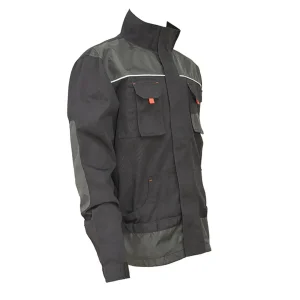
Factory Solution: Ergonomic hybrid jackets: 9 oz flame-retardant stretch cotton bodies fitted with cowhide sleeves and magnetic snap cuffs for effortless, snag-free movement.
A rigorous checklist for Supply Chain Directors, Quality Assurance Auditors, and Private-Label Buyers.
Audit incoming cattle hides for uniform thickness (1.1mm to 1.4mm standard), absence of deep healed scars or tick damage, and uniform chrome-tanning oil extraction limits below 3%.
Inspect critical load-bearing seams for 7–9 stitches per inch (SPI). Loose stitching allows molten metal penetration; overly dense punching cuts the leather substrate under load.
Ensure zero detectable Hexavalent Chromium (Cr VI < 3 mg/kg), azo dyes, and banned chlorophenols via certified SGS, TÜV, or Intertek batch testing certificates.
Verify BSCI, SEDEX SMETA, and ISO 14001 factory compliance, confirming fair labor conditions, ethical work hours, and closed-loop environmental tanning effluent handling.
Expert answers addressing lead times, minimum order quantities, certifications, and leather grading.
Split cowhide is cut from the fibrous inner flesh layer of the hide after the top grain is split off. It is suede-textured, highly abrasion-resistant, and inherently fire-resistant, making it ideal for heavy-amperage stick and flux-cored arc welding. Grain cowhide provides a smooth exterior that easily repels oils and surface sparks, offering superior tensile strength. Pigskin is lighter and more supple, containing natural hair follicle pores that enhance breathability; it is widely preferred for hot-weather welding, hybrid jacket construction, and situations requiring greater upper-body dexterity.
For European markets (CE mark), the garment must comply with PPE Regulation (EU) 2016/425 under standard EN ISO 11611:2015 (Class 1 for lighter TIG/MIG techniques or Class 2 for heavy spatter and cutting hazards), along with EN ISO 13688 general requirements. For North America, compliance centers on NFPA 2112, ASTM F1506 (arc flash rating), and OSHA 1910.252 hot work protective guidelines. Our factory provides complete technical construction files (TCF) and supports accredited laboratory testing through SATRA, SGS, and TÜV.
Custom OEM/ODM leather welding jackets typically carry a production MOQ of 500 to 1,000 units per style, depending on leather dye color customization and hardware specifications. First-run prototype sampling takes 5 to 7 business days. Bulk container production typically completes in 40 to 50 calendar days following pre-production sample sign-off. We also accommodate split container deliveries and recurring container replenishment schedules for large enterprise partners.
Yes. We provide complete OEM/ODM customization services. Branding options include heat-pressed leather patches, direct embroidery, laser-engraved pocket gussets, customized metallic snap studs, woven neck labels, barcode hangtags, and bilingual retail box packaging. Furthermore, sizing can be graded specifically for European (EU), American (US Tall/Big), or Asian size charts to ensure accurate regional fit.
Third-party apparel stitchers that source crust leather on the open spot market routinely suffer batch-to-batch variation in thickness, hand-feel stiffness, and shade matching. Because Guangdong Ming Shun integrates in-house drum dying, fatliquoring, and automated split calibration, we lock in dye formulas and chemical recipes permanently. Repeat orders placed twelve months apart match approved master swatches within tight spectrophotometric Delta-E tolerances.
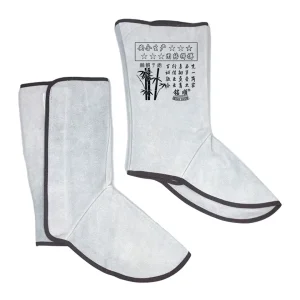
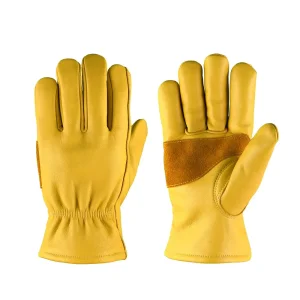
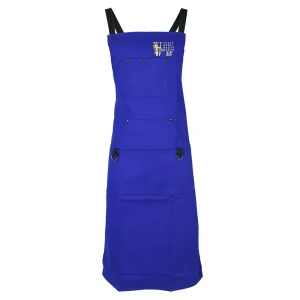
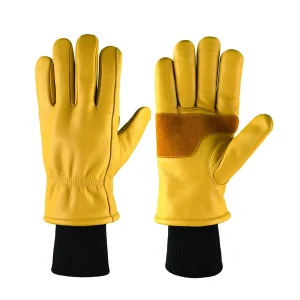
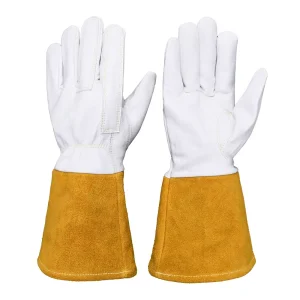
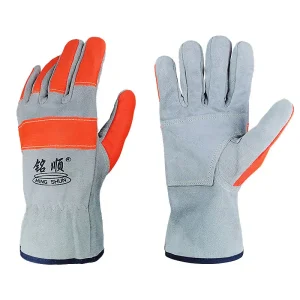
Complementary hand, arm, and lower-body protective equipment engineered to matching standards.
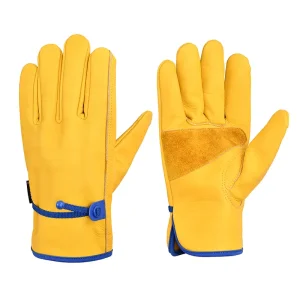
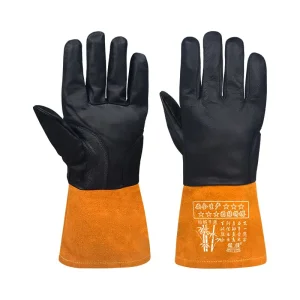
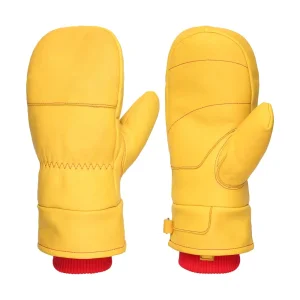
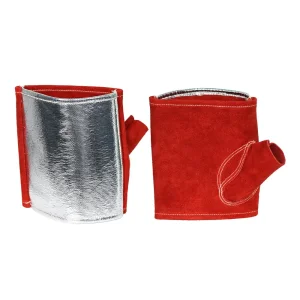
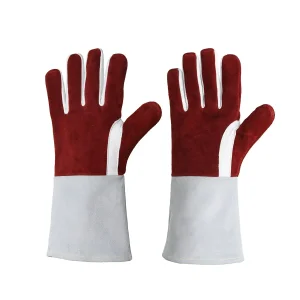
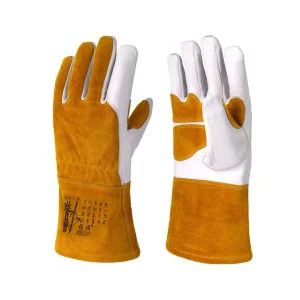
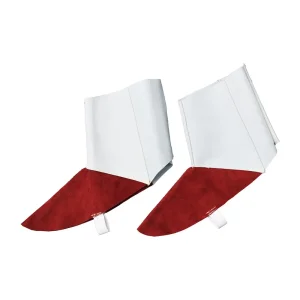
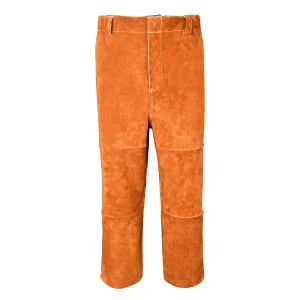
A structured 4-step path from technical drawing submission to volume sea container dispatch.
Submit your CAD blueprints, bill of materials (BOM), size grading charts, and target target compliance levels (EN ISO 11611 Class 1/2).
Our Gaozhou sample room cuts physical master samples in 5–7 days, complete with your custom branding, snaps, and labeling for evaluation.
Upon sample approval, dedicated walking-foot assembly lines execute manufacturing under strict AQL 2.5/4.0 in-line quality controls.
Consolidated container loading, custom palletizing, full customs documentation, and direct FOB/CIF delivery via Guangzhou, Shenzhen, or Hong Kong ports.

