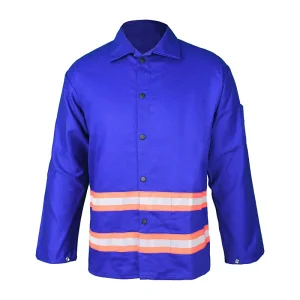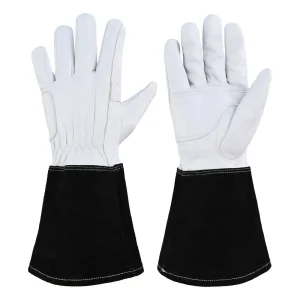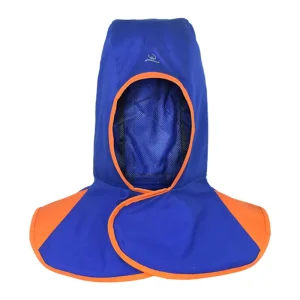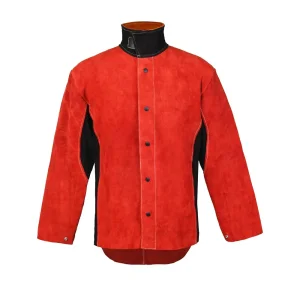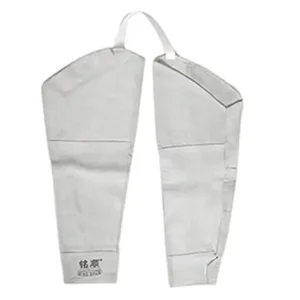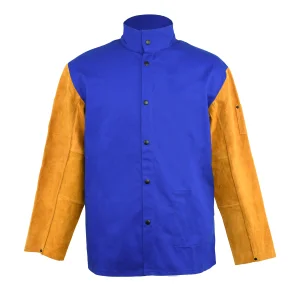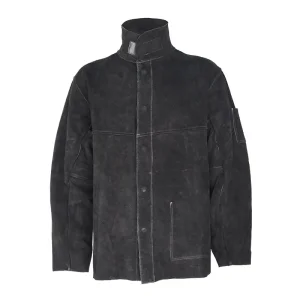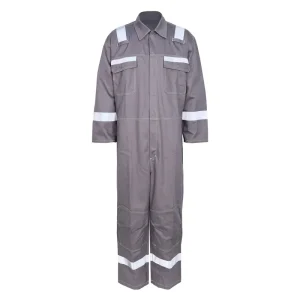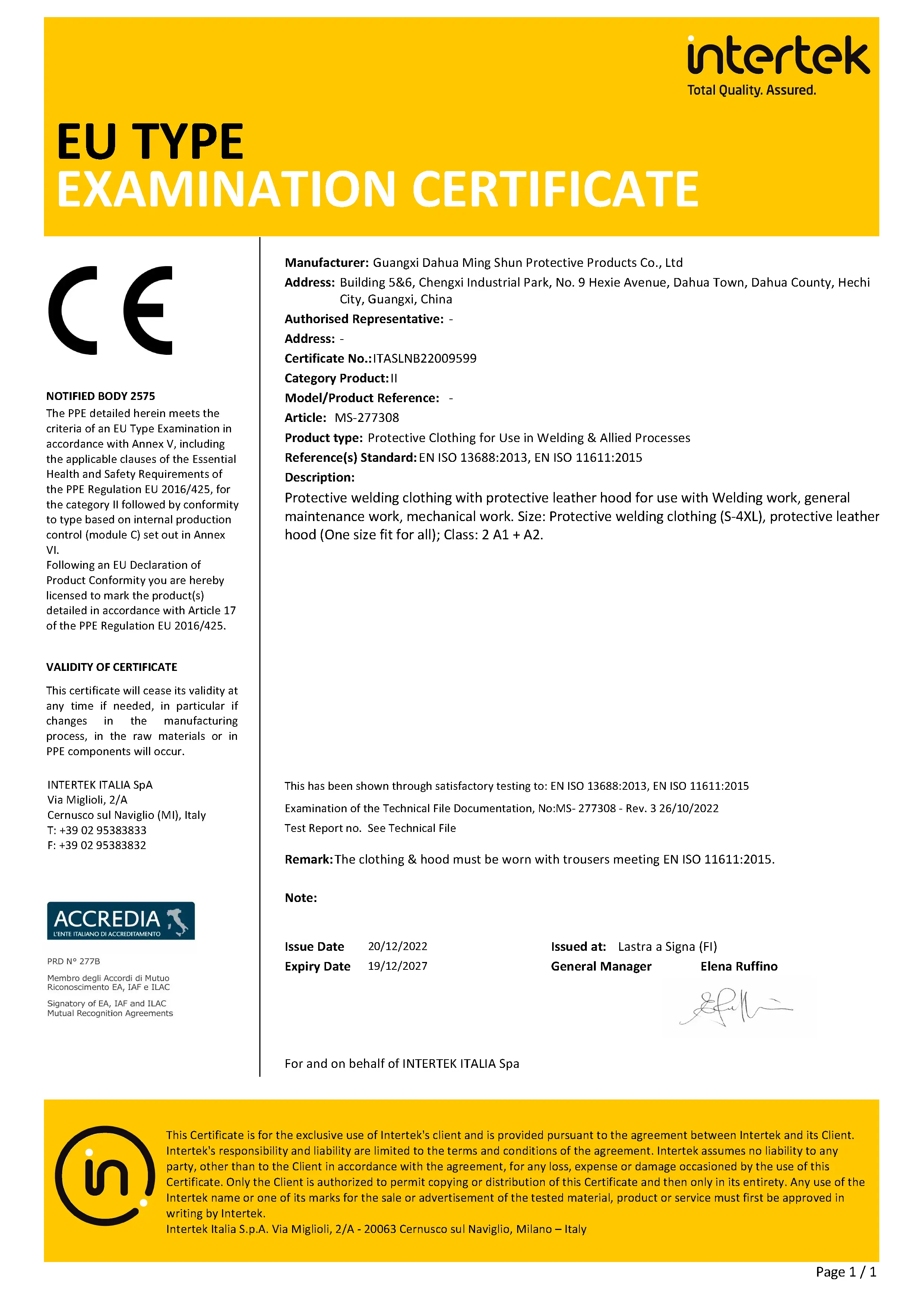
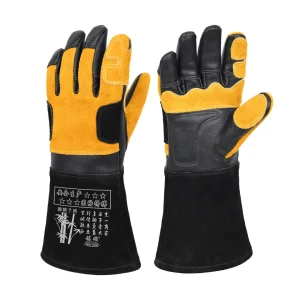
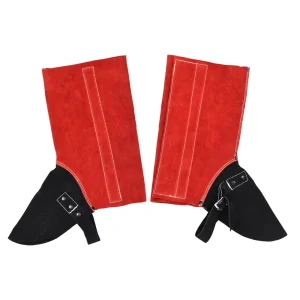
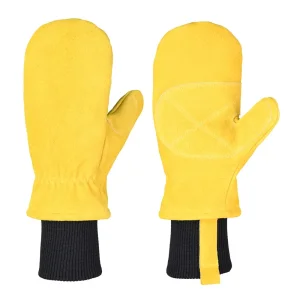
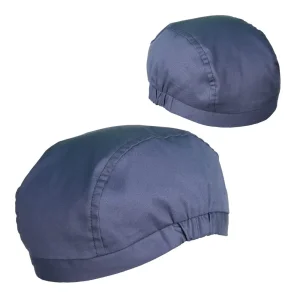
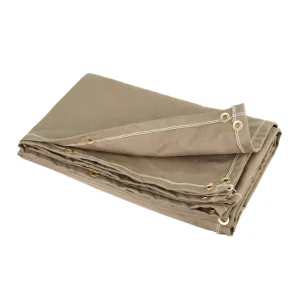
Explore our certified welding PPE line manufactured with high-tensile Kevlar stitching, Grade-A split cowhide, and radiant-heat barrier engineering.
Strategic analysis of the high-amperage welding PPE market, regulatory shifts, and technical material demands across heavy industrial applications.
Traditional rigid helmets leave critical anatomical zones exposed. Industrial audit data shows that over 34% of secondary welding burns occur at the lateral cervical area, back of the neck, and clavicle due to rebounding slag during SMAW, GMAW, and carbon-arc gouging operations.
Modern fabrication facilities are moving away from heavy, cumbersome head protection. The industry requires flexible, form-fitting split cowhide leather welding hoods and ergonomic balaclava-style drapes that integrate seamlessly with ADF (Auto-Darkening Filter) shells and PAPR respirators.
Global procurement teams face intensifying workplace safety enforcement under OSHA 1910.132, EN ISO 11611:2015 Class 2 standards, and AS/NZS guidelines. Standard textile hoods no longer suffice in overhead and out-of-position pipeline projects where Class 2 molten droplet thresholds are mandatory.
Why Guangdong Ming Shun’s fully integrated vertically organized manufacturing model offers uncompromised supply continuity, tight tolerances, and direct cost optimization.
Unlike assemblers who buy market split hides with unpredictable tensile strength and moisture variances, our Gaozhou facility commands in-house leather grading, chrome tanning, and softening processes to guarantee consistent thickness between 1.1mm and 1.4mm.
Computerized CAD-driven die cutting systems minimize human variance, maximizing hide utilization and ensuring every panel of an OEM leather hood aligns accurately with stress-bearing seam geometry.
Eliminating middle-tier raw material traders and regional subcontractors allows us to offer Tier-1 safety brands and distributors competitive pricing structures with reliable year-round margin stability.
With 1,000+ floor employees and automated assembly cells, bulk container runs move from raw split cowhide to packaged, barcoded product in a stable 35 to 45-day production window.
A breakdown of materials used in OEM leather welding hood configurations engineered to resist heavy industrial thermal loads.
| Component Zone | Primary Substrate Options | Protective Specification | Target Operational Benefit |
|---|---|---|---|
| Crown & Lateral Shell | Premium Selected Split Cowhide (1.2–1.4mm) | EN ISO 11611:2015 Class 2 Compliant | Deflects high-velocity molten metal droplets and radiant heat spikes up to 500°C. |
| Extended Neck / Shoulder Drape | Supple Suede Cowhide or 9 oz FR Treated Cotton | ASTM D6413 Flame Resistance Rated | Full coverage over the jacket collar to eliminate gap exposure during overhead work. |
| Interior Comfort Liner | Breathable Poly-Mesh or Soft Cotton Twill | Sweat-wicking, hypoallergenic | Reduces skin friction, disperses perspiration, and lowers heat stress during long shifts. |
| Structural Seams & Joints | DuPont™ Kevlar® 3-4 Ply Thread | Thermal degradation threshold > 420°C | Prevents seam burst from hot sparks; reinforced with welted leather along key joints. |
| Fastening Systems | Insulated Brass Snaps or Heavy-Duty Hook & Loop | Dielectric & Non-Conductive Shielded | Secure, multi-point adjustment compatible with industrial hard hats and ADF shells. |
Engineered for high-risk operating environments where standard protective equipment fails to provide sufficient coverage.
Shipyard double-bottom tanks, process vessels, and offshore oil platforms require welders to work in tight crawl spaces. Leather welding hoods shield the neck, scalp, and ears from rebounding sparks against curved metallic surfaces.
Overhead stick and flux-cored arc welding generates high volumes of downward molten slag. Leather hoods combined with shoulder drapes fit under site-mandated hard hats, keeping the welder fully covered without restricting neck rotation.
Air carbon-arc gouging ejects molten steel under compressed air pressure. Our split cowhide hoods with reinforced brow bands deliver the impact and temperature resistance needed to protect operators from splash and severe thermal radiation.
Anticipating the technological and regulatory requirements shaping the next decade of personal protective equipment manufacturing.
With stricter OSHA hexavalent chromium (Cr(VI)) and manganese exposure limits, demand for hoods built with sealed breathing ducts and flame-retardant air-diffusing channels is growing rapidly. Our OEM design team develops dedicated interfaces compatible with all major global PAPR blowers.
To reduce overall garment weight without compromising safety, next-generation hood designs deploy split leather specifically along heavy spatter trajectories (brow, neck front, shoulder tops), paired with high-breathability 9 oz FR cotton on less vulnerable side and rear panels.
European and North American buyers are increasingly requesting chromium-reduced and vegetable-assisted retanned leathers. Ming Shun is investing in closed-loop water treatment systems and sustainable tanning chemistries that satisfy strict REACH compliance standards.
A systematic private-label manufacturing pathway designed for international distributors, military procurement offices, and private-label brands.
Send CAD files, dimensional sketches, or competitor samples. Our engineering team reviews panel joints, seam clearance, thread weights, and ergonomics to match your target operating environment.
Within 7 to 10 working days, physical prototypes are cut, sewn, and inspected. Samples can be delivered with third-party testing documentation for EN ISO 11611, abrasion, and tear resistance.
Tailor your product line with laser-etched cowhide badges, high-definition embroidery, custom woven neck tabs, branded polybags, and retail-ready display cartons.
Each container shipment undergoes multi-point inspection checks: seam pull strength, thickness uniformity, dye-fastness testing, and secure palletization for global container freight.
In-depth technical answers addressing common procurement, manufacturing, and regulatory compliance considerations.
Split cowhide is derived from the fibrous lower corium layer of the hide, offering superior heat insulation, radiant-heat reflection, and high abrasion resistance at a more cost-effective point than grain leather. Grain leather is thinner and more pliable, making it ideal for precision TIG gloves, whereas split leather remains the industrial standard for spatter barriers and overhead molten metal deflection.
Our raw leather and finished products are tested under standardized conditions for impact of spatter (number of molten metal droplets required to cause a 40K temperature rise), radiant heat transfer, tear resistance, and limited flame spread (ISO 15025). We provide model-specific batch test reports and coordinate full certification verification with accredited notified bodies prior to contract execution.
For custom private-label leather welding hoods, our standard production run begins at 500 to 1,000 units per color and specification. We can accommodate lower trial volumes for custom tech-pack evaluations during pre-production verification phases.
Yes. Our in-house engineering team regularly develops custom retention slots, rubber seal channels, and modular snap patterns that integrate directly with major industrial hard hat suspensions and third-party welding helmet shells.
Conventional cotton or nylon threads melt and char at temperatures between 150°C and 220°C, causing early seam failure when hit by falling welding slag. DuPont™ Kevlar® thread resists temperatures above 420°C without melting, ensuring structural seam integrity throughout the usable service life of the split leather shell.
Explore additional protective lines designed to form integrated, high-durability protection systems for demanding fabrication environments.