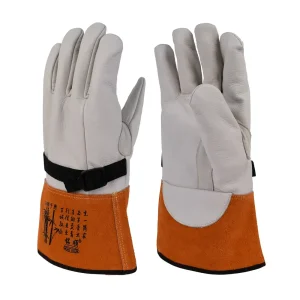
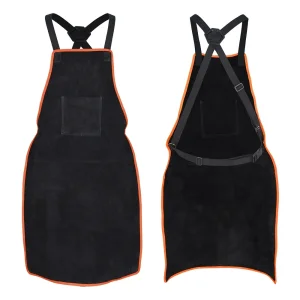
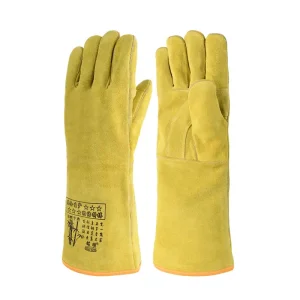
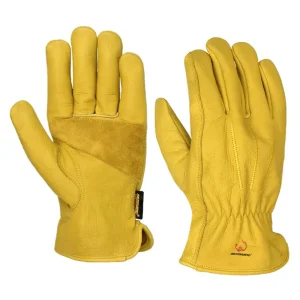
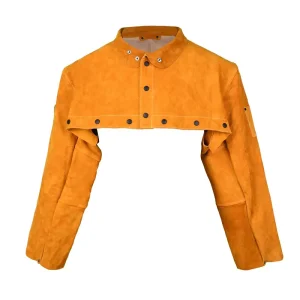
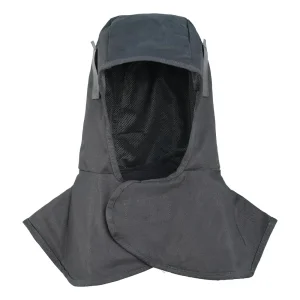
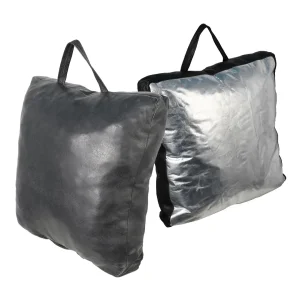
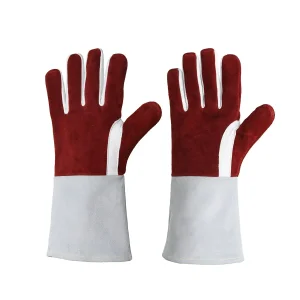
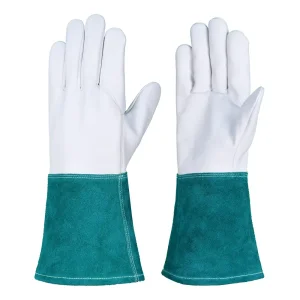
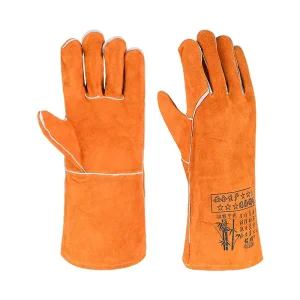
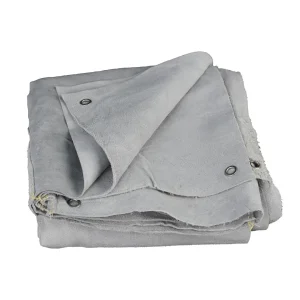
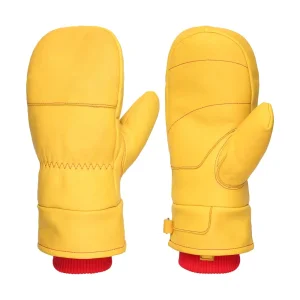
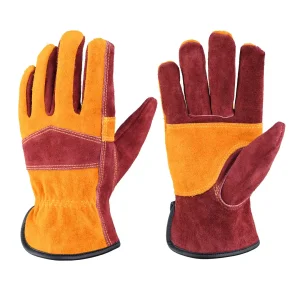
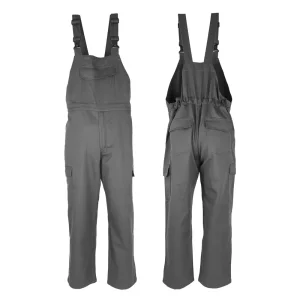
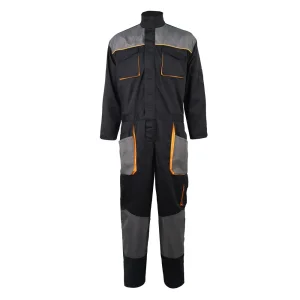
Explore our primary OEM manufacturing series engineered specifically for high-stress electrical, fabrication, and foundry safety programs.
Understanding the physics of mechanical abrasion, ozone exposure, and arc-flash dynamics that make high-tensile leather protectors indispensable over rubber insulating gloves.
In modern electrical engineering, personal protective equipment (PPE) systems operate under strict fail-safe parameters. Under ASTM D120 and IEC 60903 guidelines, dielectric rubber gloves provide primary electrical isolation against potentials ranging from 500V (Class 00) to 36,000V (Class 4). However, rubber remains fundamentally susceptible to puncture, pinholes, abrasion, hydraulic contamination, and ozone embrittlement. A microscopic puncture in a Class 2 rubber glove exposes a high-voltage lineman to catastrophic dielectric breakdown.
This life-critical vulnerability necessitates the deployment of specialized Leather Protector Gloves (ASTM F696 / EN 388 / EN 407). Worn directly over rubber insulating gloves, leather protectors serve as an uncompromising sacrificial armor. They prevent sharp copper burrs, galvanized hardware friction, cross-arm splinters, and extreme friction from breaching the underlying insulating dielectric barrier.
Per ASTM F696 Section 8 and OSHA 1910.137, leather protector gloves must never extend to the edge of the rubber glove. A strict minimum clearance must be maintained between the top of the leather protector cuff and the beaded edge of the rubber glove to prevent flashover or surface dielectric tracking:
• Class 00 & Class 0 (Up to 1,000V): Minimum 0.5 inches (13 mm) separation.
• Class 1 (Up to 7,500V): Minimum 1.0 inch (25 mm) separation.
• Class 2 (Up to 17,000V): Minimum 2.0 inches (51 mm) separation.
• Class 3 (Up to 26,500V): Minimum 3.0 inches (76 mm) separation.
• Class 4 (Up to 36,000V): Minimum 4.0 inches (102 mm) separation.
As an OEM manufacturer, our Gaozhou engineering facility cuts patterns with micro-precision cuffs (ranging from 10-inch driver styles to 16-inch contour gauntlets) to guarantee strict compliance with these safety clearances across international utility contracts.
Goatskin exhibits the highest natural tensile strength of any commercial leather due to its tightly interwoven collagen protein matrix. High lanolin content yields exceptional natural water-repellency and supreme tactile sensitivity, crucial for linemen manipulating small terminal nuts and hot sticks.
Tensile Matrix: >18 N/mm²For high-abrasion line construction and heavy cable pulling, heavy-weight split cowhide (1.1mm to 1.4mm) offers exceptional resistance against rough wood utility poles, heavy cross-arm hardware, and high-energy secondary arc exposure. Heat-resistant chrome tanning prevents stiffening after moisture exposure.
Abrasion Grade: Level 4 ANSICrucial for life-safety certification: all leather protectors destined for electrical work are strictly fabricated with zero external metallic components. We utilize non-metallic nylon or polymer pull buckles, dielectric FR composite rivets, and 100% Kevlar/Nomex aramid core thread to avoid spark gap generation.
Zero-Metallic HardwareStrategic analysis of the evolving procurement criteria for industrial purchasing directors, energy grid contractors, and international safety brands.
The global protective glove market is undergoing a structural transformation. The rapid electrification of global transport, massive expansion of renewable energy generation (photovoltaic megawatt arrays and offshore wind farms), and upgrading of aging power transmission infrastructure across North America and Europe have driven demand for certified leather protector gloves to historical peaks.
However, purchasing managers no longer evaluate suppliers solely on piece-rate pricing. Modern procurement mandates analyze supplier capabilities through a three-dimensional filter:
Importers require verifiable, batch-specific test reports demonstrating adherence to ASTM F696, NFPA 70E (Arc Flash Hazard), EN 388:2016+A1:2018 (Mechanical), and EN 407 (Thermal). Batch identification must be hot-stamped permanently onto the cuff.
Audit-Ready DocumentationFluctuations in raw hide availability and global shipping volatility make factory-direct leather processing critical. Manufacturers with captive tanning and continuous raw hide reserves buffer clients against sudden market shortages.
Predictable 45-Day CyclesDistributors require cohesive branding: customized embossed logos on the cuff, specialized color-coded binding tapes (denoting specific size categories for rapid field identification), and specialized polybag packaging with regional EAN barcodes.
Full OEM / ODM ServiceCheap leather protectors with inconsistent seam alignment or substandard thread degrade prematurely, resulting in excessive replacement cycles or danger of catastrophic field tears. Premium grain integrity lowers annualized glove expendables budgets by over 30%.
High Lifespan ROI| TECHNICAL PARAMETER | FULL-GRAIN GOATSKIN | PREMIUM COWHIDE GRAIN | HEAVY SPLIT COWHIDE | SYNTHETIC COMPOSITES |
|---|---|---|---|---|
| Target Voltage Classes | ASTM Class 00, Class 0, Class 1 | ASTM Class 1, Class 2, Class 3 | ASTM Class 2, Class 3, Class 4 | Limited / Non-Compliant with F696 |
| Tactile Dexterity & Ergonomics | Exceptional (ISO 21420 Level 5) | Moderate to High (Level 4) | Moderate (Level 2-3) | Variable / Low Puncture Resistance |
| Cut & Puncture Resistance | High Puncture, Medium Cut | High Puncture, High Abrasion | Extreme Abrasion, High Puncture | High Cut, Poor High-Heat Resistance |
| Arc Flash Thermal Protection | Naturally Flame Resistant (NFPA 70E) | High Calorie Arc Barrier (>25 cal/cm²) | Extreme Calorie Arc Barrier (>40 cal/cm²) | Melts under high radiant arc thermal pulse |
| Primary Application Scenarios | EV Battery Assembly, Meter Installation | Substation Maintenance, Utility Trucks | High-Voltage Lineman Overhead Work | General Mechanical Warehouse Only |
How Guangdong Ming Shun Labour Protective Products leverages vertically integrated manufacturing, automated tension cutting, and digital QA to guarantee export consistency.
Headquartered in the renowned leather manufacturing hub of Pukang Industrial Park, Gaozhou, Guangdong, Ming Shun operates over 25 years of specialized PPE manufacturing infrastructure with a workforce exceeding 1,000 skilled craftsmen and production engineers. Producing over 500,000 pairs of industrial gloves every month, our operational model bridges time-honored artisanal leather sorting with cutting-edge Industry 4.0 production technologies.
Unlike trading intermediaries or fragmented assembly workshops, Ming Shun maintains 100% ownership over the critical supply chain nodes: from raw hide tanning and non-hazardous chrome formulation to computer-controlled automated cutting tables and multi-point tensile inspection.
Direct control of drumming, tanning, and dyeing parameters ensures consistent leather pliability, precise hide thickness (±0.05mm tolerance), and low electrical conductivity salts.
Automated CAD-guided cutting tables optimize hide yield while avoiding natural grain scars, guaranteeing matching panel grain alignment across every paired set.
Programmable lockstitch sewing stations utilize heat-resistant DuPont Kevlar thread, maintaining 8–10 stitches per inch for maximum seam bursting resistance under high mechanical stress.
Every production batch receives a digital batch tracking number, ensuring complete traceability from hide receipt through sewing line operators to final master carton palletization.
From extreme cold arctic utility repairs to gigawatt battery manufacturing lines, discover where Ming Shun protective equipment performs.
Deployed by transmission linemen working with hot-line sticks, cross-arm maintenance, and transformer substations up to 36kV. Gauntlet cuffs with adjustable non-metallic nylon straps guarantee a secure friction grip over Class 2 through Class 4 rubber insulating gloves.
ASTM F696 / NFPA 70EModern EV battery pack testing operates between 400V and 800V DC bus architectures. High-dexterity goatskin protector gloves (10-inch driver cuffs) allow automation technicians to handle delicate battery cell wiring harnesses without compromising dielectric shielding.
Class 0 & Class 00 OptimizedElectrified rail systems utilize overhead 25kV AC catenary lines subject to harsh atmospheric weathering, soot contamination, and continuous friction. Our reinforced split cowhide gauntlets withstand repetitive friction against steel tension wire and tensioning winches.
Abrasion ANSI Level 4Central utility-scale PV inverters require high DC voltage maintenance in intense radiant heat environments. Specially treated cowhide and breathable FR cotton backing configurations maintain interior cooling while shielding against unexpected DC arc explosions.
High Radiant Heat ShieldBeyond dielectric insulation, our multi-layered split leather series provides protection against heavy hot weld slag, radiant molten metal spatter, and sharp sheared metal plates across structural fabrication yards, shipyards, and blast furnaces.
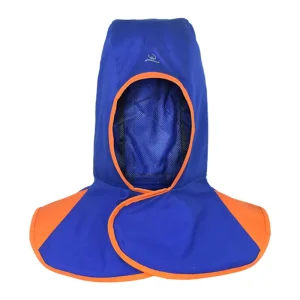
EN 12477 Type A Heavy WeldComplement your leather protector procurement program with factory-direct welding apparel, high-precision TIG gloves, and heat-resistant workshop equipment.
Essential technical clarifications for safety engineers, import distributors, and compliance managers evaluating leather protector programs.
Strictly NO. Leather protector gloves have zero dielectric insulating rating. Their sole function in high-voltage work is to provide mechanical protection (cut, puncture, abrasion, oil resistance) and thermal arc-flash shielding over rubber insulating gloves compliant with ASTM D120 or IEC 60903. Wearing a leather protector glove alone during electrical contact will result in fatal electrocution.
Metallic parts (such as steel buckles, metal eyelets, or conductive rivets) create points of electrical field concentration, significantly lowering the dielectric flashover threshold between the worker and live equipment. In the event of an arc flash, metallic parts heat instantly, melting into adjacent PPE. Ming Shun strictly utilizes heavy-duty nylon adjustment straps, dielectric polymer cinches, and composite rivets.
For standardized glove configurations and repeat private-label orders, typical mass production lead time is approximately 35 to 45 business days following tech-pack and pre-production counter-sample sign-off. Full 20ft and 40ft high-cube container bookings are handled directly via Shenzhen or Guangzhou ports with complete export documentation (Form A, Certificate of Origin, mill test logs).
Because we control the tanning and splitting drums in-house, incoming crust leather is calibrated on continuous roller gauge splitters. Each leather panel cut for ASTM F696 gloves is sorted into strict caliper brackets: 0.8–1.0mm for goatskin precision work and 1.1–1.3mm for cowhide gauntlet shells. Panels outside tolerance are automatically redirected to non-critical accessory lines.
Yes. Utility contracts frequently specify non-standard overall glove lengths (e.g., 10-inch, 12-inch, 14-inch, or 16-inch gauntlets) to maintain required dielectric clearances over different Class 0 to Class 4 rubber glove cuff profiles. Our digital CAD pattern department can adjust gauntlet flare, cuff slant, and elastic gather placements within 48 hours for prototyping.
We provide comprehensive private-label integration: hot-foil debossing or permanent heat-transfer stamping on the leather cuff, custom color-coded edge binding tape (red for size 9, green for size 10, etc.), woven brand logos, Barcoded hangtags, master polybags with desiccant packs, and export cartons labeled to warehouse SKU specifications.