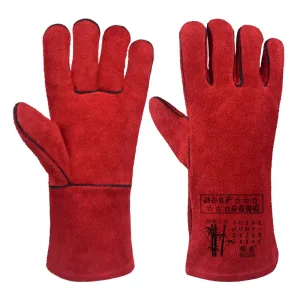
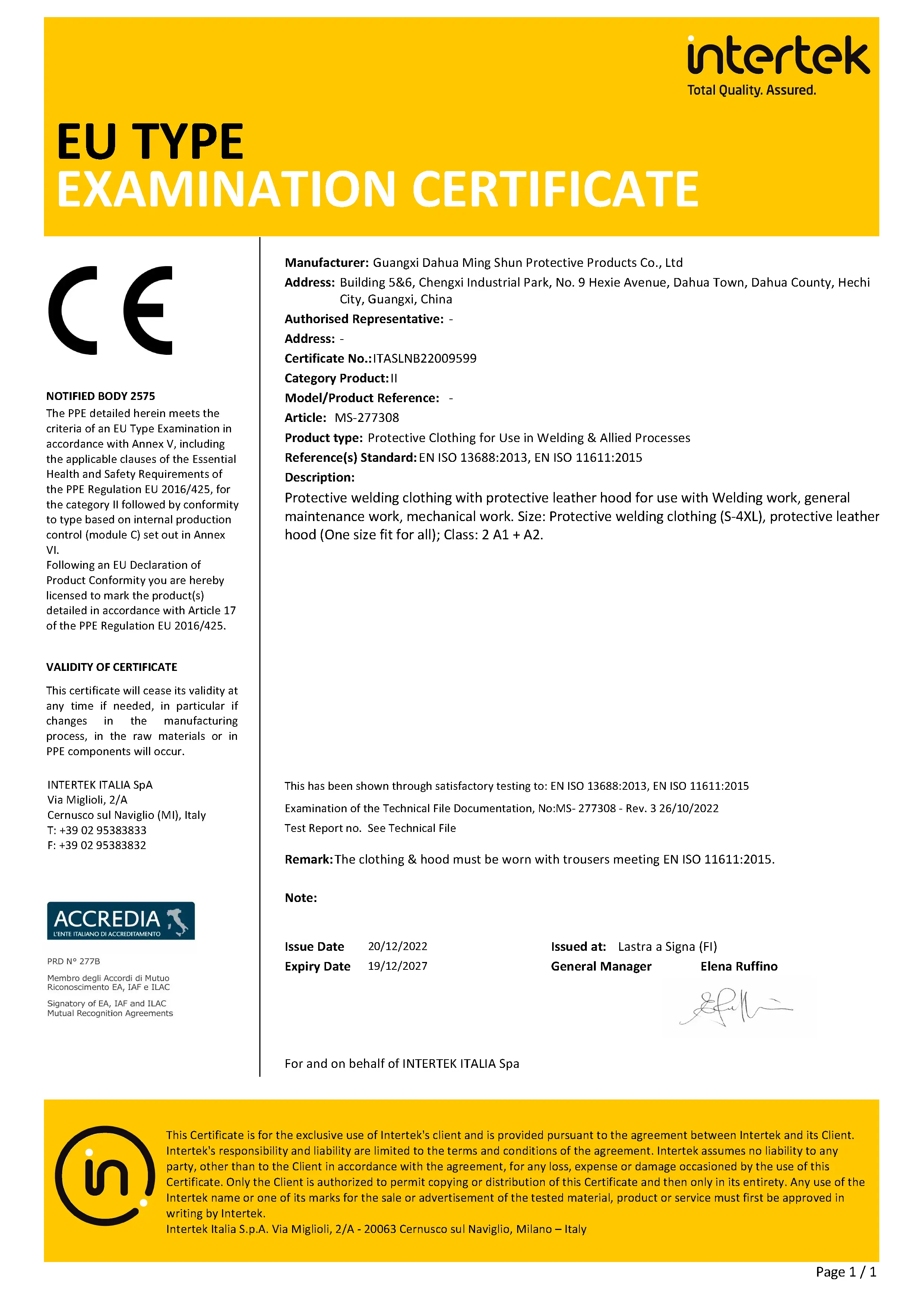
Explore our certified hand protection, heavy-duty welders' workwear, and heat-reflective accessories built directly from our integrated tannery and production workshops.
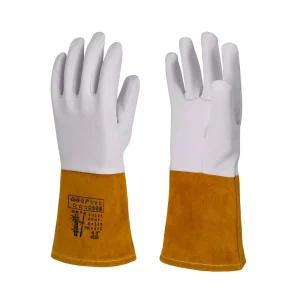
Understanding heat transfer mechanics, conductive barriers, and mechanical abrasion thresholds in industrial high-temperature personal protective equipment.
In modern metallurgical processing, automotive chassis welding, and foundry casting, personal protective handwear operates at the intersection of extreme thermodynamic stress and intricate ergonomics. Thermal degradation of hand protection occurs via four primary heat transfer vectors: conductive heat transfer (direct surface contact with glowing forgings or hot dies), convective heat transfer (surrounding superheated gases and open flame exposure), radiant heat transfer (high-intensity infrared electromagnetic emissions from molten baths or electric arcs), and molten metal splash impact (droplets of liquefied slag or iron adhering to exterior layers).
As a vertically integrated OEM manufacturer based in Gaozhou, Guangdong, Guangdong Ming Shun Labour Protective Products Co., Ltd. controls the composite layering of specialized safety gloves from the initial hide conditioning to final Kevlar® welted assembly. When engineering thermal hand protection, selecting the outer grain or split leather is merely the baseline. High-performance barrier systems necessitate a multi-strata topology: an exterior abrasion-resistant cowhide, goatskin, or aluminized aramid backing, coupled with intermediate air-entrapment non-woven felts, and an interior skin-comfort moisture-wicking FR cotton lining.
Direct contact with workpieces up to 500°C demands low thermal conductivity ($k$-value) materials. We incorporate dense split leather backed by needle-punched aramid fibers to retard heat transfer to the dermal threshold.
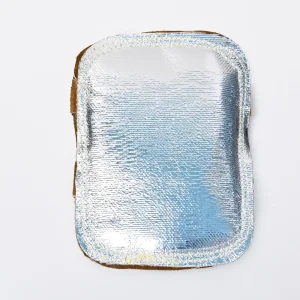
For smelting furnaces, boiler overhaul, and Class 2 heavy arc welding, our aluminized multi-layer back-hand composites reflect up to 95% of radiant infrared energy, shielding dorsal tendons from hyperthermic injury.
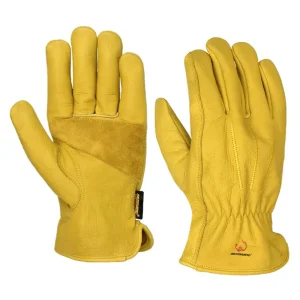
Thermal insulation typically sacrifices tactile control. By utilizing grade-A grain goatskin for TIG palm constructions and computer-contoured 3D keystones, our gloves preserve precision feed dexterity without compromising insulation.
| Thermal Standard Test | EN 407:2020 Level 1 | EN 407:2020 Level 2 | EN 407:2020 Level 3 | EN 407:2020 Level 4 | Ming Shun Engineering Benchmark |
|---|---|---|---|---|---|
| Contact Heat ($T_c$) | 100°C for ≥ 15s | 250°C for ≥ 15s | 350°C for ≥ 15s | 500°C for ≥ 15s | Exceeds Level 3 & 4 (Up to 500°C Calibrated) |
| Limited Flame Spread | After-flame ≤20s | After-flame ≤10s | After-flame ≤3s | After-flame ≤2s | Level 4: Zero Ignition After-Glow ≤ 1s |
| Convective Heat ($HTI$) | $HTI_{24} \ge 4\text{s}$ | $HTI_{24} \ge 7\text{s}$ | $HTI_{24} \ge 10\text{s}$ | $HTI_{24} \ge 18\text{s}$ | Level 3-4 Multi-Layer Aramid Felt Composite |
| Radiant Heat ($t_2$) | $t_2 \ge 7\text{s}$ | $t_2 \ge 20\text{s}$ | $t_2 \ge 50\text{s}$ | $t_2 \ge 95\text{s}$ | Level 4 with Aluminized Dorsal Laminate |
| Small Molten Splash | ≥ 10 Droplets | ≥ 15 Droplets | ≥ 25 Droplets | ≥ 35 Droplets | ≥ 40 Droplets with Dense Split Cowhide |
Why sourcing directly from an in-house tanning and manufacturing hub eliminates supply disruptions and guarantees superior cost-performance ratios.
Unlike trading assemblers, Ming Shun controls leather raw processing, degreasing, chrome-free retanning, and custom color dyeing within Pukang Industrial Park.
Situated in China's foremost leather and protective glove industrial epicentre, we leverage deep regional component ecosystems including threads, fasteners, and trims.
With more than 1,000 skilled line operators and automated hydraulic die-cutting presses, our capacity exceeds 500,000 pairs of heavy heat-resistant gloves monthly.
Quality assurance is embedded at every manufacturing node: incoming raw material inspection, pre-cut leather grading, in-line stitching QC, and pre-shipment carton checks.
A rigorous checklist for commercial procurement officers, safety directors, and private-label distributors navigating international thermal handwear contracts.
B2B procurement of high-temperature PPE involves strict life-safety accountability. Sourcing agents must look far beyond unit pricing to evaluate overall supply chain robustness, liability mitigation, and regulatory legitimacy. When selecting an OEM manufacturing partner for heat-resistant work gloves, enterprise procurement audits must examine three critical evaluation pillars:
Never rely solely on static marketing catalogs. Enterprise buyers should mandate verifiable third-party test reports showing compliance with EN 407:2020 contact heat durations, EN 388:2016 abrasion cycles, and ANSI/ISEA 105 thermal conductive rankings.
A true OEM factory supports end-to-end brand realization. From heat-embossed logo stamps and woven brand labels to barcode retail packaging, your partner must streamline shelf-readiness without ballooning minimum order quantities (MOQs).
Supply continuity separates first-tier manufacturers from brokers. Evaluate container loading efficiency, proximity to deep-water ports (Guangzhou, Shenzhen), and forward-inventory stocking programs for seasonal demand spikes.
Real-world thermal hazard zoning requires specific leather grades, liner composite weights, and gauntlet architectures.
Contact with charging tools, ladle handles, and radiant heat exposure from electric induction furnaces exceeding 1,200°C. Requires heavy-duty split cowhide reinforced with aluminized dorsal drapes and interior fleece felt.
Repetitive MIG and spot welding work stations require balance between slag resistance, rapid heat release, and hand comfort across 8-hour manufacturing shifts.
Dry contact with freshly blown or molded glass items. Requires non-marring exterior leathers with zero chemical finishes that could blister or leave silicone residue on optical glass.
Mitigate import inspection risks with certified models designed to satisfy mandatory PPE regulations worldwide.
Importing industrial personal protective equipment requires uncompromised conformity to regional health and safety mandates. Ming Shun maintains an active technical compliance dossier for our global distributor network, ensuring every container clears customs smoothly and passes occupational safety audits (OSHA / CE PPE Regulation (EU) 2016/425).
Under PPE Regulation (EU) 2016/425, our protective glove models undergo Module B Type-Examination testing through accredited Notified Bodies (such as CTC, SATRA).
We engineer custom glove variants in accordance with ANSI/ISEA 105-2016 standard benchmarks, ensuring compliance with OSHA 1910.138 general hand protection directives.
Because safety gear directly contacts human skin, our Gaozhou factory adheres to stringent environmental parameters to safeguard worker wellness.
From nano-aerogel insulation to sustainable vegetable retanning, discover how modern engineering is shaping industrial safety.
Traditional high-heat gloves rely on thick leather and heavy cotton felts, creating operator hand fatigue. Next-gen prototypes integrate ultralight nanoporous silica aerogel inserts that slash bulk by 40% while preserving 500°C protection.
Global carbon neutrality initiatives are driving demand for sustainable leather handwear. We are actively expanding vegetable-tanned split lines and incorporating recycled aramid yarns to reduce the environmental footprint of heavy fabrication equipment.
Migrating away from flat-cut 2D designs, modern CAD modeling maps the hand's natural resting curvature. Pre-curved finger construction reduces muscular resistance during continuous grip tasks, boosting productivity while minimizing tendon strain.
Direct technical and commercial answers for international procurement managers and brand buyers.
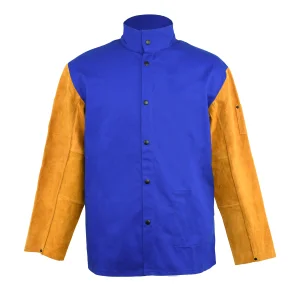
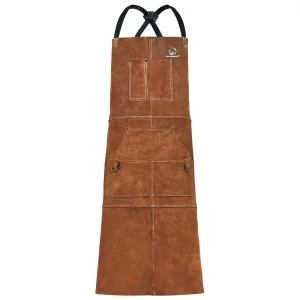
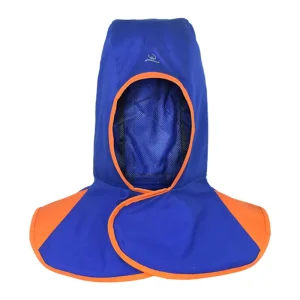
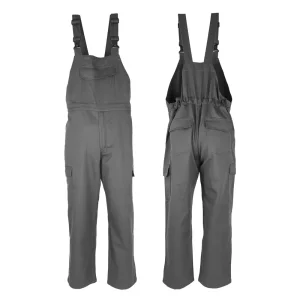
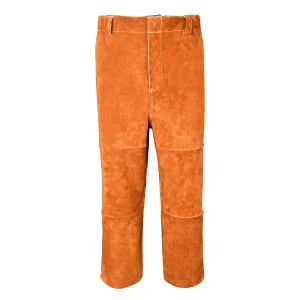
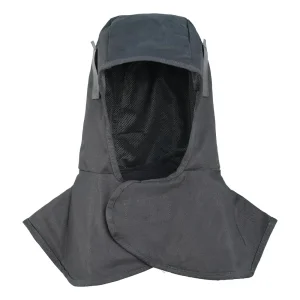
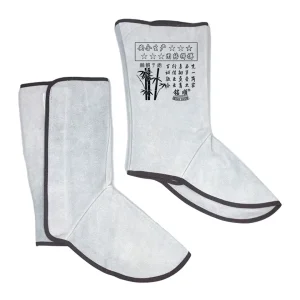
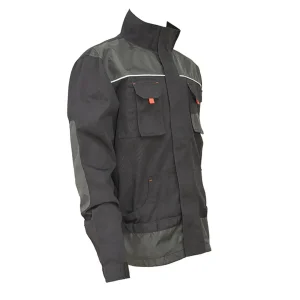
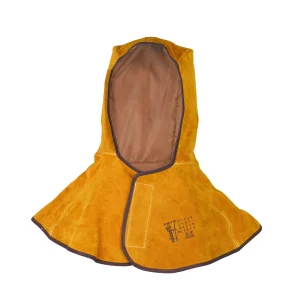
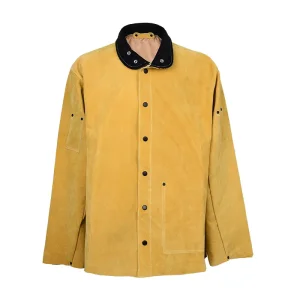
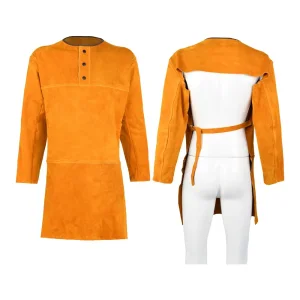
Complement your hand protection procurement with factory-direct welding jackets, flame-resistant bibs, leather spats, and ergonomic headwear.