Explore heavy-duty split cowhide configurations, Kevlar-stitched armor, and breathable flame-retardant workplace gear built for global OEM & private label procurement.
A technical assessment of split cowhide leather density, treated sateen FR textiles, and hybrid composite architectures engineered for high-amperage fusion arc protection.
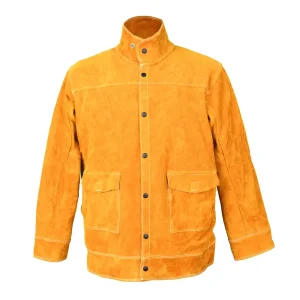
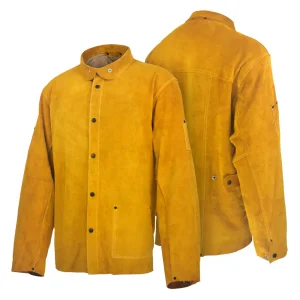
Specially selected corium fiber split leather provides unbeatable thermal ablation defense against direct molten metal drops up to 1400°C. Characterized by high tear resistance (exceeding EN 388 Level 4) and natural flame resistance without toxic chemical washouts.
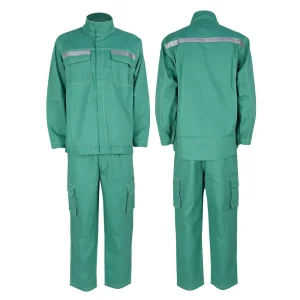
Long-staple combed cotton treated through cross-linked polymer flame retardancy (Proban/Pyrovatex chemistry) retains supple breathability while fulfilling NFPA 2112 vertical flame limits (char length <100mm after 50 industrial laundry cycles).
A welding jacket's safety threshold is strictly defined by its weakest seam. Standard synthetic threads decompose under ultraviolet arc exposure and burn through instantly upon contact with spatter.
| Substrate Configuration | Thermal Resistance (Contact) | Molten Splash Capacity | Weight & Ergonomics | Ideal Welding Modality |
|---|---|---|---|---|
| Full Split Cowhide Leather (MS-270 / MS-386A) | Extreme (>500°C short contact) | Class 2 (>25 drops without penetration) | Heavy (~1.6 – 2.1 kg per garment) | Submerged Arc, Heavy Flux-Cored, Overhead Stick |
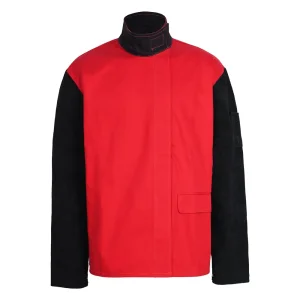
| Hybrid FR Cotton Torso + Leather Sleeves (MS-281B) | High (Sleeves) / Medium (Torso) | Class 1/2 Balanced Zone Architecture | Moderate (~1.0 – 1.3 kg per garment) | High-Production MIG/MAG Production Lines |
| Full 9 oz / 11 oz Sateen FR Cotton (MS-1215G Series) | Moderate (<250°C radiant threshold) | Class 1 (15–25 drops spatter limit) | Ultralight (~0.7 – 0.9 kg per garment) | TIG/GTAW, Light Maintenance, Hot Climates |
Ensuring effortless customs clearance, workplace safety compliance, and frictionless legal governance for international brand labels across the European Union, North America, and Australasia.
Harmonized European standard dictating flame spread, impact of molten spatter, radiant heat transfer (RHTI 24), and electrical resistance to protect against incidental contact with live conductors up to 100 V d.c.
Stringent US performance standards for flame-resistant garments against industrial flash fires. Requires comprehensive testing for melt/drip resistance, heat transfer performance (HTP), and body burn injury rate under 50% in simulated 3-second flash fires.
Rigorous chemical safety screening ensuring that cowhide leather tanning agents, finishes, and metal snap fasteners contain zero restricted substances, Hexavalent Chromium [Cr(VI)] undetectable (<3 ppm), and nickel-free hardware.
Closed-loop total quality management across incoming hide tanning inspection, seam tensile verification, computerized pattern placement, and pre-shipment ANSI/ASQ Z1.4 sampling audits.
How our vertically integrated 25-year manufacturing cluster in Pukang Industrial Park eliminates intermediate markups, stabilizes volatile raw hide indices, and shortens OEM delivery schedules.
Unlike assembly-only cut-and-sew workshops that buy leather on spot markets, our direct control over raw hide splitting, liming, retanning, and specialized drum-dyeing delivers immutable leather consistency, precise thickness control (±0.05 mm), and uniform tensile strength across multi-container purchase orders.
Leather hides are inherently non-uniform biological products. Our digital scanning tables map hide grain structure, defects, and thickness gradients, optimizing cut yields by 14.8% over traditional steel die stamping. This algorithmic optimization yields major cost reductions for high-volume OEM jacket buyers.
With more than 1,000 experienced factory workers operating structured production lines, we support an annual production capacity surpassing 1.2 million protective welding jackets and 6 million pairs of technical welding gloves. We ensure rapid bulk ramp-up without sacrificing stitch-line density or seam burst tolerances.
A systematic framework for global brand directors, safety distributors, and enterprise supply chain executives navigating PPE procurement, duty structures, and durability life-cycles.
Procuring sub-standard welding jackets with ordinary polyester seams or non-uniform split leather results in early seam blowouts and burn-throughs within 2–3 weeks of rigorous heavy shop operations. High-grade cowhide paired with Kevlar stitching offers an extended 4–6 month operating lifespan, lowering annualized employee protective outlays by up to 42%.
Worker rejection of excessively rigid, non-breathable protective jackets remains the top factor in weld-shop burn injuries. By deploying ergonomic articulated sleeves, underarm gussets, and hybrid breathable FR backs, safety teams boost PPE compliance to near 100%, reducing burn downtime and workers' comp payouts.
Our OEM workflows handle technical sizing charts (US, EU, Asian body dimension specs), barcode tagging, hangcards, multilingual care labels, and container load optimization (cbm packing analysis). We guarantee freight-ready compliance and prevent customs delays across major international ports.
How next-generation thermal personal protective equipment integrates modular ergonomics, green chemistry, and smart tracking to meet evolving ESG and automation demands.
Strategic deployment of heavy cowhide leather strictly across high-spatter impact quadrants (shoulders, forearms, abdomen) coupled with flexible 300g/m² inherently FR knit fabrics across the spine and underarms for optimal airflow.
Transition toward vegetable aldehyde, mineral-free synthetic tanning agents that drop chemical oxygen demand (COD) in tannery wastewater by 60%, delivering hypoallergenic, biodegradable split leather jackets that conform to carbon-neutral OEM mandates.
Replacing traditional zinc-plated steel snap closures with dielectric composite insulated cover snaps. This prevents accidental short-circuit grounding during tight-space fabrication in wet or high-conductivity environments.
Thermal-resistant UHF RFID tags vulcanized into internal seams support digital asset tracking, laundry cycle counting for institutional rental laundries, and regulatory PPE lifecycle audits across complex industrial shipyards.
Matching specific leather-fabric outerwear configurations to the unique thermal risks of major heavy industrial applications.
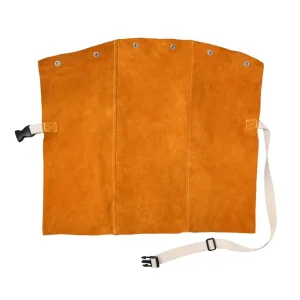
Severe continuous multi-axis welding within enclosed double-bottom hulls. Operators require heavy 30-inch cowhide leather jackets (MS-386A / MS-270) with standalone leather spats and neck bibs to stop cascading sparks during overhead stick and FCAW jobs.
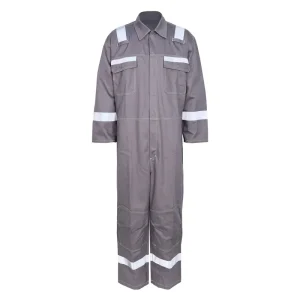
Requires dual-hazard NFPA 2112 and EN ISO 11611 Class 2 protection. Multi-hazard hybrid suits with anti-static yarns, high-visibility 3M Scotchlite reflective stripes, and chemical splash finishes protect against combined arc, hydrocarbon flash fire, and low-light deck conditions.
Rapid tactical movement across robotic jig fixtures calls for our hybrid MS-281B series. The lightweight FR cotton torso dissipates operator metabolic heat, while rugged split cowhide sleeves absorb repeated contact abrasion against sharp stamped metal panels.
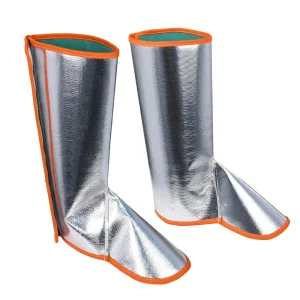
Exposed high-altitude wind and radiant heat stress. Field welders rely on full-coverage FR coveralls (MS-1215G) matched with detachable leather bibs and aluminized boot guards (MS-373) to defend against high-velocity slag scatter.
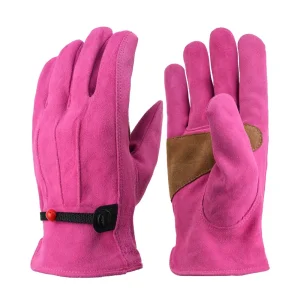
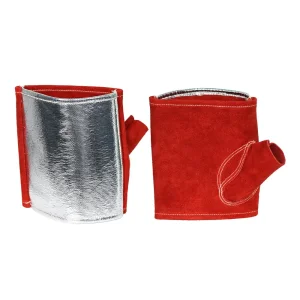
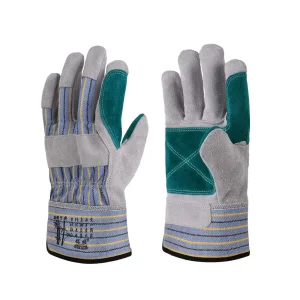
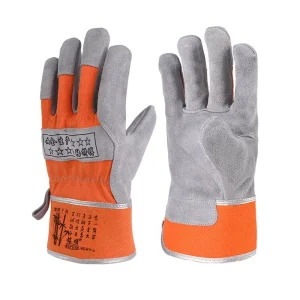
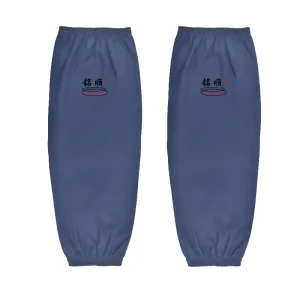
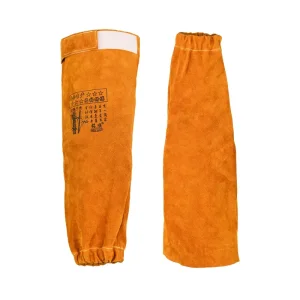
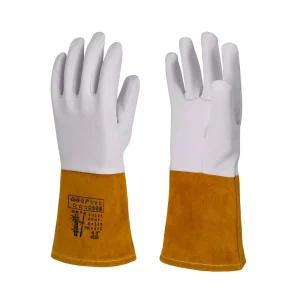
Complete your catalog with specialized aluminized thermal spats, split leather sleeves, heavy bibs, and fine TIG welding hand protection straight from our manufacturing lines.
Direct engineering answers to technical queries raised by global importers, safety distributors, and private-label PPE sourcing teams.
For shipyard applications with heavy overhead flux-cored and stick welding, we recommend 1.2 mm to 1.4 mm select split cowhide sewn with 100% Kevlar thread (such as models MS-270 and MS-386A). This thickness delivers an optimal balance between reliable molten-splash protection (exceeding EN ISO 11611 Class 2 limits) and ergonomic operator movement.
Yes. We regularly coordinate with recognized notified bodies (such as SATRA, SGS, and TÜV Rheinland) to secure CE Category II / Category III Module B/C2 certifications and UL NFPA 2112 listings under our buyers' private brand registrations, backed by full technical construction files (TCF).
The MS-281B is purpose-built for high-cycle factory MIG lines. The torso uses breathable 9 oz flame-retardant treated cotton to relieve worker heat stress, while high-wear split cowhide sleeves absorb direct mechanical wear and spatter, reducing garment weight by over 35% compared to all-leather jackets.
Custom tech-pack pattern development and physical sampling typically take 7 to 10 business days. For bulk container orders (20GP/40HQ), our typical lead time runs 35 to 45 days. Our plant supports over 1,000 workers, producing more than 100,000 jackets and 500,000 pairs of gloves per month.
Because we handle drum-dyeing in our own tannery, all leather lots undergo in-line lab checks for dry and wet rub fastness (ISO 11640), tear strength, and pH balance. Every leather batch is certified free of AZO colorants, with Hexavalent Chromium [Cr(VI)] strictly below standard detection thresholds (<3 ppm).
We offer heat-stamped leather debossing on chest pockets, direct embroidery, industrial high-temp transfer printing, custom-molded silicone badges, woven size and care labels, personalized barcode tags, and custom retail packaging boxes ready for point-of-sale display.