Direct manufacturer deployment of leather PPE, TIG/MIG gloves, and structural welding outerwear tested for spatter load and thermal convection.
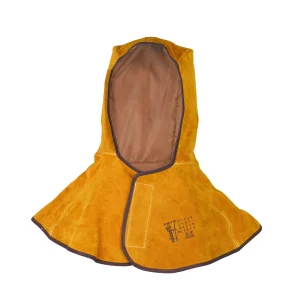
The global welding apparel market is undergoing a structural paradigm shift driven by stricter occupational safety mandates and rapid modernization in energy, shipbuilding, and robotic welding infrastructure.
Traditional pure-leather gear is being systematically augmented by hybrid ergonomic composites. Combining high-abrasion split cowhide in direct spatter trajectory zones with 9 oz / 12 oz intrinsically flame-resistant treated cotton minimizes operator fatigue while boosting heat dissipation by over 38% in continuous hot-work environments.
Cross-functional industries such as petrochemical refining, offshore wind turbine manufacturing, and public utility pipeline management now require protective wear satisfying both EN ISO 11611 (Welding) and NFPA 70E / IEC 61482 (Arc Flash) ratings to streamline enterprise inventory overhead.
Global procurement teams prioritize durable flame-resistant stitching, notably DuPont Kevlar® thread matrixes, dielectric non-conductive snaps, and targeted gusseted mobility seams that dramatically prolong field durability and reduce annualized PPE replenishment costs by up to 27%.
Operating a full-chain manufacturing ecosystem in Gaozhou, Guangdong: from raw hide tanning and non-toxic dyeing to computer-aided drafting and high-output stitch assemblies.
Direct regulation of split cowhide, top grain goatskin, and premium pigskin tanning enables consistent tensile fiber density, heat dissipation, and strict chrome VI compliance below detectable thresholds.
Full CAD digital nesting maximizes hide yield while allowing bespoke ergonomic contour adjustments, gusseted underarms, curved finger glove construction, and customized sleeve lengths.
Every lot undergoes rigorous verification: tensile testing on raw leather, fire retarding evaluation on FR cotton batches, stitch density inspection (7-9 SPI), and end-line zero-defect packaging checks.
Complete ODM/OEM capabilities supporting laser hide debossing, fire-retardant embroidery, branded silicone transfers, customized hangtags, barcode serialization, and localized containerized dispatch.
Bespoke protective arrays engineered around precise thermal exposure zones, molten metal splatters, and continuous operator duty cycles.
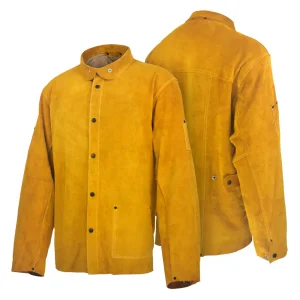
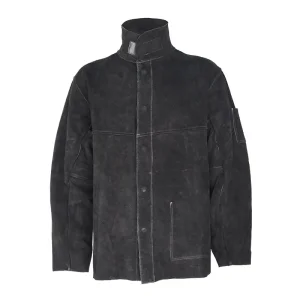
Severe Convective Heat & Molten Drop Risks: Deployed systems center on Grade-A heavy split cowhide jackets (such as the MS-386A and MS-390B) featuring Kevlar 5-ply stitched seams, standing collar spatter collars, and integrated spats to prevent molten slag accumulation inside safety footwear.
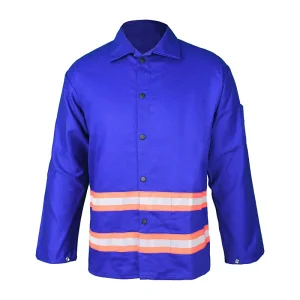
Multi-Hazard All-Weather Hot-Work: Utilizing 9 oz flame-retardant treated cotton overalls and hybrid cowhide-sleeve jackets with 3M Scotchlite™ FR reflective striping (e.g., MS-1200FR) for elevated visibility in subterranean conduits, trenching, and low-light industrial plants.
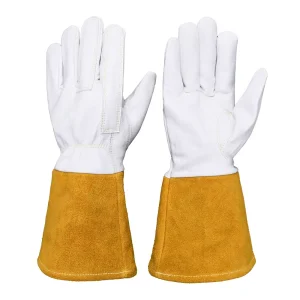
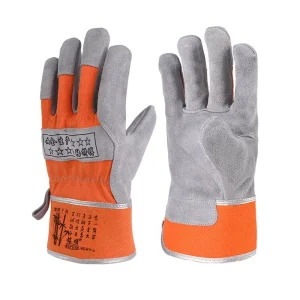
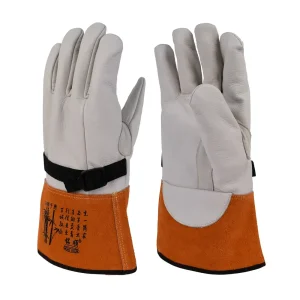
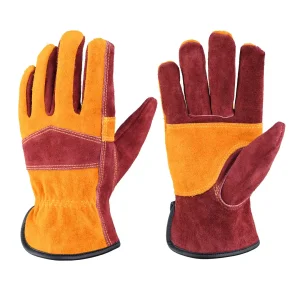
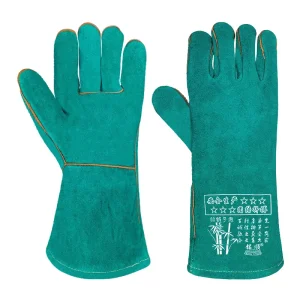
Micro-Amperage Dexterity Demands: Implementation of Grade-A top-grain goatskin gloves (MS-862) with seamless index finger construction and split cowhide gauntlets, granting extreme tactile feedback while maintaining radiant heat shielding up to 350°C.
Our engineering laboratory verifies that export-bound welding workwear matches regional testing protocols, guaranteeing friction-free customs clearance and local labor board validation.
Class 1 (manual welding with light spatter) and Class 2 (heavy fabrication, cutting). Full REACH compliance for azo dyes, aromatic amines, and chromium VI restriction below 3 mg/kg.
ASTM F1506 compliance, third-party arc rating (ATPV cal/cm²), and Char Length verification under ASTM D6413 testing ensures seamless deployment across North American contractor networks.
UV transmission shielding protocols and extreme heat endurance designed for Australasian mining, refining, and structural infrastructure hubs.
Continuous investment in protective material science to solve ergonomic, ecological, and micro-climate management hurdles.
Developing 100% aldehyde-free, plant-polyphenol cured leathers that eliminate toxic effluent discharges without sacrificing radiant heat thermal shrinkage resistance.
Patented micro-baffled flame-arresting mesh ventilation inlets deployed on garment shoulder capes and lower axillary voids, driving heat release while stopping ingress of 1200°C spatter sparks.
Early-stage prototyping of embedded passive RFID thermal loggers inside split leather jackets to warn safety officers when critical radiative threshold tolerances are exceeded on blast furnace floors.
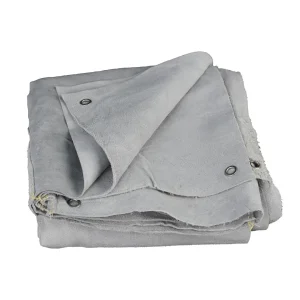
Closed-loop reclamation programs transforming reclaimed manufacturing leather trims into pulverized refractory composites for high-temperature welding curtains and insulated back-hand pads.
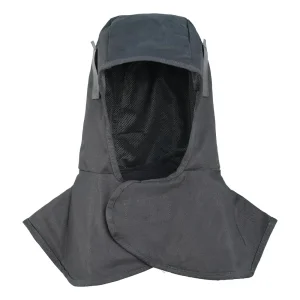
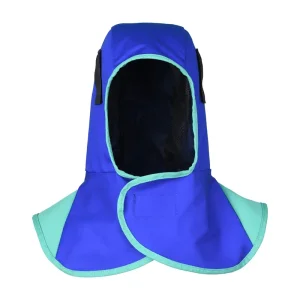
Complete the full-body safety matrix with high-coverage flame-resistant hoods, reinforced work overalls, and ergonomic utility hand protection.
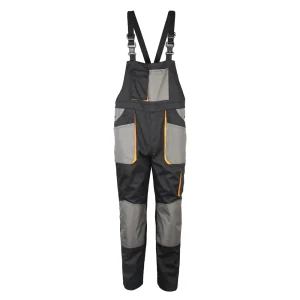
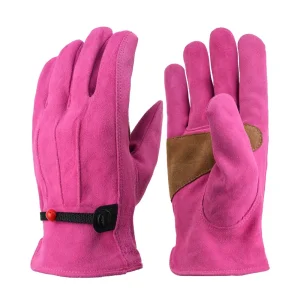
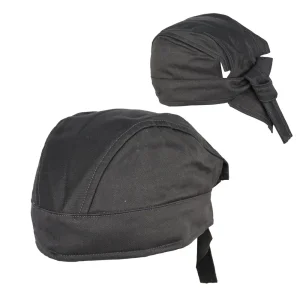
Comprehensive answers regarding factory compliance, supply scalability, sample lead cycles, and leather material selections.
Eliminate intermediary costs. Engage directly with a veteran 25-year manufacturer capable of delivering verified certification, custom engineering, and scalable container capacity.
Request Technical Spec Sheet & Sample