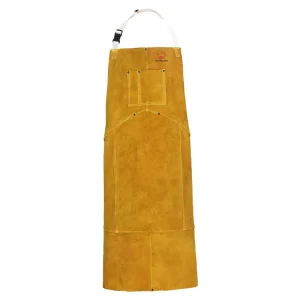
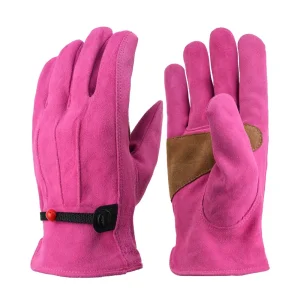
Direct supply from Ming Shun's vertical tanning, composite cutting, and Kevlar® stitching workshops. Fully customizable under OEM & ODM frameworks.
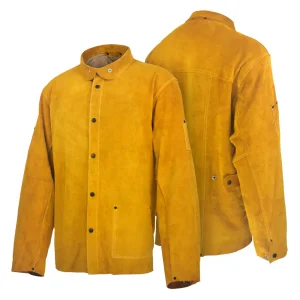
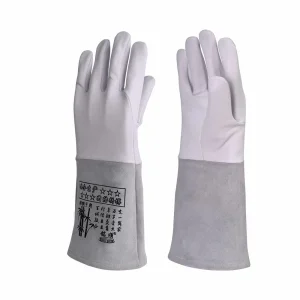
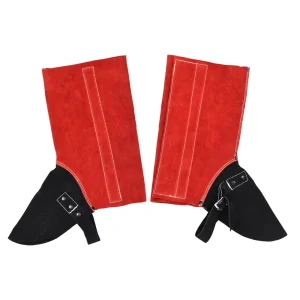
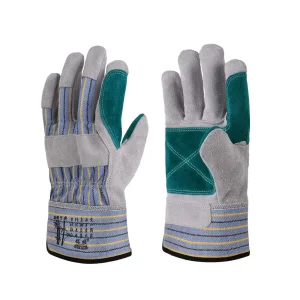
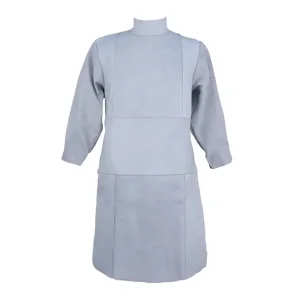
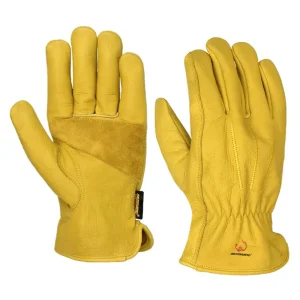
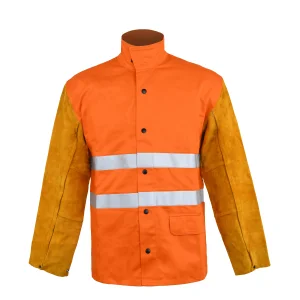
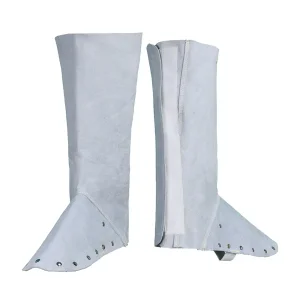
An in-depth metallurgical and polymer analysis of electrical worker hand protection under IEC 60903, ASTM D120, and NFPA 70E compliance standards.
Electrician protective gloves rely on high-purity natural latex or synthetic elastomer dipped under cleanroom micro-dispersion. Dielectric strength ratings demand pinhole-free zero tolerance up to Class 4 (36,000V AC working voltage), tested with 40kV AC proof voltage immersion.
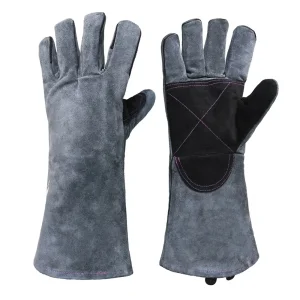
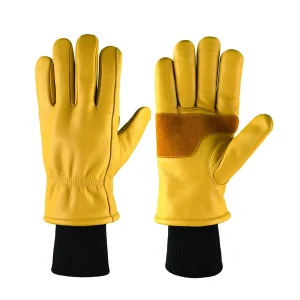
Rubber insulating gloves possess minimal cut, puncture, and abrasion resistance. As mandated by ASTM F696 and EN 388, high-tensile goatskin or grain cowhide leather covers protect the inner insulating barrier from metal shavings, slag spatter, and sharp utility wire strands.
Arc incidents generate temperatures exceeding 19,000°C. Advanced hybrid electrical gloves integrate inherently flame-resistant aramid seams, non-melting leather shells, and nomex liners that achieve Arc Thermal Performance Value (ATPV) exceeding 40 cal/cm² (NFPA 70E PPE Category 4).
| Voltage Class | Max Use Voltage (AC RMS) | Proof Test Voltage (AC RMS) | Standard Cuff Length | Protector Minimum Distance | Primary Industrial Application |
|---|---|---|---|---|---|
| Class 00 | 500 V | 2,500 V | 11 in / 280 mm | 0.5 in / 13 mm | EV Maintenance, Low-Voltage Switchgear |
| Class 0 | 1,000 V | 5,000 V | 11 - 14 in / 280 - 360 mm | 0.5 in / 13 mm | Industrial Automation, Building Distribution |
| Class 1 | 7,500 V | 10,000 V | 14 in / 360 mm | 1.0 in / 25 mm | Solar Farm Inverters, Utility Substations |
| Class 2 | 17,000 V | 20,000 V | 14 - 16 in / 360 - 410 mm | 2.0 in / 51 mm | Overhead Line Distribution, Rail Power |
| Class 3 | 26,500 V | 30,000 V | 14 - 18 in / 360 - 460 mm | 3.0 in / 76 mm | Heavy Utility Feeder Cabling, Wind Turbines |
| Class 4 | 36,000 V | 40,000 V | 16 - 18 in / 410 - 460 mm | 4.0 in / 102 mm | Primary Grid Transmission, High-Voltage Pylons |
How Guangdong Ming Shun Labour Protective Products Co., Ltd. eliminates supply disruption through end-to-end leather tanning, composite dipping, and lean automation.
Unlike assembly-only contractors, Ming Shun operates in-house hide grading, de-greasing, mineral tanning, and fire-retardant dyeing in Gaozhou, stabilizing chemical levels, tensile strength, and tactile hand-feel.
CNC multi-layer digital cutters eliminate blade drag and dimensional inconsistencies across finger gussets, wing-thumbs, and gauntlet cuffs, achieving tolerances within ±0.2mm for tight leather protector fittings.
Every batch of electrical protective gloves and matched protectors receives a laser-etched tracking QR code linking hide origin, tensile test reports, and seam integrity logs for complete client traceability.
With 1,000+ experienced craftsmen and semi-automated sewing cells, Ming Shun produces over 500,000 pairs monthly, keeping standard order lead times locked at approximately 45 days despite global shipping volatility.
Addressing the exact procurement specifications of electric utilities, renewable EPCs, defense sectors, and automated gigafactories.
For lineworkers handling high-tension energized feeds, glove systems demand Class 2 to Class 4 dielectric core protection reinforced by 12-inch bell-cuff split cowhide protectors with Kevlar® thread stitching to resist transformer oil, ozone cracking, and abrasive pole hardware.
800V DC electric drivetrains require Class 0/00 ergonomic gloves with enhanced fingertip sensitivity. Ming Shun supplies supple grain goatskin outer protectors engineered with silicone micro-dotting or moisture-resistant oil tanning for battery pack harness termination.
Direct exposure to open weather, UV radiation, and high DC busbar arrays requires dielectric systems with severe UV degradation barriers. Reinforced leather gauntlets prevent sharp module frame cuts during inverter stringing and high-altitude turbine nacelle maintenance.
Ming Shun's R&D engineering division is actively piloting next-era materials to solve the historic trade-off between insulation thickness, weight, and worker dexterity.
Molecular dispersion of graphene nanosheets into synthetic rubber matrices boosts mechanical puncture resistance by 40% while preserving ultra-thin wall diameter, enabling lighter, more pliable Class 0 and Class 1 insulation.
Embedding vulcanized, passive RFID microchips into protector gauntlets allows utility warehouse scanners to verify electrical test recertification dates, user logs, and operating life thresholds instantaneously before field deployment.
Transitioning heavy-duty leather protectors to metal-free vegetable tanning processes reduces total effluent load by 65%, meeting stringent EU REACH and carbon-neutral procurement mandates for Tier-1 corporate sustainability scores.
Streamlined certification pathways and transparent third-party testing for North American, European, and Asia-Pacific importers.
Every phase of pattern nesting, sewing tensioning, and leather thickness grading is governed by standard operating procedures under our ISO 9001:2015 audited facility, minimizing defect ratios below 0.05% across export container shipments.
We work in collaboration with recognized test institutes (SGS, TÜV, CTC, SATRA) to confirm EN 388, EN ISO 11611, EN 12477, and ANSI/ISEA 105 cut/abrasion metrics with batch-specific documentation issued prior to bill of lading releases.
Avoid communication friction. Our dedicated overseas trade department comprises fluent technical English sales coordinators and on-site pattern engineers who review client tech-packs, CAD cut-sheets, and packaging proofs in real time.
Crucial commercial, technical, and regulatory clarity for global supply directors, corporate safety officers, and private-label distributors.
Dielectric rubber insulating gloves provide electrical barrier protection according to ASTM D120 or IEC 60903 standards. However, rubber is vulnerable to physical cuts, punctures from sharp wire, and abrasion. Leather protector gloves (manufactured to ASTM F696 standards from grain goatskin or cow split) are worn strictly OVER the rubber glove to defend the elastomer from mechanical compromise without impeding flexibility.
Because Ming Shun controls the raw hide selection and tanning stages in-house in Gaozhou, our leather technicians calibrate split-bench precision bandknives to micrometer accuracy (±0.05mm). We grade hides for consistency, eliminating thin belly spots and stiff shoulder zones before pieces move to automated digital cutting beds.
Yes. OEM clients regularly specify custom cuff lengths (from 10" to 18" straight, bell, or contour cuffs), dielectric nylon cinch-straps, non-conductive plastic ladder-locks, Kevlar® 4-ply stitching, dual-tone leather hi-vis contrast panels, and debossed private label branding on the cuff face.
Physical prototypes developed from tech-packs or physical reference samples typically take 7 to 10 working days. Following signed prototype approval, production across our 1,000+ employee workshop proceeds at a standard pace of approximately 45 days for full 20ft/40ft export container batches.
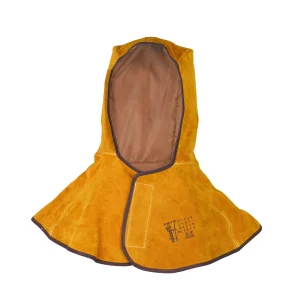
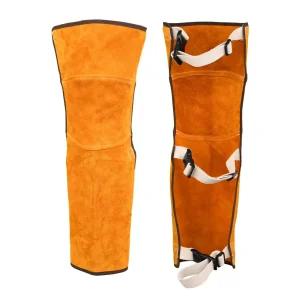
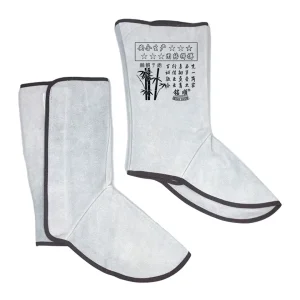
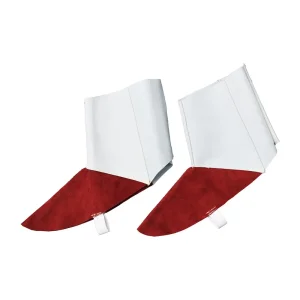
Explore our extended series of protective cowhide hoods, split leather spats, full-grain driver gloves, and cold-climate work mittens manufactured to ISO criteria.