Pioneering high-durability thermal safety apparel, multi-hazard flame-resistant coveralls, and precision leather protective gear for global industrial enterprises.
Engineered for high-amperage environments, severe spatter mitigation, and ergonomics across demanding global worksites.
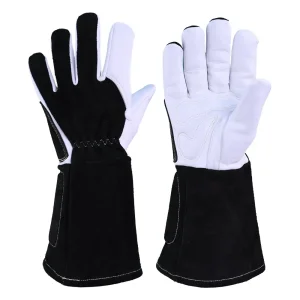
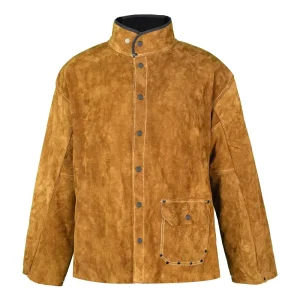
A technical examination into thermal hazard containment, ergonomic kinetic freedom, and integrated OEM manufacturing governance.
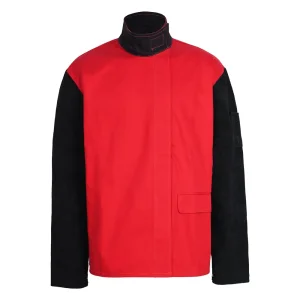
Modern automated and manual joining processes operate at elevated heat zones where secondary sparks exceed 1,400°C. Our OEM welding coveralls combine treated 9 oz and 7 oz FR cotton shells with localized Class 2 split cowhide strategically situated along the forearms, upper chest, and legs. This hybrid configuration deflects slag ricochet while lowering total physiological fatigue.
Seam rupture represents over 68% of premature protective garment retirements in heavy metal fabrication. By executing structural lockstitches using 100% DuPont™ Kevlar® or spun meta-aramid threads with triple-folded welt seams, our coverall systems resist direct thermal degradation, high-stress abrasion, and shear mechanical stresses generated during overhead positioning.
Heat stress is a leading contributor to industrial workplace incidents. Ming Shun coverall chassis integrate passive back gussets, underarm ventilation eyelets, and bi-swing articulated shoulders. Technicians gain complete kinetic liberty during continuous GTAW, GMAW, and SMAW executions without pulling the garment hem or exposing the pelvic apex to spark intrusion.
Formulated to satisfy stringent safety standards in extreme energy, transport, and structural production plants.
Naval shipyards require full-body protection against high-amperage flux-cored arc welding (FCAW) and aggressive carbon-arc gouging within confined bilges and double hulls. Our heavy split-cowhide welding bibs and flame-resistant one-piece coveralls block direct molten pooling while repelling oil permeation and marine saline corrosion.
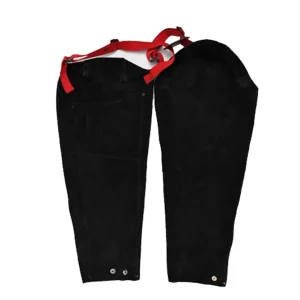
Stovepipe welding pipelines in sub-zero or arid expanses forces operators into prone and kneeling postures on sharp gravel. Reinforced knees, heavy-gauge leather spats, and 30-inch cowhide jackets deliver thermal boundary management alongside abrasion resistance meeting Class 2 requirements under real-world abrasive loads.
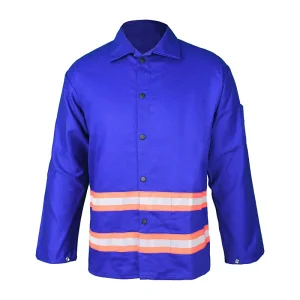
Ironworkers operating at elevation balance dynamic fall-protection harnesses with overhead welding arcs. Ming Shun coveralls utilize flat-profile snaps, internal harness routing ports, and high-visibility retroreflective strips (EN ISO 20471 compliance) to protect technicians across high-risk civil infrastructure developments.
Meeting and surpassing continental safety certifications to guarantee legal compliance for distribution partners.
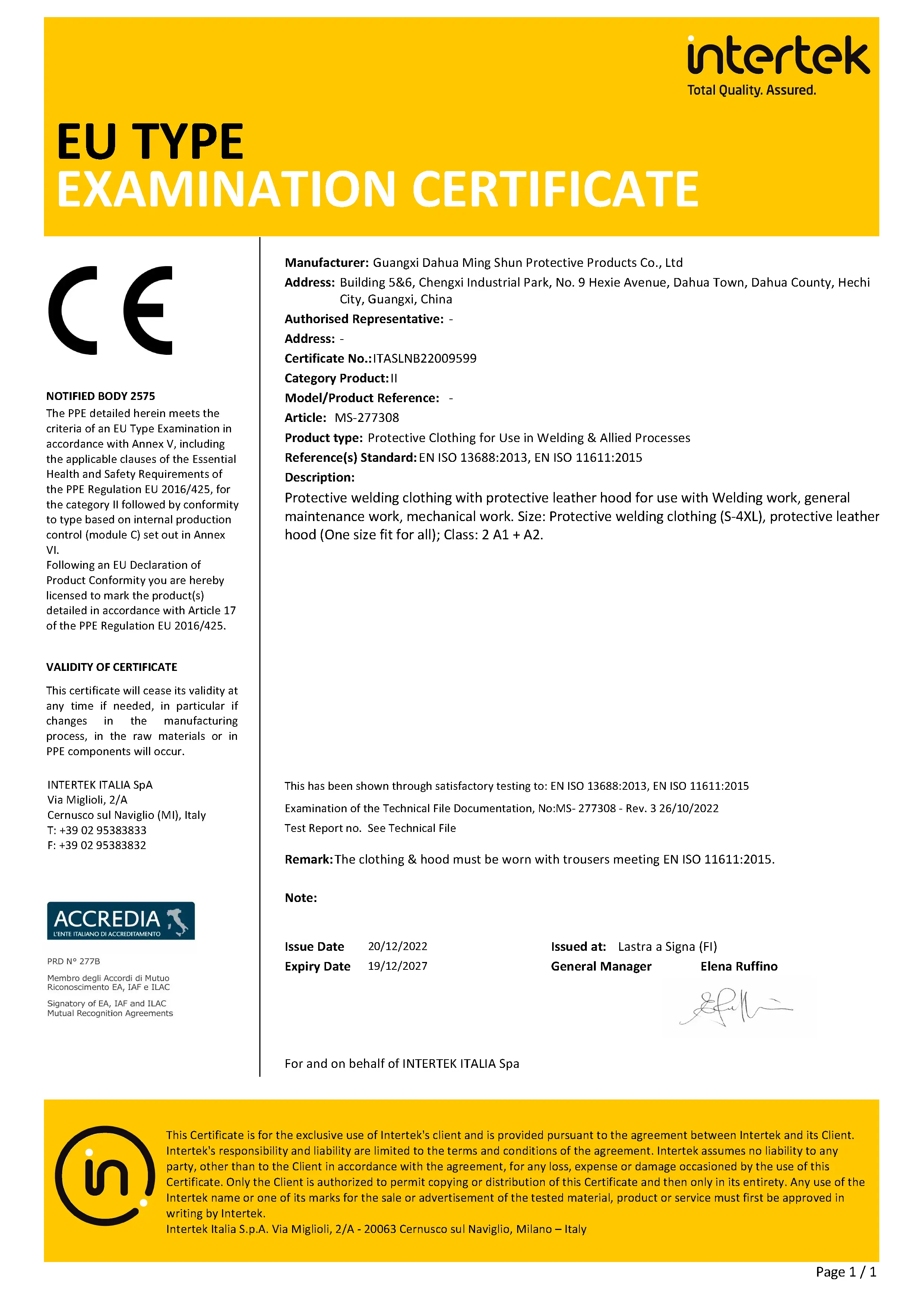
Mandatory for the European single market, testing flame spread, impact of molten spatter drops, and radiant heat transfer. Our certified Class 2 coveralls endure over 25 drops of liquid metal without internal probe elevation exceeding 40K.
Guarantees flash-fire resilience for North American oil, gas, and utility procurement. Tested via vertical flammability procedures where afterflame times remain strictly beneath 2 seconds, eliminating post-exposure thermal melting or fiber dripping.
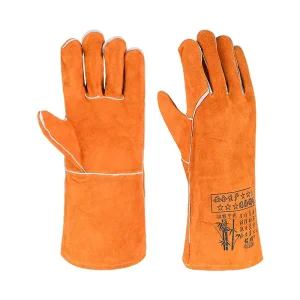
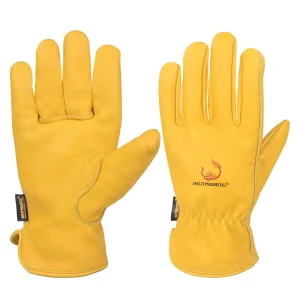
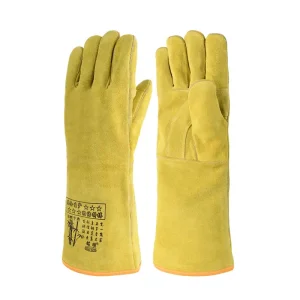
Complete harmonized synergy between garment cuffs and our Type A & B welding gloves. Validates contact heat protection up to 100°C alongside high tear and puncture ratings across leather seam interfaces.
Investing in advanced materials, ecological chemistry, and digital production transparency.
Transitioning to non-toxic, bio-based water-and-oil-repellent barriers without compromising the self-extinguishing fiber properties of our heavy 9 oz FR industrial cotton fabrics.
Incorporating micro-laminations in critical chest and thigh zones, reflecting up to 90% of intense radiant heat generated during high-amperage sub-arc automated production lines.
Field-testing integrated sensor arrays inside underarm garment matrices to alert industrial facility safety coordinators of heat-stroke indices prior to cognitive impairment.
Deploying vegetable-synthetic hybrid tanning agents that decrease chromium effluent in tannery outflows while yielding a softer, more flame-resilient split cowhide hide.
Modular safety configurations: heavy cowhide bibs, TIG gloves, flame-resistant hoods, and aprons engineered to integrate seamlessly into your brand catalog.
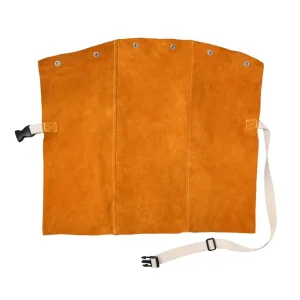
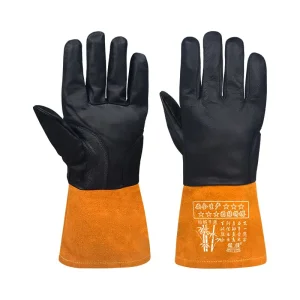
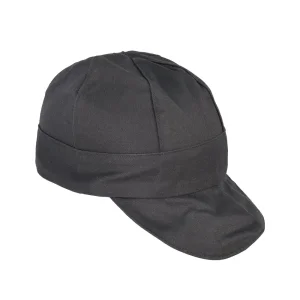
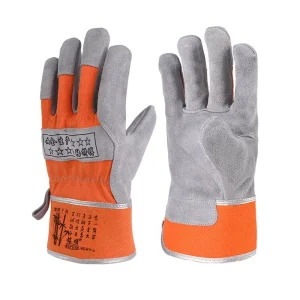
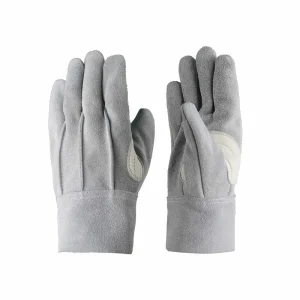
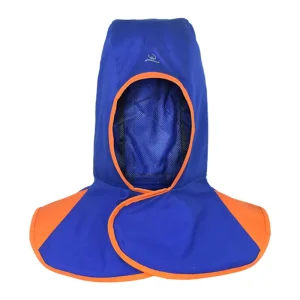
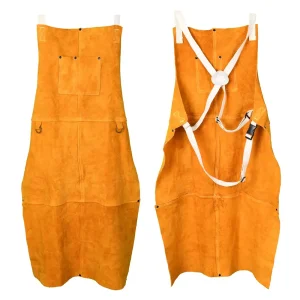
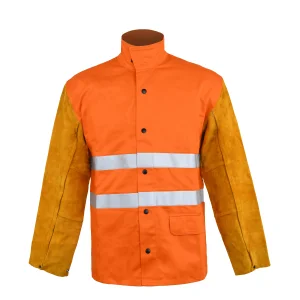
From raw hide beamhouse processing to custom tech pack development, laser-cut prototyping, and container freight logistics.
Unlike simple garment assemblers reliant on third-party leather markets, Ming Shun runs dedicated tannery infrastructure in Gaozhou. This internal mastery guarantees uniform tensile thickness (1.1mm - 1.4mm), uniform chrome fixation, stable dye absorption across production lots, and predictable hand-feel from primary samples to multi-container replenishment.
Our rapid-response CAD sampling room translates technical spec sheets into physical prototypes within 5 to 7 days. Brand-specific packaging, custom woven wash care emblems, heat-transferred corporate crests, debossed leather patches, and UPC barcode integration are configured prior to containerized dispatch.
Every welding coverall chassis undergoes multi-stage inspections. We monitor raw fabric tear resistance, seam thread tensile limits, snap closure pull-force thresholds, and dimension stability after high-temperature industrial laundry cycles, preventing costly international product returns.
Essential guidance for procurement directors, PPE distributors, and technical supply chain teams.
Full-grain or split leather coveralls offer superior protection against molten splash and puncture hazards, making them ideal for heavy gouging, foundry tapping, and continuous out-of-position stick welding. However, they carry higher weight and retain body heat. Hybrid coveralls incorporate 9 oz or 7 oz treated FR cotton across non-critical flex points while reinforcing high-risk impact zones (such as chest, thighs, and sleeves) with cowhide. This strikes a balance between Class 2 spatter resistance and ergonomic mobility for all-day manufacturing shifts.
Our baseline factory MOQ for custom private-label welding coveralls begins at 300 to 500 units per colorway, depending on whether specialized dyed fabric weights or bespoke leather paneling are required. Glove lines allow higher batch volumes, scaling upward to 3,000 pairs. For enterprise accounts developing multi-component product catalogs, we consolidate shipments across jackets, gloves, spats, and aprons within a single 20-foot or 40-foot HQ container.
Inconsistent leather grading is a common pitfall with trading firms reliant on fragmented subcontractors. Because our primary manufacturing facilities in Gaozhou process raw split hides directly from our vetted supply pipeline, we regulate the entire mechanical splitting, vegetable/chrome tanning, fatliquoring, and color dyeing process in-house. Thickness gauges, surface hydration ratios, and pH levels are metered to maintain uniform hand-feel and abrasion performance across reorders.
Yes. We routinely coordinate with accredited independent certification bodies including SATRA, TÜV Rheinland, and CTC. We provide complete CE Module B Type-Examination certificates, Declaration of Conformity (DoC) documentation, and certified laboratory test reports covering EN ISO 11611:2015, EN ISO 11612, EN 388:2016, and EN 12477:2001. Simply inform our engineering department of your territory requirements prior to tech-pack sign-off.
Pre-production sampling and pattern approvals typically conclude within 7 to 10 days. Upon receipt of bulk purchase order confirmation and deposit clearance, standard bulk manufacturing timelines span 35 to 45 days. Rapid replenishment pathways exist for standardized patterns utilizing stock-program FR cottons and split cowhide reserves maintained in our Gaozhou industrial logistics warehouse.