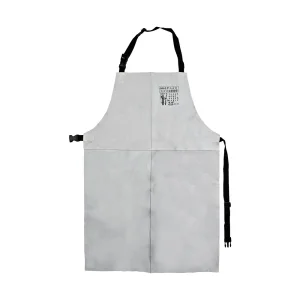
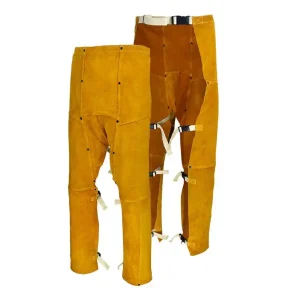
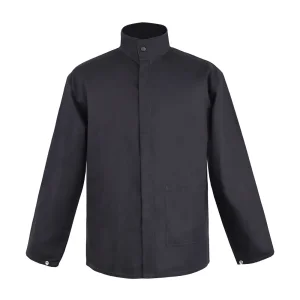
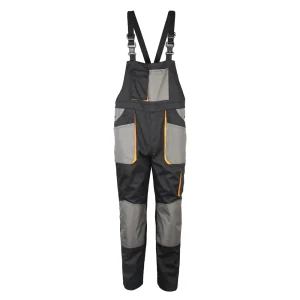
Heavy Spatter
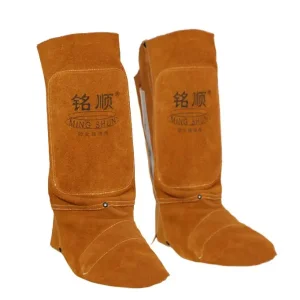
Model: MS-361
View Product Specs
Direct-from-factory production lines featuring in-house leather tanning, Kevlar® lock-stitching, and severe spatter mitigation profiles.
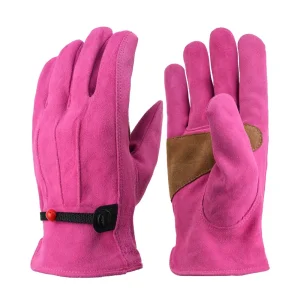
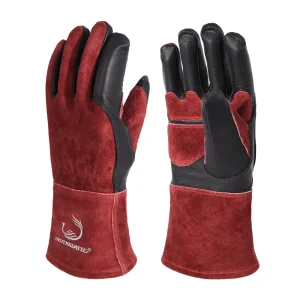
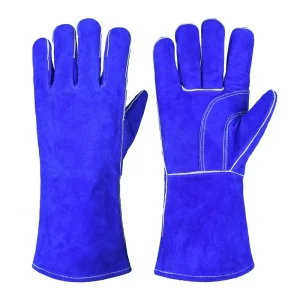
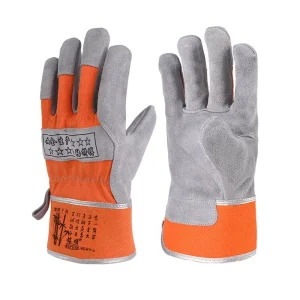
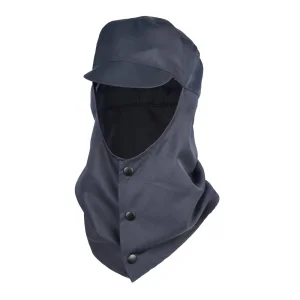
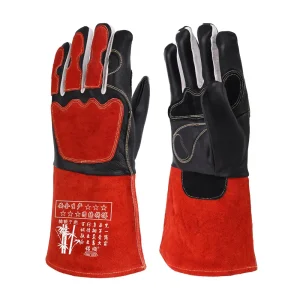
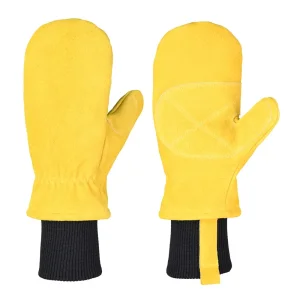
Contemporary industrial hot work demands a fundamental transition from heavy, stiff split-cowhide armor to hybrid thermodynamic barrier systems engineered for heat dissipation, kinetic fluidity, and multi-hazard arc mitigation.
Traditional 100% heavy split cowhide gear, while impervious to continuous slag, imposes severe metabolic heat fatigue on welders, causing thermal exhaustion and diminished compliance. Modern engineering marries high-wear zones (forearms, chest, thighs) with Grade-A side split cowhide (1.1mm - 1.3mm), integrated with 9 oz or 12 oz flame-resistant cotton backings. This hybrid construction cuts total garment weight by up to 38% while sustaining full EN ISO 11611 Class 2 spatter resistance.
Arc welding processes generate localized radiative temperatures in excess of 5,500°C, accompanied by molten spatter droplets expelled at velocities up to 12 m/s. Custom protective clothing must combine high radiant reflectance with low thermal conductivity. Ming Shun utilizes chromium-stabilized fibrous matrices and pyrovatex-treated cellulose textiles that instantaneously carbonize without melting, self-extinguishing in under 1.5 seconds under ISO 15025 test parameters.
92% of field failures in welding workwear stem not from substrate puncture, but from thread burn-through along the armholes, inseams, and glove gussets. Our automated production line utilizes 100% DuPont™ Kevlar® 3-ply and 4-ply continuous filament stitching. With a thermal decomposition threshold exceeding 427°C and tensile retention triple that of treated polyester, seam separation under heavy mechanical and thermal stress is completely eliminated.
How tier-1 EPC contractors, shipyard operators, rail rolling-stock manufacturers, and energy infrastructure consortiums optimize their Total Cost of Ownership (TCO) through precision custom apparel specifications.
| Industrial Sector | Predominant Welding Process | Critical Risk Exposure | Recommended Garment Configuration | Target Regulatory Benchmark |
|---|---|---|---|---|
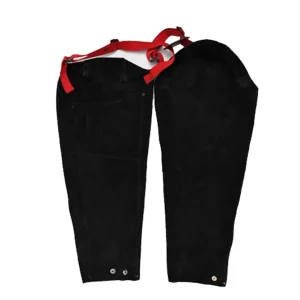
| Heavy Maritime & Offshore | FCAW, Sub-Arc, Carbon Arc Gouging | Heavy molten droplets, restricted-space heat entrapment | Split Cowhide Jackets (MS-393) + Reinforced Spats (MS-361) | EN ISO 11611 Class 2, Module D Audited |
| Energy Pipeline & Petrochem | SMAW (Cellulosic downhill), GTAW root | Flash fire, weather variance, overhead weld slag | 9 oz FR Cotton Coverall with Reflective Tape (MS-1215G) | NFPA 2112, ASTM F1506, EN ISO 11612 |
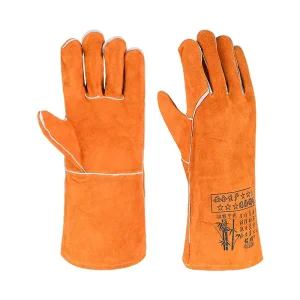
| Automotive Body & Tooling | GMAW / MIG, Resistance Spot, Laser | Fine spatter, high repetitive dexterity demand | Goatskin Precision MIG Gloves (MS-829 / MS-832) | EN 388 (4122X), EN 12477 Type B |
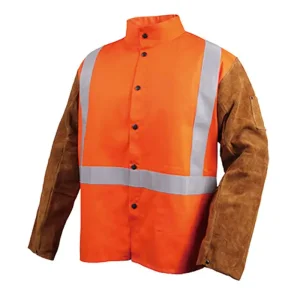
| Structural Civil Engineering | Heavy Flux-Core, Multi-pass GMAW | Wind-blown sparks, mechanical abrasion, high traffic | Hi-Vis Hybrid FR Cotton & Cowhide Jacket (MS-324) | ANSI/ISEA 107 Class 3, EN ISO 20471 |
| Aerospace Exotic Alloys | Micro-TIG, Plasma Arc, Orbital GTAW | Extreme dexterity requirement, radiant IR skin burning | Ultra-Supple Grain Goatskin TIG Gloves (MS-862) | EN 12477 Type B, ISO 13997 Cut Level B |
Procuring low-spec commoditized welding clothing results in catastrophic seam blowouts, leather premature embrittlement, and unbudgeted replacement cycles every 3 to 4 weeks. Ming Shun's reinforced welted stitching, grade-A split hides, and high-tenacity thread double garment service life up to 16 to 24 weeks under relentless heavy shop duty—lowering annualized PPE spend by 41% across high-headcount operations.
With an on-site workforce of over 1,000 operators and integrated cutting-to-shipping facilities in Gaozhou, Guangdong, Ming Shun eliminates the sub-tier contracting bottlenecks plaguing typical export intermediaries. We fulfill 40-foot HQ container deliveries on a stable 45-day lead-time cycle, ensuring seamless ERP inventory buffers for global distribution networks across North America, Europe, and Australia.
From raw CAD patterns and technical packages to custom embossing, high-visibility piping placements, and barcoded retail packaging, our engineering division adapts every garment detail. We match specific national ergonomic profiles, accommodating diverse body sizing systems (EU EN 13402, US ANSI, and JP JIS) to guarantee uncompromised ergonomic comfort and safety on global job sites.
From raw hide classification to automated laser layout and final dielectric stress testing—our Gaozhou manufacturing complex guarantees unwavering lot-to-lot consistency.
Hides undergo ultrasonic density testing and surface inspection. Only dense, scar-free cowhide and goatskin bellies are cleared for thermal protective applications.
Proprietary chromium tanning ensures heat shrinkage resistance up to 180°C. In-house dye lots guarantee exact Pantone matching across repeat OEM orders without fading.
Precision die-cutting preserves the structural grain axis of each hide panel. Uniform edge beveling avoids hot spots and eliminates premature leather fraying.
Dedicated sewing cells assemble ergonomic jackets, sleeves, and gloves utilizing dual-needle lockstitch machines operating 100% genuine para-aramid threading.
Snap fasteners and rivets feature insulated internal backing flaps. This critical engineering detail ensures zero arc conductivity from outer metal parts to inner workwear.
Pre-curved gunn-cut glove patterning and contoured jacket elbow darts are steam-pressed onto 3D anatomical lasts to eliminate bunching and reduce worker grip fatigue.
Every single batch is tested for seam tear strength, flame contact persistence (ISO 15025), dimensional tolerances (±3mm), and pH balance (>3.5 to prevent skin irritation).
Apparel is desiccated, poly-bagged, and packed in reinforced double-wall corrugated master cartons designed to withstand long ocean transits without moisture degradation.
International PPE regulations require exhaustive third-party laboratory verification. Ming Shun guarantees comprehensive certification compliance across all primary industrial trading jurisdictions.
Our core protective welding line is rigorously verified by European Notified Bodies for Class 1 (light spatter, manual TIG/MIG) and Class 2 (heavy spatter, MMAW, gouging, flame cutting). Full documentation portfolios include Module B EU Type Examination Certificates and Module D Ongoing Quality Surveillance, meeting Regulation (EU) 2016/425.
Engineered to comply fully with OSHA 1910.252 hot work PPE standards. FR coveralls and cotton textiles meet ASTM F1506 and NFPA 2112 flame spread standards, with Arc Thermal Performance Values (ATPV) rated up to Category 2 (HRC 2, >8 cal/cm²). Glove offerings conform stringently to ANSI/ISEA 105 cut, abrasion, and puncture classifications.
We satisfy tier-1 vendor audits through full BSCI, SEDEX SMETA 4-pillar, and ISO 9001:2015 registration. Our closed-loop wastewater mitigation systems in Gaozhou adhere strictly to national ecological guidelines, providing multinational clients with an ethically clean, audit-ready global supply chain.
Ming Shun R&D continues to push the boundaries of materials science, active thermal management, and sustainable manufacturing practices.
Currently entering Phase 2 testing, our proprietary silica-fluoro nano-coatings reduce surface friction coefficients on split cowhide and FR cotton. This treatment prevents liquid slag globules from sticking to creases, allowing spatter at 1,400°C to roll harmlessly off without charring or thermal degradation.
Integrating microscopic graphene hexagonal networks within jacket shoulder yokes and glove backs. Graphene's exceptional thermal conductivity (up to 5,000 W/m·K) rapidly spreads localized hot-spot energy across a wide garment area, preventing concentrated burn injuries during continuous high-amperage robotic and manual welding.
Transitioning toward 100% chrome-free vegetable and aldehyde-based tanning formulas derived from agricultural olive leaves and mimosa bark. This initiative eliminates heavy-metal waste and creates fully biodegradable split cowhide cut-offs without compromising thermodynamic flame resistance.
Direct technical answers addressing minimum order volumes, material specs, audit authorizations, and custom pattern development.
Hybrid jackets strategically position Grade-A split cowhide across high-exposure zones (chest and sleeves) while utilizing breathable 9 oz or 12 oz FR cotton across the torso back. This drops overall garment weight by ~35%, significantly cuts worker thermal strain, improves range of motion, and cuts unit costs while retaining full EN ISO 11611 Class 2 front protection.
Class 1 protects against less hazardous welding techniques and situations (e.g., TIG, micro-plasma, bench work with small spatter drops, radiant heat impact ≥15s to rise by 24°C). Class 2 protects against high-hazard welding (e.g., MMAW, MAG, carbon-arc gouging, plasma cutting with heavy droplets ≥25 drops, radiant heat impact ≥20s). Ming Shun engineers both classes to fit exact job hazards.
For established standard catalog styles, our baseline MOQ is 500 units per garment model or 1,200 pairs for gloves. Fully custom OEM/ODM development (custom sizing blocks, unique brand embroidery, specialized hardware) requires an initial run of 1,000 garments. Bulk container orders reliably dispatch in 40–50 days following sample approvals.
Because Ming Shun operates dedicated in-house tanning, retanning, and dye-house drums in Gaozhou, we do not buy random odd lots from open markets. Every hide batch is machine-measured for thickness (±0.1mm tolerance), color-checked using spectrophotometers, and laboratory tested for tear strength, tensile modulus, and pH before cutting begins.
Yes. We regularly supply petrochemical utilities with multi-norm protective garments engineered to meet EN ISO 11611 (Welding), EN ISO 11612 (Heat & Flame), IEC 61482-2 (Electric Arc Box Test Class 1 & 2), and ASTM F1506 / NFPA 70E (with ATPV ratings exceeding 12 cal/cm²), complete with accredited test reports.
Send your technical drawing, dimension specifications, target fabric weight, and logo artwork to our export engineering desk. Our pattern studio cuts counter-samples within 5 to 7 business days, accompanied by full material spec sheets and formal quotes for your review and laboratory verification.
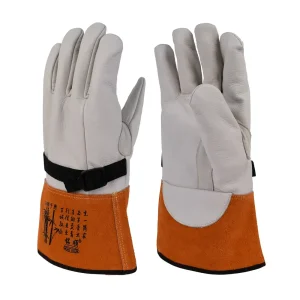
Heavy-duty cowhide aprons, articulated split chaps, high-visibility flame-resistant jackets, and electrical protective gear engineered for extreme environments.