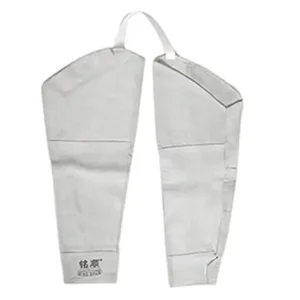
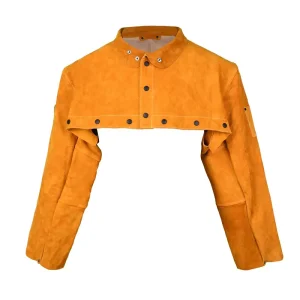
Explore our certified thermal protective handwear, modular leather cape sleeves, aluminized back pads, and FR safety garments designed for zero-burnout industrial hot work.
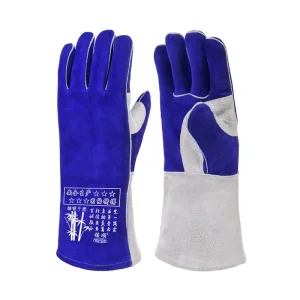
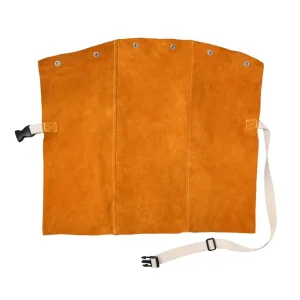
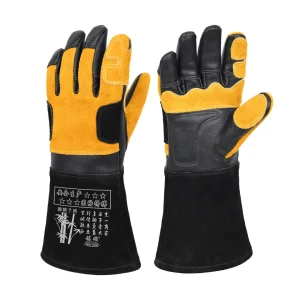
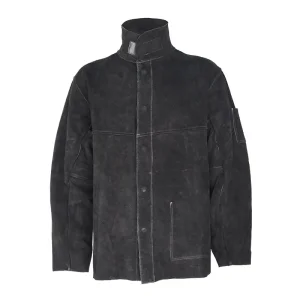
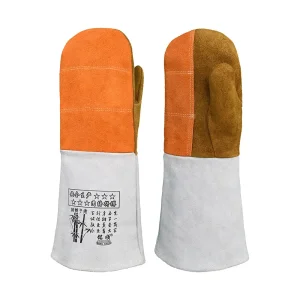
A rigorous industrial perspective on why generic leather work gloves catastrophically fail in high-duty cycle GMAW/FCAW manufacturing cells.
In high-throughput fabrication sectors—such as automotive chassis assembly, structural shipbuilding, and pressure vessel manufacturing—Gas Metal Arc Welding (GMAW / MIG) and Flux-Cored Arc Welding (FCAW) subject operators to a uniquely aggressive spectrum of hazards. Unlike Gas Tungsten Arc Welding (TIG), which demands delicate tactile dexterity under minimal spatter conditions, or Shielded Metal Arc Welding (SMAW / Stick), characterized by massive intermittent slag release, MIG welding combines continuous wire feed speeds (up to 700 IPM), intense electrical arcs emitting up to 350 Amperes, and high-velocity globule splatter exceeding 1,200°C.
From an industrial engineering standpoint, a standard work glove undergoes rapid thermal breakdown. The extreme infrared (IR) and ultraviolet (UV) radiation emitted by the shielding gas ionization (typically Ar/CO2 blends) rapidly desiccates standard chrome-tanned leather, crystallizing natural collagen bundles, precipitating shrinkage, and causing premature mechanical seam ruptures. Simultaneously, repetitive trigger manipulation under thermal stress induces severe carpal tunnel compression and flexor tendon fatigue.
As an authoritative custom welding MIG gloves manufacturer and direct factory supplier with over 25 years of tannery-to-tailoring integration in Gaozhou, Guangdong, Ming Shun engineers hand protection systems engineered specifically around thermal flux dissipation, anatomical pre-curving, and multi-tier seam welt shielding. Our products are engineered not merely as sacrificial barrier PPE, but as precision operational equipment designed to lower Total Cost of Ownership (TCO) and eliminate arc-time injuries.
MIG arc temperatures easily reach 6,000°C to 8,000°C at the core. Our custom engineered gloves utilize multi-laminate back-of-hand construction featuring aluminized heat-deflecting foils, aerogel felts, and spun FR fleece that reduce internal heat transfer by up to 68% over standard split cowhide.
Continuous gun-trigger holding leads to hand cramping. By utilizing proprietary 3D curved Keystone thumb geometries and unlined grain goatskin/cowhide palm cuts, our gloves deliver fluid trigger manipulation with zero bulk-induced resistance.
Direct liquid metal droplets incinerate standard polyester or nylon threading instantly. Every seam across our MIG portfolio is double-locked with 100% genuine DuPont™ Kevlar® continuous filament thread, recessed behind full-grain cowhide welts.
Our vertical integration begins at the raw fiber level, pairing advanced hide grading with patented synthetic insulating composites.
Harvested from dense shoulder regions, our split cowhide undergoes proprietary chrome-free mineral re-tanning. It retains high puncture resistance (>100N) while remaining pliant across cold and high-humidity workshop environments without stiffening.
For high-dexterity MIG pulse welding, we bond premium top-grain goatskin palms with split cowhide gauntlets. High natural lanolin content yields unmatched tensile ductility and abrasion resistance, ensuring prolonged wire feed tactile feedback.
Integrated back-of-hand radiant shields reflect 95% of radiant heat waves. Combined with lightweight needle-punched Kevlar® fleece, internal glove temperatures remain below 48°C even during sustained 300A continuous bead depositions.
Every stress joint features 4-ply aramid thread that does not burn, melt, or drip up to 450°C. Fully enclosed leather piping prevents molten globules from cutting through the structural binding stitches under intense duty cycles.
Discover how direct-from-source Gaozhou manufacturing delivers uncompromised consistency, plannable lead times, and global distributor margin advantages.
In an era plagued by supply chain fragility, volatile freight rates, and unpredictability in basic raw hide supplies, Guangdong Ming Shun Labour Protective Products Co., Ltd. provides global B2B procurement partners with unparalleled reliability. Situated in the heart of Gaozhou—the globally recognized epicenter of leather safety manufacturing—our vertically integrated manufacturing ecosystem eliminates middleman markups and insulates clients against third-party disruptions.
Unlike standard assembly workshops that source pre-tanned, inconsistent crust leather from scattered vendors, Ming Shun operates an end-to-end production architecture: from raw hide grading, proprietary chemical re-tanning, and automated tension drying, to digital CAD laser cutting, robotic seam welding, and computerized tensile stress validation. This closed-loop setup enables strict lot-by-lot consistency in leather thickness, softness, moisture threshold (<14%), and dye stability across repeat 40ft high-cube container runs.
By shifting from manual clicker presses to multi-axis computer-guided laser and oscillating blade cutters, we eliminate edge fraying and dimensional variations across palm, back, and fourchette components, achieving 0.1mm piece-to-piece repeatability.
Quality assurance is not deferred to the packaging line. Inspections occur after hide splitting, post-tanning pH neutralization, individual pattern stitching, and seam bursting pressure tests, completely preventing sub-spec batches from progressing.
Our dedicated R&D sample room generates fully engineered tech-pack prototypes within 3 to 7 working days. Once confirmed, high-speed dedicated production lines ramp up to deliver bulk consignments of 500,000+ pairs within an average 45-day window.
Matching specific metallurgical welding environments to targeted glove architectures, liners, and compliance thresholds.
Industrial health and safety officers (EHS) and supply chain executives require empirical specifications rather than generic catalog descriptions. MIG welding operations vary dramatically across industrial sectors: an automotive robotic maintenance crew requires ultra-flexible, oil-resistant goatskin MIG gear, whereas a heavy shipyard hull fabricator running 1.6mm flux-core wire requires heavily reinforced, aluminized-back cowhide gauntlets that resist continuous molten puddle exposure.
| Industrial Sector | Operational Environment | Primary Hazard Profile | Recommended Glove Architecture | Key Standard Ratings |
|---|---|---|---|---|
| Automotive & Commercial Vehicles | Robotic cells, manual touch-up, sheet metal GMAW, stamping/fixture welding. | Moderate heat, constant tool handling, sharp stampings, pinch points. | Goatskin Palm / Split Cow Back: Unlined palm for dexterity, Kevlar® stitching, elasticated snug wrist. | EN 12477 Type B EN 388: 3122X |
| Shipbuilding & Marine Heavy Fab | Thick plate FCAW, overhead positional welding, continuous multi-pass seams. | Intense radiant heat, heavy spatter rain, slag entrapment, cold drafts. | Heavy Split Cowhide + Aluminized Hand Shield: Wool/Kevlar® fleece lining, reinforced palm strap, 15cm cuff. | EN 12477 Type A EN 407: 413344 |
| Oil, Gas & Pressure Pipelines | Cross-country pipeline tie-ins, field spooling, all-weather conditions. | High-voltage arcs, wind-blown sparks, moisture penetration, severe abrasion. | Water-Repellent Top Cowhide: Hydrophobic re-tanned grain leather, aramid needlefelt liner, Keystone thumb. | EN 12477 Type A ANSI/ISEA Cut A3 |
| Structural Steel & Crane Framing | High-amperage sub-arc/MIG, girder joints, rigging and steel fitting work. | Rough structural edges, high mechanical tear forces, heavy spatter drops. | Double Palm Cow Split Armor: Reinforced thumb saddle, full cotton drill interior lining, rigid leather safety cuff. | EN 388: 4243X EN 407: 413X4X |
Ensuring complete import compliance across the European Union, North America, United Kingdom, and Asia-Pacific trading zones.
Importing PPE into heavily regulated territories carries substantial risk if compliance documentation fails customs validation or workplace safety audits. Ming Shun guarantees comprehensive certification assurance for every production batch. We work hand-in-glove with premier third-party testing institutions—including SATRA Technology, TÜV Rheinland, SGS, and Intertek—to issue verified Module B/C2/D certification portfolios.
Full CE certification certifying performance for both Type A (higher thermal and mechanical protection for heavy MIG/MMAW) and Type B (elevated flexibility and dexterity for precision pulse GMAW), complete with notified body EU Type-Examination certificates.
Empirical verification across all six thermal tiers: Limited flame spread (A), Contact heat resistance (B: tested up to 350°C for 15+ seconds), Convective heat (C), Radiant heat (D), Small splashes of molten metal (E), and Large molten metal splash volumes (F).
Fully qualified for North American MSHA and OSHA compliance. Rigorous lab screening ensures zero Hexavalent Chromium (Cr VI < 3 mg/kg under ISO 17075), non-detectable restricted azo dyes, and full compliance with EU REACH Regulation (EC) 1907/2006 and California Prop 65.
How Ming Shun is pioneering circular sustainable materials, cobot-synergy ergonomics, and smart sensory monitoring systems.
Transitioning toward 100% organic, aldehyde-free, vegetable-modified synthetic tanning agents. This next-generation process reduces tannery effluent biochemical oxygen demand (BOD) by 60% while matching or exceeding the thermal shrinkage temperature of traditional chrome-tanned hides.
As collaborative welding robots (Cobots) reshape assembly lines, operator duty cycles transition from manual feeding to automated gun positioning, part clamping, and touch-screen pendant teaching. We are deploying hybrid cut-A6 palm interfaces with conductive fingertip arrays for seamless interface control without glove removal.
Embedding ultra-thin, flexible thermocouple matrices and RF alert chips inside the glove backings. These sensory nodes alert operators via haptic pulse feedback when cumulative radiant thermal absorption crosses danger thresholds, eliminating hidden third-degree subcutaneous contact burns.
Comprehensive engineering, customization, and logistics insights for safety gear importers and private-label brand managers.
MIG (GMAW) welding gloves occupy the crucial engineering middle ground between delicate TIG and heavy Stick gloves. TIG gloves utilize ultra-thin, unlined goatskin or deerskin to maximize fingertip touch for feeding thin filler rods under zero-spatter conditions, offering minimal thermal insulation. Stick (SMAW) gloves feature thick, heavy split cowhide with dense fleece linings to resist massive heat and flying slag, sacrificing finger dexterity. In contrast, MIG gloves require medium-to-heavy split cowhide or grain goatskin hybrid palms with lightweight cotton or Kevlar® linings. They must withstand substantial continuous radiant heat and flying spatter while maintaining finger mobility to hold the MIG gun, operate trigger toggles, and change contact tips smoothly.
Standard industrial thread made from polyester, nylon, or cotton melts or burns at temperatures between 150°C and 250°C. In continuous MIG welding, direct molten splatter droplets can exceed 1,000°C upon landing on glove seams. DuPont™ Kevlar® continuous-filament aramid thread resists temperatures up to 450°C without melting, charring, or dripping. Furthermore, Kevlar® thread possesses a tensile strength five times higher than steel on an equal weight basis, preventing glove seams from splitting when exposed to abrasive structural metal plates.
Our typical baseline Minimum Order Quantity for fully custom private-label MIG gloves (custom leather dyes, bespoke cut patterns, branded heat transfers or debossed logos, customized hangtags, and barcode polybags) starts at 1,200 to 2,400 pairs per style. For existing catalog configurations branded with client labeling, smaller evaluation trial orders can be accommodated. Rapid counter-samples are produced and dispatched in 3 to 7 business days. Bulk mass-production containers typically ship within 35 to 45 days following sample sign-off.
We design specific models to satisfy the exact requirements of both European classifications. Type A gloves offer superior thermal protection (higher resistance to contact heat, convective heat, and molten spatter) and higher mechanical tear/puncture resistance, recommended for high-amperage MIG and flux-core operations. Type B gloves feature greater flexibility and dexterity (minimum dexterity Level 4), ideal for low-amperage, precise MIG pulse welding. Every model is certified via independent accredited bodies (e.g., SATRA, TÜV), ensuring valid Module B certification, accompanied by Declarations of Conformity (DoC) and CE/UKCA marking documentation.
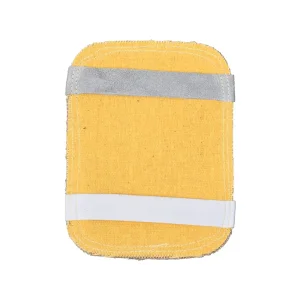
Yes. For heavy multi-pass pipe welding or high-amperage structural GMAW where operators work within inches of heavy weld pools, we engineer custom models with integrated aluminized glass-cloth radiant shields or supply modular clip-on aluminized back-hand pads (such as our MS-106T). These composite shielding layers deflect up to 95% of radiant heat emissions, dramatically reducing internal glove temperature rises and extending glove service life by over 300%.
We provide full retail and distributor-ready private-label packaging programs. Branding options include: deep heated leather debossing / stamping, silk-screen rubber printing, embroidered cuff badges, woven brand tags, color-coded binding tapes for immediate size identification (e.g., Green=S, Brown=M, Red=L, Blue=XL), custom multilingual warning booklets, FSC-certified header cards, individual polybags with bespoke barcode artwork, and heavy-duty 5-ply export master cartons built to withstand intermodal container transit.
Complete head-to-toe hot work safety: explore specialized rod holders, spats, flame-resistant workwear, and high-dexterity hand protection.
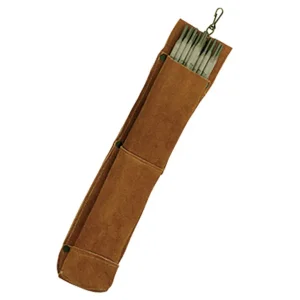
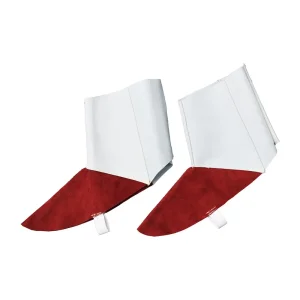
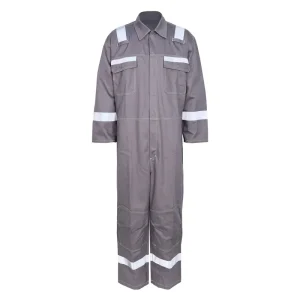
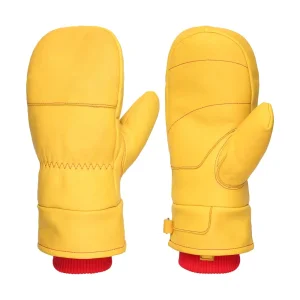
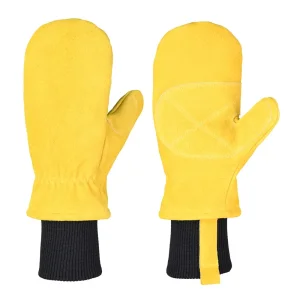
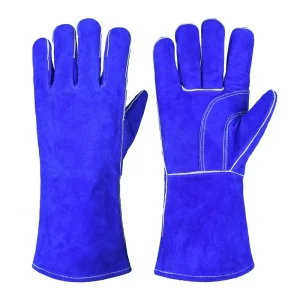
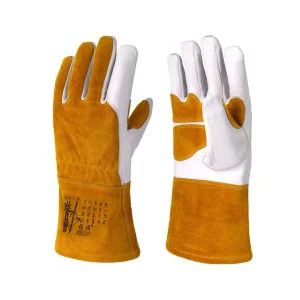
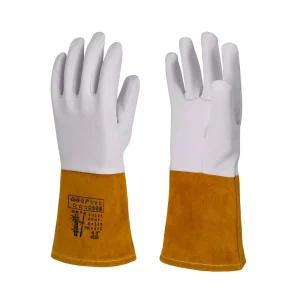
Direct factory supply, custom pattern engineering, certified test reports, and uncompromised Gaozhou tannery quality. Contact our English-speaking engineering sales directors today.

