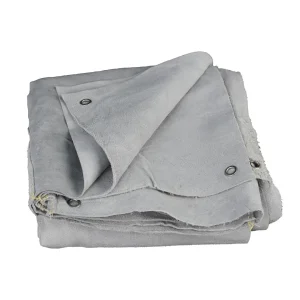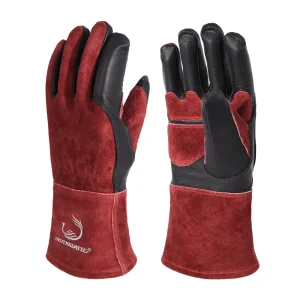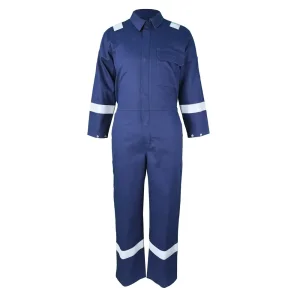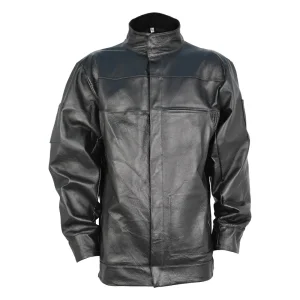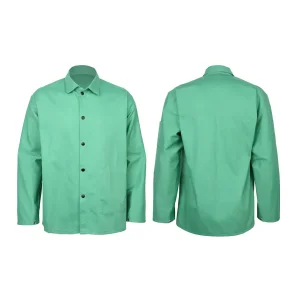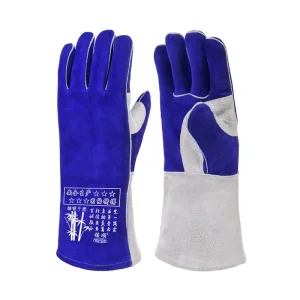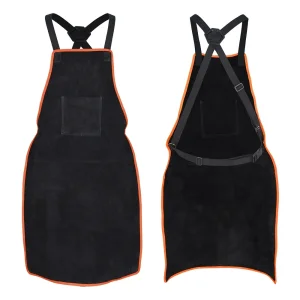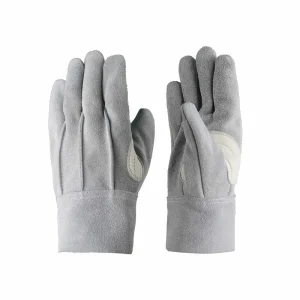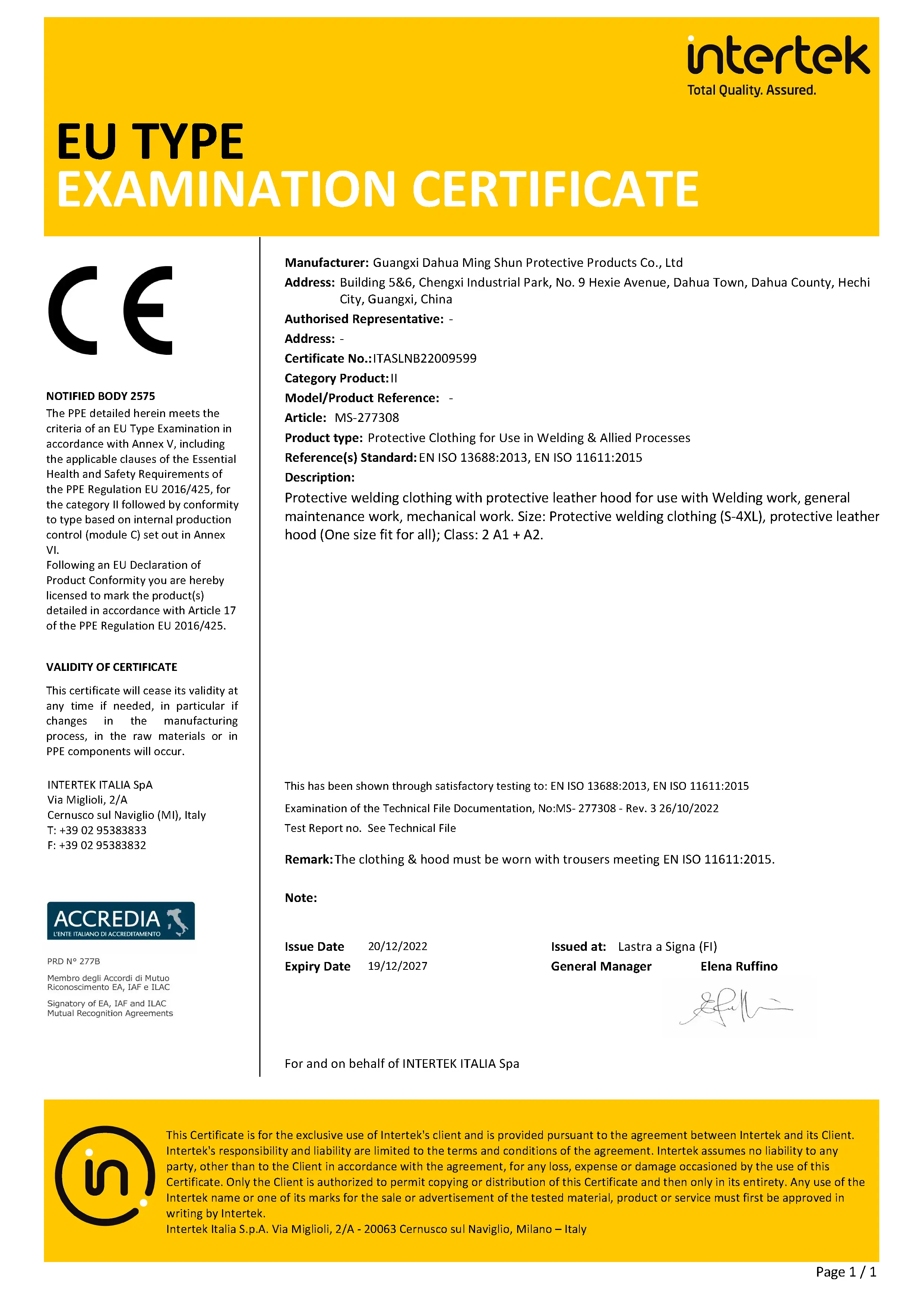
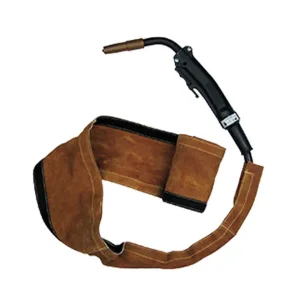
Heavy-duty heat insulation, precision TIG/MIG ergonomics, and flexible cable guards developed for mission-critical industrial yards and certified automated manufacturing plants.
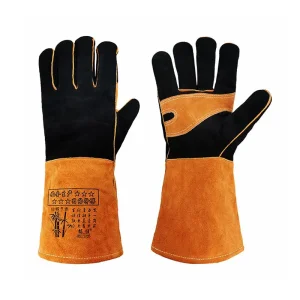
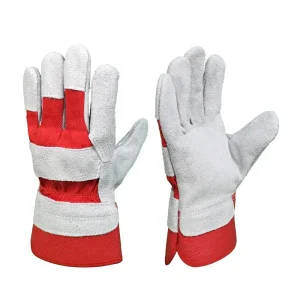
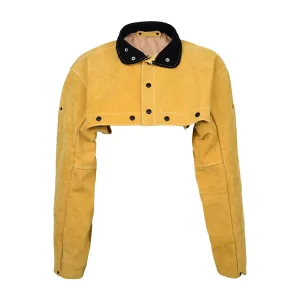
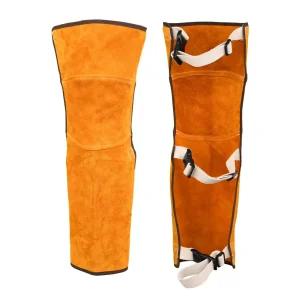
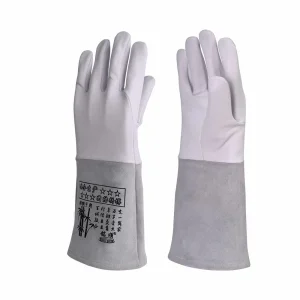
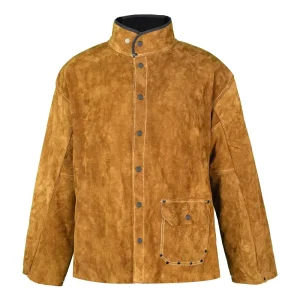
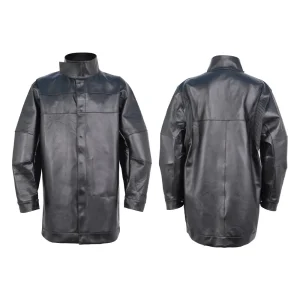
Industrial hot work environments subject safety apparel to complex multi-vector hazards: instantaneous arc thermal flux, continuous radiant convective heat, abrasive grinding friction, and violent molten metal splash (up to 1,400°C). Balancing uncompromising barrier protection with ergonomic range of motion requires comprehensive control over textile chemistry and hide processing.
Our vertical tannery in Gaozhou monitors chrome-tanning concentrations, chromium-VI conversion inhibitors, and fatliquoring oils. Sourced cow split hides maintain a standardized 1.2mm–1.4mm thickness, offering unmatched structural puncture resistance, char density, and molten metal deflection without stiffness or premature hardening.
Combining comfort with safety, our 7 oz and 9 oz flame-retardant sateen and twill fabrics utilize long-staple cotton treated via advanced ammonia cure polymer cross-linking (Proban/Pyrovatex equivalents). Tested to retain self-extinguishing flame retardancy across 50+ commercial industrial washes without carcinogenic wash-off.
Standard stitching fails rapidly under ultraviolet exposure and localized burn-through. Every structural seam across our heavy-duty jackets, bibs, and gloves is engineered with double or triple-stitch 100% Para-Aramid (Kevlar®) thread, reinforced with split leather welting to eliminate hot spatter seam degradation.
Located at Plant 2, Industrial Avenue, Pukang Industrial Park, Gaozhou City, Guangdong, our manufacturing complex integrates raw hide sorting, specialized eco-dyeing, CNC pattern nesting, and high-capacity assembly under one audited management framework.
We eliminate intermediary leather markups and batch variance by grading raw split cowhide, goatskin, and pigskin on-site for grain density, tensile modulus, and moisture balance.
CAD-assisted oscillating knives and multi-ply laser cutters ensure pattern dimensional tolerances within ±0.5mm, reducing fabric waste and delivering seam alignment across tens of thousands of units.
Digital barcode tracking from raw leather rolls through final packaging. Each export shipment includes auditable traceability tags that link finished goods to certified fabric melt numbers and hide batch logs.
Monthly throughput reaching 500,000+ glove pairs and 80,000+ protective jackets. Flexible capacity allows rapid reallocation between high-volume standard runs and fast-turn OEM client tech packs.
A single specification cannot protect against every welding risk. We configure custom PPE bundles to address the exact thermal flux, ergonomic mobility, and environmental conditions of distinct heavy industries.
| Sector Environment | Primary Hazard Vectors | Recommended Material Architecture | Standard Configuration Spec | Compliance Target |
|---|---|---|---|---|
| Shipbuilding & Marine Fabrication | Confined space, high-amperage FCAW/SMAW spatter, overhead slag drop | Heavy Split Cowhide (1.3mm+) + Kevlar® Stitched Sleeves & Aprons | MS-393 Leather Jacket, MS-113 Spats, MS-308N Leather Hood | EN ISO 11611 Class 2 (A1+A2) |
| Automotive Robotic Body-in-White | Rapid spot welding sparks, sharp stamping edges, high ambient shop temps | Hybrid 9 oz FR Breathable Cotton with Grain Pigskin Front Reinforcement | MS-1260 Hybrid Jacket, MS-829 Goatskin/Cowhide MIG Gloves | EN ISO 11611 Class 1, EN 388 (4243X) |
| Oil, Gas & Offshore Petrochem | Hydrocarbon flash fires, pipeline cross-country SMAW, electrical arc risks | 7 oz to 9 oz Inherent AR/FR Cotton with Anti-Static Grid Fibers | MS-315 Navy AR/FR Coverall, MS-1215G Hi-Vis FR Workwear | NFPA 2112, NFPA 70E PPE Cat 2 |
| Heavy Structural Steel & Bridge Erection | High-altitude wind cooling, high-amperage flux-cored spatter, abrasive beams | Extended Back Split Leather + Fleece-lined Winter Gloves | MS-W231 Extended Jacket, MS-710F Winter Fur-Lined Gloves | EN 12477 Type A, EN 511 Cold Rating |
| Aerospace & High-Purity TIG Systems | Micro-amperage arc, extreme finger tactile sensitivity, non-spatter radiant heat | Ultra-supple A-Grade Goatskin Palm with Seamless Keystone Thumb | MS-862 & MS-855N Premium Goatskin TIG Gloves | EN 12477 Type B, ISO 13997 Cut Level B |
Importing PPE into regulated Western and global jurisdictions demands third-party notified body certification, documented Technical Construction Files (TCF), and strict adherence to environmental chemical regulations.
Our European product lines are certified Category II PPE under EN ISO 11611:2015 (Protective clothing for use in welding) Class 1 and Class 2, EN 12477:2001+A1:2005 (Welders' gloves Type A and B), and EN 388:2016 mechanical ratings. Fully compliant with UKCA equivalents for the British market.
Exporting to the US and Canadian distribution networks requires compliance with NFPA 2112 (Standard on Flame-Resistant Clothing for Protection of Industrial Personnel Against Short-Duration Thermal Exposures from Fire), NFPA 70E Arc Flash Hazard PPE Categories, and ANSI/ISEA 105 cut/puncture requirements.
Every tanning formulation and finishing chemical strictly eliminates Chromium VI (Cr6 < 3 mg/kg limit), restricted Azo dyes, nickel releases in closures, phthalates, and persistent organic pollutants. Garments touch the skin safely even in high-heat perspiration environments.
Corporate PPE sourcing directors, industrial safety distributors, and private-label brand holders evaluate supply partners on metrics far beyond the unit invoice price. We structure contracts to support operational resilience, inventory turns, and landed cost optimization.
Our production facilities regularly clear stringent third-party social audits, including SMETA (SEDEX 4-Pillar), BSCI, and corporate customer vendor codes of conduct. Sourcing teams avoid brand risk associated with labor violations or unsafe working environments.
With an established raw hide strategic reserve and fast-turn digital pattern cutting, glove volume re-orders maintain a dependable 40–45 day bulk turnaround. Standard container shipments are palletized and moisture-barrier packaged to survive high-humidity ocean transit intact.
From custom silicone-transfer brand stamping and embossed leather wrist patches to bespoke hangtags, multi-language instruction leaflets (IFUs), and retail-ready barcodes, we transform your tech pack into market-ready boxed SKUs.
The next decade of industrial safety will be defined by smart thermal management, bio-based circular tanning chemistries, and ultra-lightweight hybrid aramid-graphene matrices.
Anticipating international restrictions on per- and polyfluoroalkyl substances (PFAS), our R&D center is deploying next-generation bio-wax and siliconized surface finishes that achieve ISO 14419 oil-repellency and liquid splash resistance without fluorinated compounds.
Collaborating with industrial safety tech firms to test flexible interior sensor nodes that track core body heat, cumulative ambient radiation exposure, and pulse kinetics—alerting safety supervisors via LoRaWAN before heat exhaustion sets in.
Pioneering zero-discharge water recycling systems and chrome-free zeolite vegetable tannage within our Gaozhou hub. By valorizing leather scrap into reconstituted thermal pads, we decrease net lifecycle carbon footprints by up to 34%.
Clear, documented answers addressing standard testing protocols, material selections, lead times, and private labeling for commercial buyers.
Heavyweight cotton coveralls, contoured pigskin garments, ergonomic stick welding gloves, and harness aprons engineered for turnkey enterprise supply.