
Engineered to mitigate extreme thermal radiant hazards, mechanical abrasion, and electrical contact risks across global heavy industrial operations.
Bridging certified workplace compliance, geopolitical procurement strategies, and raw-material sovereignty for enterprise tier-1 supply chains.
In high-stakes industrial ecosystems—spanning deep-sea energy infrastructure, heavy structural steel fabrication, automated automotive welding lines, and electrical transmission maintenance—the operational margin for hand injury is nonexistent. The modern occupational personal protective equipment (PPE) landscape has progressed far beyond generic hand coverings. Hand protection now operates as an engineered interface subject to stringent statutory requirements under OSHA Title 29 CFR 1910.138 in North America and EU Regulation 2016/425 across the European Economic Area. Sourcing decisions directly determine total recordable incident rates (TRIR), insurance premium liabilities, and regulatory audit approvals.
As international supply managers evaluate regional sourcing balances between Southeast Asian assembly hubs and East Asian manufacturing foundations, China’s leather processing corridors—specifically Gaozhou, Guangdong—retain a definitive technical advantage. By consolidating tannery chemical treatment, beamhouse preparation, precision splitting, laser computer-numerical cutting, and specialized Kevlar® stitching within single industrial clusters, lead-time variances and batch inconsistencies are eliminated.
The global availability of high-grade split cowhide, top-grain goatskin, and durable pigskin is increasingly vulnerable to cross-border logistics volatility and fluctuating tannery standards. As a primary manufacturer directly operating integrated tanning facilities, Guangdong Ming Shun maintains raw inventory buffers that isolate corporate contract buyers from international price spikes, guaranteeing uniform thickness and chemical purity across multi-year contracts.
Modern procurement requires full transparency into chemical handling, wastewater treatment standards, and labor policies. Our factory operates in full conformity with ISO 9001:2015 quality frameworks, SMETA social auditing parameters, and European REACH restrictions on restricted azo colorants, extractable Chromium VI, and phthalate concentrations, providing frictionless customs clearance into regulated markets.
A rigorous engineering comparison between European Norm (EN) test thresholds and ANSI/ISEA performance indicators.
| Regulatory Standard | Core Protection Vector | Test Methodology & Metrics | Critical Target Performance | Typical Industrial Target |
|---|---|---|---|---|
| EN 12477:2001+A1:2005 Type A (Heavy Welding) |
Thermal spatter, radiative heat & structural mechanical resistance | EN 407 (Thermal) + EN 388 (Mechanical) compound testing matrices | Min. Level 3 Contact Heat (350°C >15s), Level 3 Tear, Level 2 Puncture | Heavy MMAW / SMAW, submerged arc, high-amperage MIG work |
| EN 12477:2001+A1:2005 Type B (High Dexterity) |
Precision fingertip tactility & localized spark shielding | Flexibility assessment (EN 420 small pin test) & low-amperage heat shield | Fingertip pin dexterity class 4 to 5, Level 1 Contact Heat (100°C) | Precision TIG welding, aeronautical sheet joining, laser braze |
| EN 388:2016+A1:2018 Mechanical Risks |
Abrasion, blade cut, tear, puncture & ISO 13997 TDM-100 cut | Martindale abrasion cycles, circular blade ratio, tensile tear force | Scores 4.1.4.3.X or 4.X.4.4.D (Reinforced Palm Liners) | Structural steel erection, metal stamping, rigging operations |
| ANSI/ISEA 105-2016 North American Standard |
Puncture, hypodermic needle puncture, abrasion & conductive heat | ASTM F2992-15 (Cut), ASTM F1060-08 (Thermal conductive resistance) | Conductive Heat Resistance Level 3–4 (up to 500°F / 260°C contact) | Shipbuilding, pipeline lay, oil patch pipe handling, smelters |
| ASTM F696 / OSHA 1910.137 Electrical Protector |
Mechanical shielding over rubber insulating dielectric gloves | Grain cowhide/goatskin tensile yield, cuff clearance & arc flash exposure | Zero metallic hardware; dielectric field shielding, high dielectric tear | Substation switching, live line utility maintenance, catenary rail |
Guangdong Ming Shun's internal tannery processes integrate an advanced oxidation-reduction buffering system during post-tanning fatliquoring. This controls residual salts, ensuring hexavalent chromium (Cr VI) remains undetectable (<3.0 mg/kg limit according to EN ISO 17075-1:2017) even after prolonged exposure to radiative heat or UV emissions during welding arc operations.
How fiber matrix composition, grain selection, and specialized thread metallurgy eliminate common failure points in extreme duty gloves.
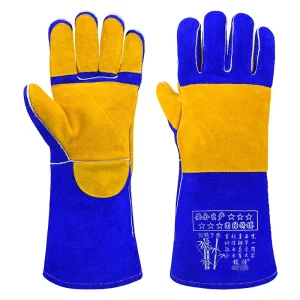
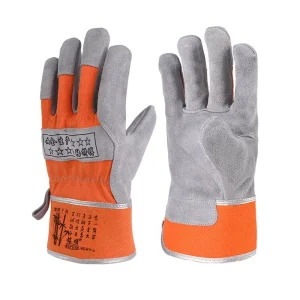
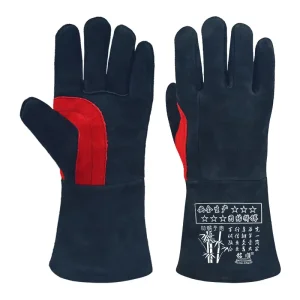
Unlike down-market split leathers produced from degraded belly cuts, our heavy-duty welding gloves (such as the MS-815 and MS-721bk) use primary shoulder-split hides. The dense collagen fiber matrix provides natural flame deflection, prevents heat shrinkage under radiant exposure, and resists puncture from sharp slag spatters.
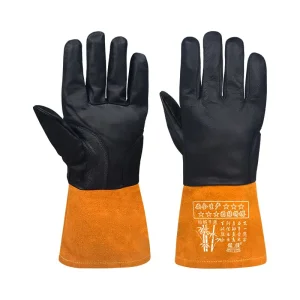
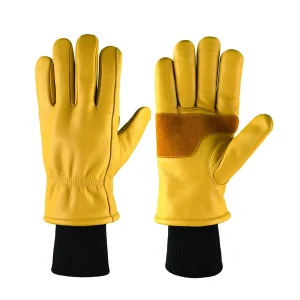
For fine TIG welding gloves (exemplified by the MS-874), top-grain goatskin is the industry benchmark. Natural lanolin within goat hide delivers high tensile strength per millimeter of thickness, allowing precise wire feeding without hand fatigue, while maintaining a flame barrier that outperforms synthetic textiles.
Conventional nylon or polyester sewing threads quickly char and fail when exposed to hot spatter, leading to seam blowouts. All Ming Shun glove seams utilize 100% 4-ply or 5-ply para-aramid fiber threads, protected by continuous cowhide welts that shield structural stitches against direct thermal flash and abrasive friction.
Glove patterns are engineered with a 3D pre-curved finger orientation, seamlessly integrating an angled keystone thumb. This aligns with natural muscular biomechanics during grip cycles, reducing forearm fatigue by up to 28% and eliminating tension points across the palm to extend glove service life.
Thermal safety requires balancing exterior heat deflection with interior moisture dissipation. Our configurations pair non-woven needle-punched flame-resistant fleeces with continuous combed-cotton palm liners. In sub-zero winter environments, our 3M Thinsulate™ integration maintains joint flexibility down to -30°C.
Industrial hot work frequently occurs in oily or wet environments. Specialized silicone-fluorocarbon treatments infuse deeply into the leather grain matrix during tanning. This achieves liquid water and oil resistance (AATCC 118 Grade 5) without clogging leather pores or degrading breathable moisture exchange.
Specific field configurations matched to the thermal profiles, mechanical stresses, and dexterity requirements of heavy industry.
Operational Stress: Mixed robotic cell loading, automated spot-weld adjustments, high-volume handling of stamped steel sheets with sharp stamping burrs.
Prescribed Configuration: Custom MS-611 leather palm work gloves combined with cut-resistant synthetic fiber knits, or the MS-829 goatskin-cowhide hybrid glove. Provides rapid manipulation of fasteners with protection against acute sheet metal lacerations.
Operational Stress: Multi-pass submerged arc welding (SMAW/FCAW), heavy hull plates, salt-air exposure, high convective heat, and flying slag.
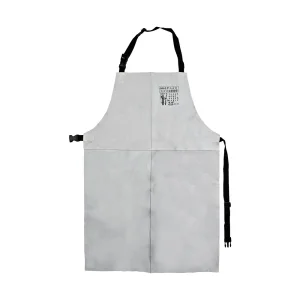
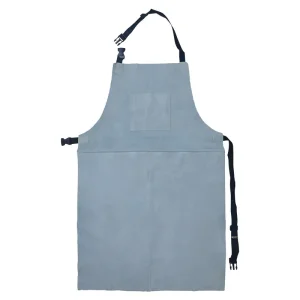
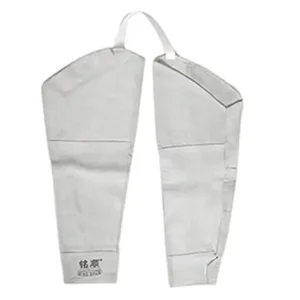
Prescribed Configuration: MS-815 16-inch gauntlets with reinforced double palm zones, stitched with Kevlar® thread and matched with MS-347 split cowhide aprons and MS-335 sleeves. Guards the forearm and brachial artery during overhead welding passes.
Operational Stress: Phase switching, overhead bucket work, transformer tie-ins requiring dielectric insulation plus cut and puncture resistance.
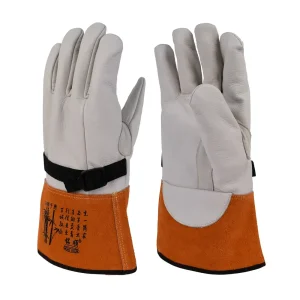
Prescribed Configuration: OEM MS-940 electrician leather protector gloves worn over Class 00 through Class 4 rubber insulating gloves. Finished with soft goatskin or cowhide to prevent mechanical cuts into the underlying insulating core.
Eight systematic quality milestones from initial CAD tech pack translation to audited container shipment.
Pattern grading based on ISO 21420 anthropometric standards, fine-tuned for regional hand dimensions across European and North American workforces.
Ultrasonic thickness scanning across shoulder and side cuts to eliminate belly leather, accompanied by lot-by-lot pH testing and moisture stabilization.
Computerized rotary drum dyeing ensuring batch-to-batch color stability, enriched with flame-suppressing fatliquor agents that preserve leather pliability.
CNC laser or hydraulic press die cutting matched to leather fiber grain directions, ensuring seam joints resist tension tears during heavy handling.
Sewing on synchronized post-bed industrial machines with continuous leather welting, preventing burn-through along vulnerable finger gussets.
Installation of brass snaps, FR hook-and-loop closures, and high-dielectric composite buckles, pull-tested to a minimum of 200 Newtons.
Multi-point dimensional verification, seam pull stress evaluations, and metal detector screenings to guarantee zero broken needle fragments remain.
Private-label retail hangtags, serialized packaging boxes, desiccants, and container palletizing ready for automated 3PL distribution networks.
Anticipating next-generation workplace safety needs with sustainable chemistries, smart sensors, and advanced composite materials.
Responding to tightening European Green Deal directives, our chemical engineering laboratory is deploying organic aldehyde and mineral zeolite tanning agents. This eliminates heavy metals from wastewater while yielding leather with heat shrinkage thresholds comparable to conventional chrome-tanned options.
Field trials are underway integrating micro-thermocouple strips within outer gauntlet welts. These send Bluetooth Low Energy (BLE) vibration alerts to safety managers when internal glove temperatures approach human burn thresholds (44°C), helping prevent heat-exhaustion injuries during prolonged enclosed pipe welding.
Replacing traditional heavy asbestos alternatives, our R&D department is pairing continuous filament basalt fabrics with graphene-dispersed knit inner liners. This reduces overall glove weight by up to 35% while increasing ANSI Level 4 conductive heat protection during heavy industrial torch cutting.
Comprehensive answers addressing common questions regarding compliance certifications, OEM customizations, and factory lead times.
Guangdong Ming Shun invites on-site client inspections and video audits across our dedicated 25-year manufacturing facilities in Pukang Industrial Park, Gaozhou City, Guangdong. Buyers maintain direct communication with technical engineers, inspect raw hide inventories, review in-house tanning drums, and verify ISO 9001:2015 registries without third-party broker markups.
Type A gloves (e.g., our MS-815 and MS-721bk) feature thicker split cowhide (1.2mm–1.4mm) with heavy flame-retardant linings, built for high-heat SMAW/MIG operations with higher tear and puncture protection. Type B gloves (e.g., our MS-874) use supple goatskin without heavy fleece liners, prioritizing fingertip dexterity (Class 4/5) for TIG welding wire manipulation.
We manage Chromium VI risks at the chemical level. By using vegetable or synthetic retanning agents combined with antioxidant polyphenols during fatliquoring, and maintaining an acidic leather matrix (pH 3.8–4.5), our finished hides remain well below the 3.0 mg/kg EN ISO 17075-1:2017 detection threshold under international lab testing.
Standard production MOQs for custom-branded welding and industrial gloves start at 1,200 to 2,400 pairs per style/size run. Prototype counter-sampling is delivered within 7 to 10 working days from receipt of client tech packs. Full container shipments typically dispatch in approximately 45 days after pre-production sign-off.
Yes. Our OEM MS-940 electrician leather protector gloves are engineered specifically to shield Class 0 through Class 4 rubber insulating gloves. They feature metal-free non-conductive stitching, dual-strap nylon cinch buckles, and grain goatskin or cowhide construction tested to withstand mechanical abrasion, puncture, and incidental flashover without compromising electrical insulation.
We provide full private-label services, including laser heat branding, leather embossing, multi-color screen printing on gauntlet cuffs, customized woven and silicone sew-in labels, multi-lingual retail hangtags with EAN/UPC barcoding, and custom cartons engineered to withstand sea freight humidity and container compression.
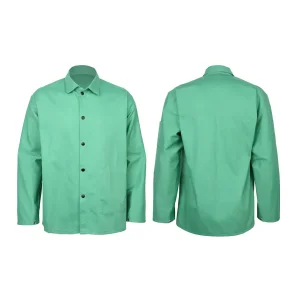
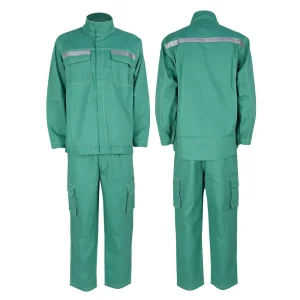
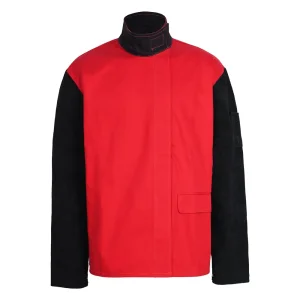
Full-body protective gear and specialized leather hand wear designed for integrated industrial hot-work safety programs.
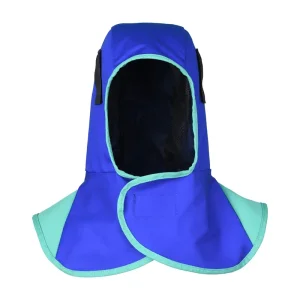
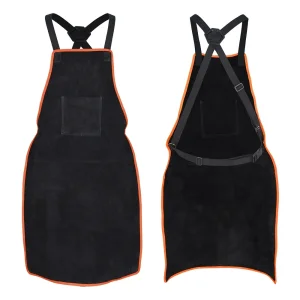
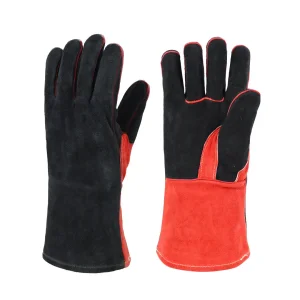
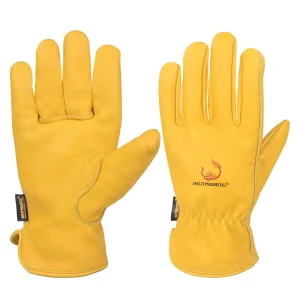
Submit your product specifications, target standards (EN 12477 / ANSI 105), or physical sample requirements. Our team in Gaozhou, Guangdong will deliver technical pattern recommendations, cost models, and sample prototypes to your facility.
