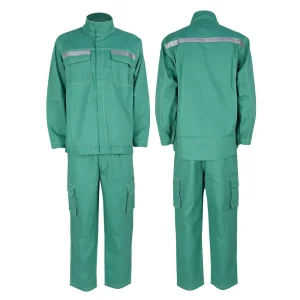
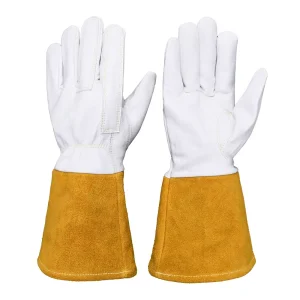
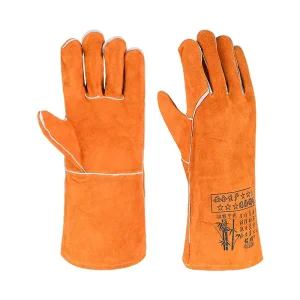
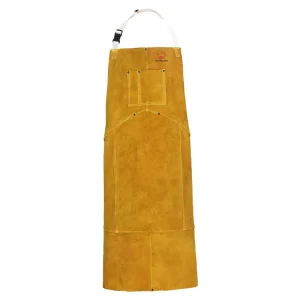
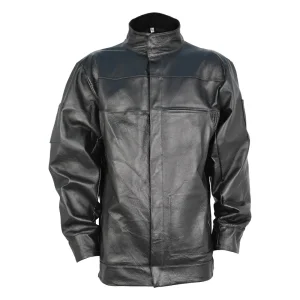
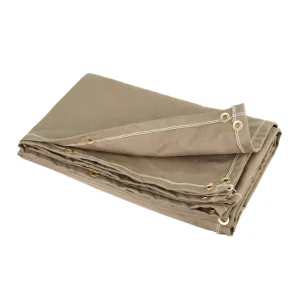
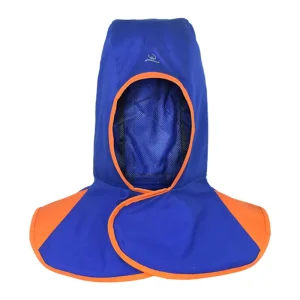
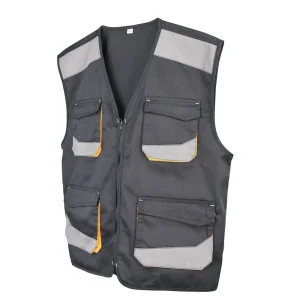
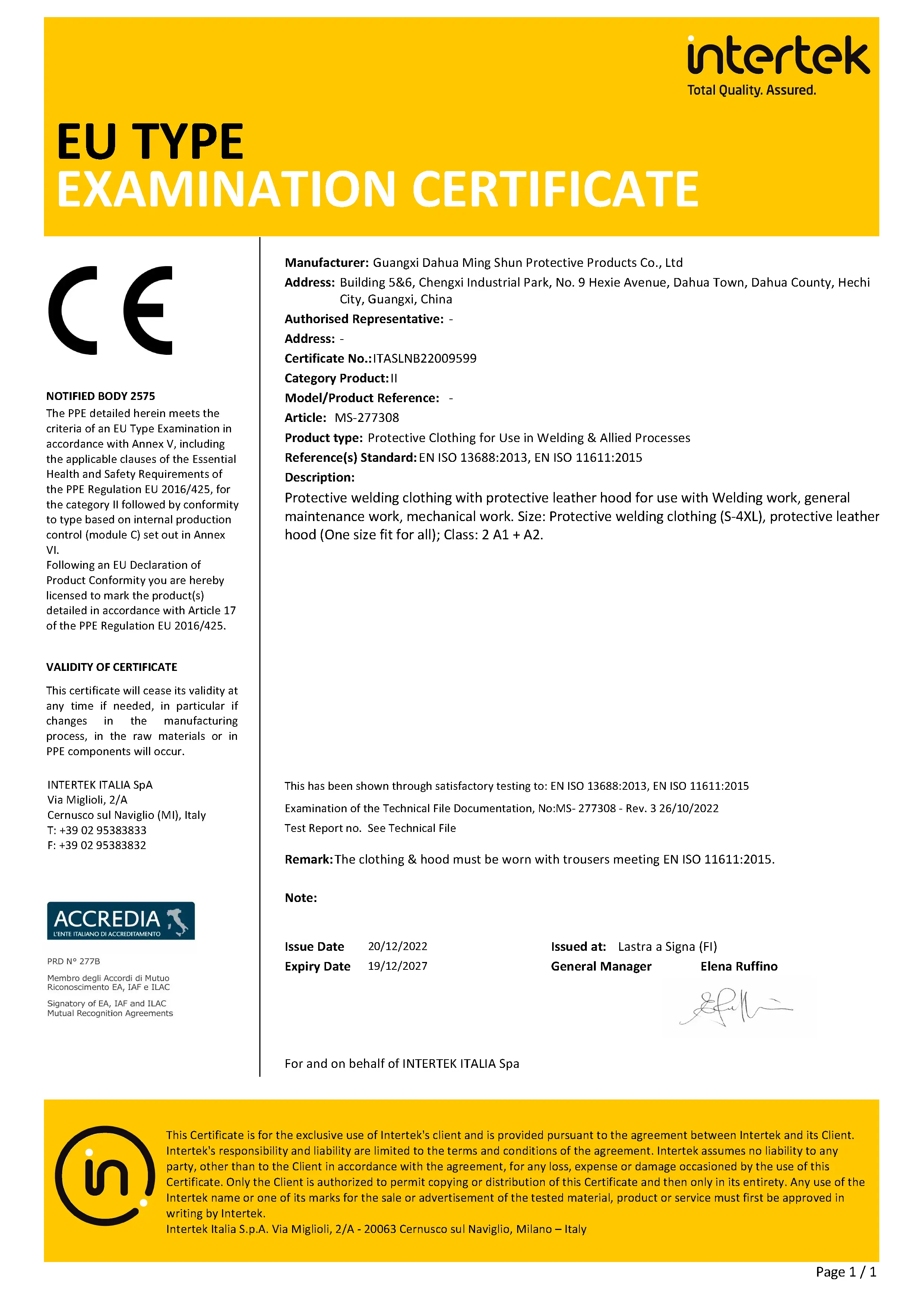
Engineered directly at our Gaozhou facility. Compare specialized 30"+ split cowhide cuts, flame-resistant hybrid shells, and specialized artisan weld accessories.
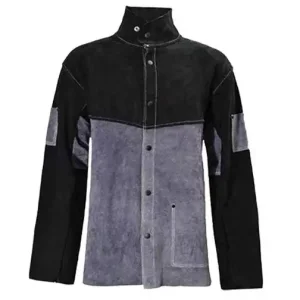
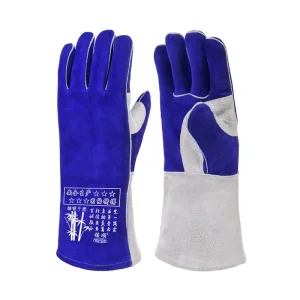
Why modern multi-axis positional welding requires the structural re-evaluation of torso, lap, and lumbar thermal shielding beyond standard 26-inch jackets.
Standard industrial jackets leave an exposed gap between waistline belts and bibs when technicians adopt stooped, kneeling, or inverted positions on overhead pipe racks. A custom long leather welding jacket (typically 30" to 36" torso length) eliminates flash gaps and prevents liquid droplets from funneling down worker trousers.
The rise of high-deposition FCAW (Flux-Cored Arc Welding) and heavy-amperage SAW (Submerged Arc Welding) repair in shipyards generates sustained molten spatter exceeding 1,400°C. Long-cut split cowhide acts as a physical heat sink, offering radiant thermal buffer times surpassing 18 seconds without burn-through.
Across onshore LNG plants, cross-country oil networks, and offshore topside platforms, EHS auditors enforce Class 2 EN ISO 11611 criteria. Procurement managers require proven supplier audit footprints capable of integrating customized RFID tagging, safety color blocks, and dielectric brass snaps.
How Guangdong Ming Shun Labour Protective Products leverages 25+ years of verticalized hide handling to outpace intermediaries in lead time, compliance rigor, and structural consistency.
Unlike assemblers sourcing variable open-market scraps, our facility regulates the chromium stabilization, pH neutrality (3.5 - 4.5), and fat-liquor balance on-site. This eliminates offensive chemical smells, guarantees leather softness, and preserves fibers against flame embrittlement.
Custom long patterns are graded digitally to conform to localized anthropometric sizes—from North American ANSI XL-5XL with broadened shoulders to athletic European slim-taper specifications—cutting fabric waste while reinforcing rotational arm pitch.
Operating from Pukang Industrial Park, Gaozhou, guarantees direct inland transit connections to Shenzhen and Guangzhou ports. By bypassing international trading agents, OEMs recapture 15-28% margin buffers across container-scale shipments.
Customizing long leather outerwear to withstand micro-climates, specific metallurgy methods, and regional operator duty cycles.
| Target Geographic Region | Primary Industrial Sector | Recommended Jacket Architecture | Critical Compliance Protocol |
|---|---|---|---|
| North America (Gulf Coast / Midwest) | Offshore Oil Drilling, Rail Fabrication, Heavy Machinery | 32"-36" Premium Split Cowhide (1.2-1.4mm), DuPont Kevlar® 4-ply thread, dielectric black anodized snaps. | ANSI/ISEA 105, ASTM F1060 Thermal Conduction, OSHA 1910 Subpart I |
| Northern & Western Europe | Renewable Wind Towers, Nuclear Maintenance, Ship Refit | Hybrid 30" Long Cut: Class 2 Cowhide front & arms paired with 9 oz / 305 gsm Proban FR Cotton back for ventilation. | CE Category II, EN ISO 11611:2015 Class 2 (A1+A2), REACH (Zero Chromium VI) |
| Middle East & North Africa (MENA) | Desert Pipeline Infrastructure, Refineries, Desalination | Lightweight grain pigskin or supple shoulder cowhide with underarm air-grommet gussets & FR moisture lining. | ISO 9001:2015, EN ISO 11611 Fire Spread resistance under high ambient heat |
| Australia & New Zealand | Open-Pit Mining Heavy Plant, Structural Steel Erection | Long Cowhide with integrated 50mm FR Silver Reflective Tape stripes, stood-up mandarin collar with hook-and-loop seal. | AS/NZS 4824, AS/NZS 2161, Hi-Vis Class D/N Site Compliance |
Anticipating structural shifts in industrial welding PPE from 2026 to 2030 through advanced chemical processing and ergonomic enhancements.
Traditional leather absorbs mineral oils, solvents, and cooling lubricants in machining cells, accelerating leather degradation and fire risk. We are deploying nanofiber polymer coatings that repel industrial greases while allowing water vapor to breathe outward.
Long jackets often bunch up when arms are elevated past 90 degrees. Our 2026 pattern revisions integrate accordion pleated stretch cowhide or FR aramid ribbing across the scapula, reducing worker fatigue during full 10-hour shifts.
Developing internal conduit sleeves tailored to integrate continuous physiological thermal sensors or personal vortex air-conditioning tubes, enabling active core body cooling for boilermakers working inside enclosed preheated pressure vessels.
Strict multi-tiered quality gates executed inside our plant ensure frictionless customs clearing and brand integrity across international borders.
Incoming tanned hides are verified under ISO 17075 spectrophotometric standards to ensure 100% absence of allergenic Chromium VI across all contact surfaces.
Continuous sampling ensures our 3-ply Kevlar® sewn joints achieve over 450N tensile breaking force, resisting abrasive sparks and snagging metal scrap.
Surface and edge ignition testing according to ISO 15025 confirms zero flame-spread or flaming debris release when direct spatter contacts the garment.
Batch numbers, PO references, and manufacturing quarters stamped permanently on interior satin tags to support global downstream recalls and safety audits.
Authoritative guidance for sourcing managers, safety program developers, and enterprise distributors.
Standard industrial welding jackets are patterned between 26 and 28 inches (66-71 cm) in length, stopping right at the hip line. Custom long welding jackets are cut to 30", 32", 34", or even 36" (76-91 cm). This guarantees extended coverage over the lap, groin, and lower spinal disc joints when seated or bent over work tables.
We typically specify 1.2 mm to 1.4 mm thickness for industrial long jackets. Leather below 1.1 mm risks premature thermal perforation during heavy flux-core spatter, while leather exceeding 1.5 mm causes worker exhaustion due to excessive garment weight. Our controlled tannery shaving process guarantees a tight +/- 0.1 mm tolerance.
Yes. Our MS-1260 series blends high-density 9 oz flame-retardant sateen cotton with genuine split cowhide sleeves and shoulders. This hybrid design reduces overall jacket weight by approximately 40%, drastically increasing comfort in hot, tropical, or summer fabrication setups.
We advise high-heat direct leather embossing (heat debossing), metal riveting of custom tags, or high-tenacity aramid yarn embroidery. Surface ink screen printing is discouraged on rough split leather because radiant heat and spatter exposure can cause cracking over time.
Complete head-to-toe hot-work protection systems built to coordinate with long leather outerwear programs.