Engineered for high-spatter MIG, low-amperage TIG precision, and extreme metallurgical fabrication lines.
An authoritative analysis of procurement trends, tannery traceability mandates, and multi-tier regulatory compliance in heavy-industry personal protective gear.
The global industrial leather work gloves sector has reached a multi-billion dollar valuation, expanding at a sustained compound annual growth rate (CAGR) powered by surging infrastructural construction, pipeline oil & gas projects, automotive assembly automation, and heavy metallurgy fabrication across EMEA and North America.
Tannery operations are bound by stringent environmental metrics including EU REACH chemical compliance, chromium-VI reduction protocols, and zero-deforestation hide tracing. Direct factory-integrated leather procurement mitigates price volatility in split cowhide, grain pigskin, and supple goatskin raw stock.
Global procurement teams are moving away from multi-tiered third-party brokerage toward consolidated factory contracts. Directly partnered manufacturing centers allow comprehensive customization of thread tensioning, palm reinforcement patches, biometric seam profiling, and private-label packaging.
Deconstructing the microscopic collagen lattice of split cowhide, high-tensile aramid filament stitching, and aluminized thermal reflection barriers.
Extracted from the fibrous lower reticular corium, our split leather undergoes proprietary vegetable-mineral tanning to optimize spark shedding, hot slag rejection, and tear-propagation resistance.
Naturally rich in lanolin with an ultra-dense, interlaced epidermal fiber structure. Provides unparalleled tactile dexterity for root-pass TIG welding and intricate wire manipulation without sacrificing tensile integrity.
Standard nylon and polyester threads carbonize under brief thermal contact. Ming Shun safety gloves utilize multi-ply Kevlar® or FR aramid filament stitching, countersunk into welted seams to eliminate thread exposure.
Integrated back-of-hand shielding deflects up to 95% of radiant thermal energy generated by high-amperage submerged arc and spray-arc operations, reducing hand fatigue and thermal stress.
Direct comparison of mechanical thresholds and thermal degradation standards for enterprise compliance officers and HSE directors.
| Testing Standard | Evaluation Parameter | Type A (Heavy Duty / MIG / Stick) | Type B (High Dexterity / TIG) | ANSI/ISEA 105 Benchmark |
|---|---|---|---|---|
| EN 388: Abrasion Resistance | Martindale Rub Cycles (Revs) | Level 2 (≥ 500 cycles) to Level 4 (8000) | Level 1 (≥ 100 cycles) | Abrasion Level 3 - 5 |
| EN 388: Blade Cut Resistance | Coup Test Index / TDM 100 (N) | Level 1 (≥ 1.2) / Level B (≥ 5N) | Level 1 (≥ 1.2) / Level A (≥ 2N) | Cut Level A2 - A4 |
| EN 388: Tear Resistance | Tensile Peak Force (Newtons) | Level 2 (≥ 25 N) | Level 1 (≥ 10 N) | Puncture/Tear Level 2+ |
| EN 388: Puncture Force | Calibrated Spike Penetration (N) | Level 2 (≥ 60 N) | Level 1 (≥ 20 N) | Puncture Level 2 - 4 |
| EN 407: Burning Behavior | After-flame time & After-glow time | Level 3 (≤ 3s flame / ≤ 25s glow) | Level 2 (≤ 10s flame / ≤ 120s glow) | ASTM F1358 Flame Spread Passed |
| EN 407: Contact Heat | Threshold time at 100°C / 250°C / 350°C | Level 1 (≥ 15s at 100°C) to Level 2 (250°C) | Level 1 (≥ 15s at 100°C) | Conductive Heat Class 1 - 3 |
| EN 407: Small Splashes (Molten) | Number of Molten Droplets to raise 40K | Level 3 (≥ 25 droplets) | Level 1 (≥ 15 droplets) | ASTM F2894 Thermal Integrity |
| EN 420/ISO 21420: Dexterity | Smallest Pin Diameter Picked Up (mm) | Level 1 (11.0 mm) - Level 2 (9.5 mm) | Level 4 (6.5 mm) - Level 5 (5.0 mm) | Tactility Rating 4 - 5 |
From offshore rig pipe spools to structural aerospace manufacturing, we tailor ergonomics and protective layers to the target operating environment.
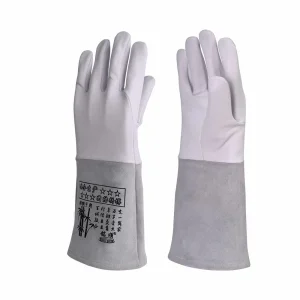
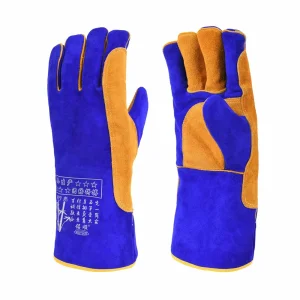
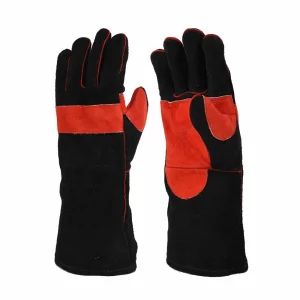
Multi-pass flux-cored arc welding (FCAW) and submerged arc operations produce torrential molten spatter and continuous radiant heat. Heavy split-cowhide construction with full palm patches, welted aramid seams, and extended gauntlet cuffs protects forearms against vertical slag roll.
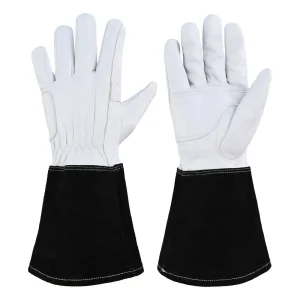
Thin-wall exotic alloy tube welding (titanium, Inconel, duplex stainless steel) requires surgical finger-motion control. Our grain goatskin TIG gloves feature seamless index fingers to feed filler wire smoothly without seam catching or torch dragging.
Continuous contact with hot billet handling and high-heat tool staging creates sustained thermal conductive and convective loading. Dual-layer composite constructions with wool or fleece linings provide prolonged heat insulation without stiffening.
Direct OEM/ODM contract partnerships eliminate intermediary markups, streamline batch audits, and ensure predictable delivery timelines.
Send CAD files, dimensional tech sheets, or physical benchmark samples. Our pattern engineering department creates adjusted prototypes within 7 to 10 working days, with documented seam-tensile and sizing audit trails.
Because we process raw hides internally in Gaozhou, Guangdong, we control color consistency, fat-liquor lubrication, pH neutrality, and chrome-VI fixation directly, preventing batch-to-batch stiffness variations.
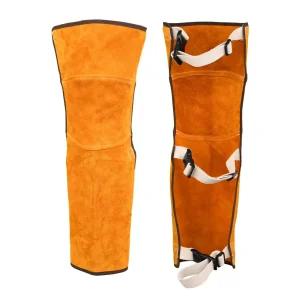
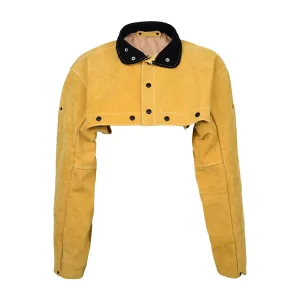
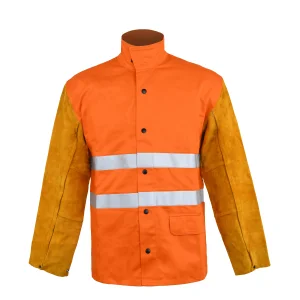
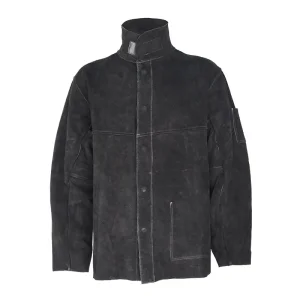
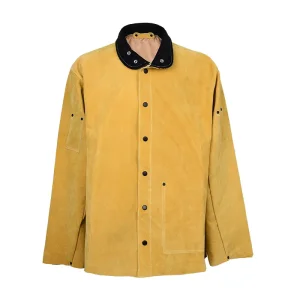
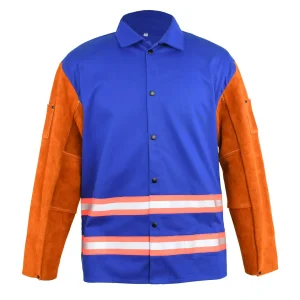
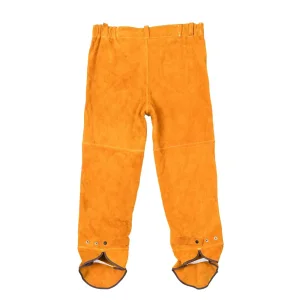
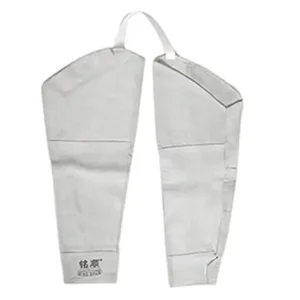
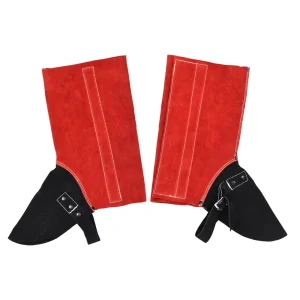
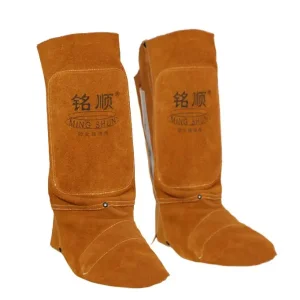
Combine leather welding jackets, spats, capes, protective bibs, and specialized MIG/TIG gloves in consolidated high-cube ocean containers to optimize freight density and reduce port handling fees.
We supply full technical files, EU Declarations of Conformity (DoC), authorized representative documentation, and UKCA/ANSI third-party laboratory test reports ahead of import staging.
Explore heavy-duty split leather MIG hand protection, long-cuff TIG options, and modular cowhide body coverings.
How automation, smart sensors, and advanced fiber hybrids are transforming industrial leather personal protective equipment.
We are deploying computerized optical scanning tables that analyze natural hide imperfections, scar tissue, and grain density in milliseconds. Automated CNC waterjet and laser nesting algorithms eliminate weak structural points in high-wear palm patterns, maximizing hide yield by 18% and optimizing tensile consistency across production batches.
Our tannery development pathway targets fully closed-loop water treatment systems and synthetic chromium-free tanning agents (trivalent mineral and aldehyde-free poly-phenolic formulas). This significantly lowers effluent environmental footprints while creating leather gloves that meet the most stringent medical and hypersensitivity standards.
The next generation of Ming Shun safety gloves combines split leather shells with seamless machine-knit 18-gauge Tungsten-HPPE liner sleeves, delivering ANSI Cut Level A7 protection while maintaining leather spark-shedding capabilities. Prototype tests include embedded UHF RFID micro-tags for toolless laundry tracking and PPE life-cycle tracking in robotic shipyards.
Detailed technical answers for professional PPE distributors, global importers, and enterprise safety procurement teams.
Streamline your leather personal protective equipment supply chain. Get direct factory pricing, full technical data packages, and expedited pre-production sample runs.

