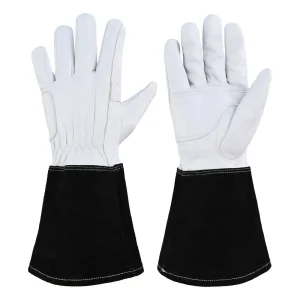
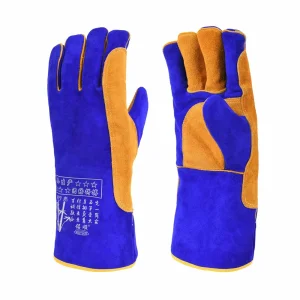
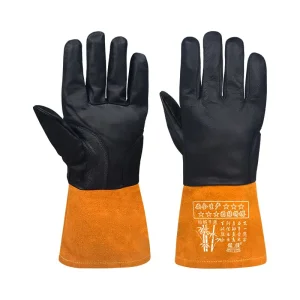
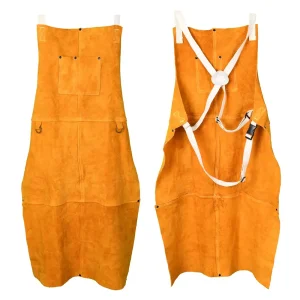
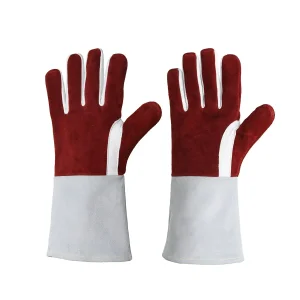
Direct from our integrated manufacturing facilities: precision-engineered leather protective gear, welding gloves, and thermal shields developed for utility operators, high-voltage technicians, and industrial welders globally.
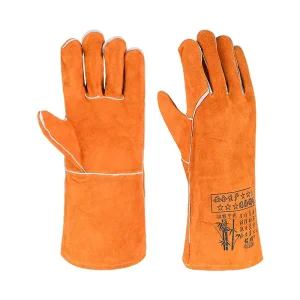
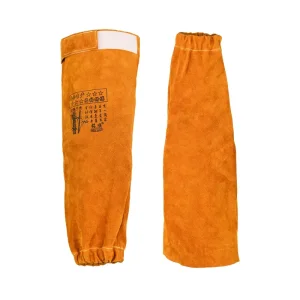
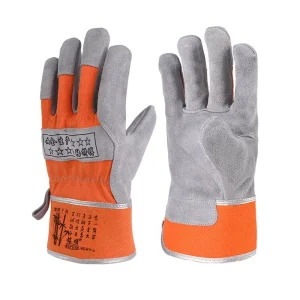
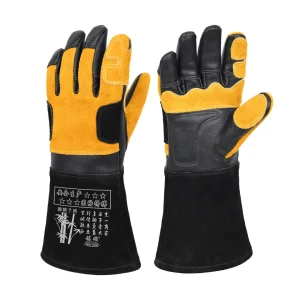
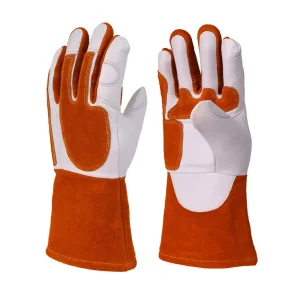
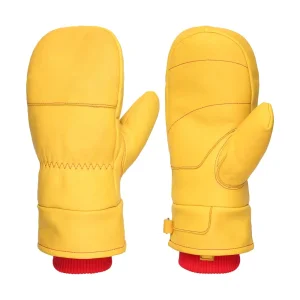
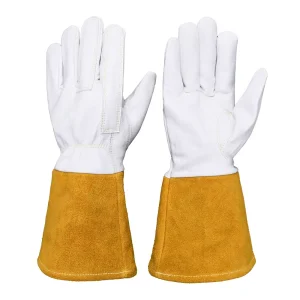
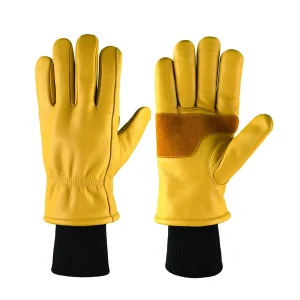
The global electrical safety protective glove market is undergoing an unprecedented shift driven by multi-gigawatt renewable energy deployment, electric vehicle (EV) battery architecture transformation, and stringent zero-accident grid mandates.
Global utilities are transitioning toward high-voltage direct current (HVDC) transmission and distributed microgrids. Live-line maintenance mandates mechanical protector gloves worn over ASTM D120 rubber insulating gloves. Without high-tensile leather protectors, rubber voltage insulating gloves remain critically susceptible to cuts, abrasions, punctures, and ozone embrittlement from sharp hardware.
Electrical explosions generate explosive radiant heat, molten shrapnel, and intense shock waves. Modern electrical contractors require leather gloves calibrated with verified Arc Thermal Performance Values (ATPV). Full-grain grain cowhide and goatskin leather inherently provide high char resistance, zero melt-and-drip behavior, and superior flame resistance compared to untreated synthetics.
The manufacturing and servicing of 400V to 800V DC electric vehicle battery packs introduces confined-space electrical hazards. Technicians handling pouch-cell interconnects and high-voltage bussbars demand extreme tactile feedback. Goatskin leather protectors combined with Class 00 insulating gloves provide the critical dexterity needed to torque miniature terminals safely.
A comprehensive technical comparison of international compliance standards and leather hide properties required for electrical protector gloves and arc-rated hand protection.
| Standard / Metric | Governing Mandate | Protective Scope | Material & Construction Criteria | Critical Sourcing Nuance |
|---|---|---|---|---|
| ASTM F696 | OSHA 1910.137 / NFPA 70E | Leather Protectors for Rubber Insulating Gloves | Grain cowhide, goatskin, or deerskin; minimum thickness 0.8mm–1.6mm depending on class; metal-free buckle or pull strap | Must guarantee class-specific clearance: Class 00/0 (0.5"), Class 1 (1"), Class 2 (2"), Class 3 (3"), Class 4 (4") |
| ASTM F2675 / F2675M | NFPA 70E-2024 / CSA Z462 | Arc Rating (ATPV / EBT) Determination | Flame-resistant materials, Kevlar® stitching, specialized tanning preserving natural lipid matrix to prevent after-flame | Direct rating on the glove body; distinguishes between mechanical protectors and standalone arc flash work gloves |
| EN 388:2016+A1:2018 | EU PPE Regulation 2016/425 | Mechanical Risk Resistance (Abrasion, Cut, Tear, Puncture) | Multi-layer reinforced palms, split leather gauntlet cuffs, cut-resistant para-aramid liner options | Essential level 3 or 4 puncture resistance required to protect underlying rubber dielectric barriers from sharp conductor ends |
| EN 407:2020 | CE Category III Industrial | Thermal Hazards (Flames, Contact Heat, Molten Splash) | Limited flame spread (Level 4), contact heat up to 100°C-250°C, resistance to small splashes of molten metal | Zero melting, zero polymer degradation under electrical arc plasma contact temperatures |
| ASTM D120 Compatibility | IEEE / ASTM Technical Guidelines | Physical Fit & Dielectric Field Stability | Contoured ergonomic patterns matching curved hand postures of dielectric rubber gloves without binding | Leather must contain zero metal eyelets, staples, or carbon-conductive dye formulations |
Characterized by natural lanolin retention and high tensile strength across dense dermal fibers. Goatskin delivers unmatched flexibility and puncture resistance relative to its weight, making it the premier choice for Class 00, Class 0, and substation metering applications requiring high dexterity.
Selected from premium heavy-duty hides, split cowhide provides rugged resistance against severe abrasive wear, sharp metallic cross-arms, and rough utility poles. Used primarily for Class 1 through Class 4 high-voltage line work where physical durability and puncture shielding are paramount.
Every electrical leather glove must maintain dielectric neutrality. Ming Shun utilizes 100% DuPont™ Kevlar® heat-resistant multi-ply stitching to prevent seam bursting during flash events. Fasteners utilize non-metallic nylon buckles, heavy-duty hook-and-loop, or all-leather pull drawstrings.
Engineered leather protectors and flame-resistant safety solutions deployed across critical electrical infrastructure and hazardous high-energy environments worldwide.
Linemen working in bucket trucks or climbing wooden poles encounter continuous high-voltage lines (4.16kV to 34.5kV and beyond). In this scenario, leather protector gloves serve as the sacrificial armor over rubber dielectric gloves. They safeguard the insulating core against cross-arm splinters, cotter keys, copper burs, and tie-wire punctures while offering arc flash mitigation during unexpected switchgear operation.
Configured Spec: Heavy-weight cow split or grain cowhide cuff, 12" to 14" total length, reinforced palm patches, Kevlar® lock-stitching, adjustable nylon web strap with friction buckle.
EV battery packs operate with direct current voltages up to 800V-1000V. Assembly workers must manipulate small bolts, high-voltage bus connectors, and automated test cables in confined battery trays. Bulky, stiff gloves severely reduce worker precision, leading to dropped tools and short-circuit hazards. Our ultra-supple goatskin leather protectors allow micrometric tactile touch without compromising mechanical shielding.
Configured Spec: 0.8mm-1.0mm hand-selected goatskin, keystone thumb, elasticized shirred back, non-conductive edge binding, silicone-free tanning.
Facilities engineers performing breaker racking, voltage measurement verification, and lockout/tagout (LOTO) protocols face extreme arc flash incident energies (up to 40 cal/cm²). Standalone rubber gloves offer zero arc thermal protection and will melt under blast heat. Ming Shun custom arc-rated leather overgloves create an air gap and sacrificial thermal boundary that deflects plasma jets and saves hands from severe third-degree burns.
Configured Spec: Multi-layer cowhide with flame-resistant treatments, ATPV arc ratings up to 28-40 cal/cm², extended split cowhide safety cuff with FR aramid binding.
Driving forward the frontier of industrial electrical PPE through material science, ergonomic digit patterning, and digital lifecycle traceability.
Moisture and oil absorption on leather protectors can dramatically compromise dielectric resistance and attract conductive contaminants. Our advanced fluorochemical tanning formulations repel water, hydraulic fluids, and insulating oils, preserving high dielectric isolation even in humid or rainy substation environments.
Integrating ultra-thin cut-level A5/F knitted para-aramid and graphene composite liners directly into the palm layer of leather protectors. This provides ANSI Level 4 puncture and cut protection without increasing overall glove thickness or inhibiting natural joint articulation.
Conventional flat leather patterns create bunching inside the palm when gripping tools. Our digital 3D pre-curved gunn-cut patterns mirror the relaxed resting state of the human hand, reducing forearm flexor tendon fatigue during 10-hour utility maintenance shifts by over 40%.
To eliminate compliance oversights in utility fleets, upcoming custom programs feature non-conductive RFID and NFC microchips encapsulated within the leather gauntlet. Safety directors can instantly scan serial numbers, production lots, and inspection service dates via handheld mobile devices.
Why leading global safety brands, power grid syndicates, and industrial distributors consolidate their custom leather electrical glove manufacturing with Ming Shun.
Unlike trading assemblers who purchase open-market scrap leather, Ming Shun controls tanning and raw material shaving in Gaozhou. We guarantee consistent thickness grading (±0.05mm), precise moisture content, and specialized pH-neutral tanning that ensures zero chemical degradation or vulcanized rubber leaching when in contact with ASTM D120 dielectric gloves.
We transform your exact corporate safety specifications or tech packs into market-ready glove programs. Capabilities include custom heat-stamped foil logos, laser marking, non-conductive woven size tags, Pantone-matched leather dye cuff accents for voltage class identification, and retail or utility-ready barcode packaging.
With over 1,000 skilled workers and multiple automated cutting lines, our production capacity exceeds 500,000 pairs monthly. We provide international procurement officers with guaranteed 45-day lead times, complete batch consistency, certified quality test documentation, and seamless container shipping logistics direct from our plant to worldwide ports.
Authoritative, engineering-backed answers addressing the complex nuances of custom leather electrical glove selection, testing, and standard compliance.
No. Under OSHA 1910.137, ASTM F696, and NFPA 70E, leather protector gloves provide zero rated dielectric voltage insulation. Their exclusive engineering function is to provide physical, mechanical (cut, puncture, abrasion) and thermal (arc flash) protection over the underlying ASTM D120 vulcanized rubber insulating gloves. Rubber insulating gloves alone are fragile and susceptible to catastrophic failure if punctured or nicked by wire ends, sharp fasteners, or rough surfaces. Leather protectors are mandatory to preserve the structural integrity of the rubber dielectric barrier.
Per ASTM F696 specifications, the cuff of the leather protector glove must be shorter than the rolled bead of the rubber insulating glove to prevent electrical surface creepage or tracking flashover across the leather to the technician's arm. The minimum clearance distances are: Class 00 & Class 0 require a minimum 0.5 inch (13 mm) clearance; Class 1 requires 1 inch (25 mm); Class 2 requires 2 inches (51 mm); Class 3 requires 3 inches (76 mm); and Class 4 requires 4 inches (102 mm). Ming Shun engineers exact gauntlet cuff lengths tailored specifically to your ordered rubber glove class sizes.
Class 00 (max 500V AC) and Class 0 (max 1,000V AC) tasks typically involve fine-dexterity operations, such as wiring circuit breakers, testing low-voltage instrumentation, terminal block torquing, and EV battery module assembly. Full-grain goatskin features naturally tight dermal fibers with high lanolin concentrations, allowing it to be shaved to 0.8mm-1.0mm while retaining high puncture and tensile resistance. This maximizes tactile sensitivity and grip dexterity. In contrast, heavier cowhide (1.2mm-1.6mm) is stiffer and better optimized for the intense abrasion of Class 2 through Class 4 outdoor utility pole construction.
Untreated synthetic gloves will melt and fuse to human skin during an electrical arc flash event. Genuine leather is an organic cross-linked protein matrix that chars rather than melts under high-heat exposure. When tanned using proprietary fatliquoring agents and stitched with genuine DuPont™ Kevlar® or Nomex® aramid threads, high-density grain cowhide and goatskin achieve Arc Thermal Performance Values (ATPV) exceeding 20 to 45 cal/cm², comfortably surpassing NFPA 70E PPE Category 2, 3, and 4 requirements.
Absolutely not. ASTM F696 explicitly prohibits any exposed metal parts, fasteners, buckles, or rivets on leather protectors because metal components alter the localized electrical field gradient and can initiate electrical arcing or conductor bridging. Ming Shun designs all custom electrical protectors with non-metallic nylon friction buckles, full-leather adjustment pull-straps, elasticized shirred backs, or flame-retardant hook-and-loop closures.
Technicians must visually inspect leather protectors before every single use. Protectors must be immediately removed from service and discarded if they exhibit cuts, punctures, broken stitches, embedded metallic shavings, burrs, or heavy saturation with conductive oils, grease, or chemicals. Even a tiny embedded copper wire strand in the leather can puncture through the rubber glove underneath, creating a fatal shock pathway.
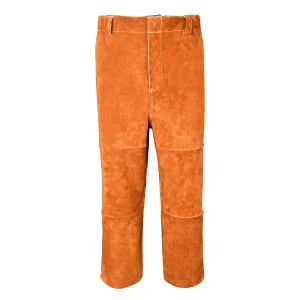
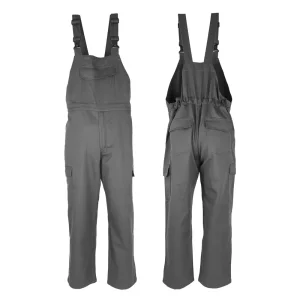
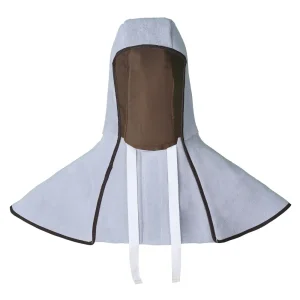
Explore our extended line of flame-resistant protective workwear, split leather trousers, welding hoods, and heavy-duty fabrication gloves engineered for the world's most demanding utility and industrial applications.