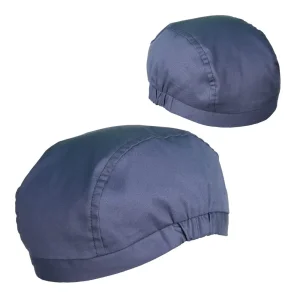
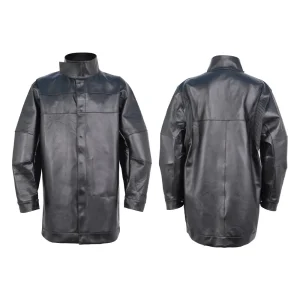
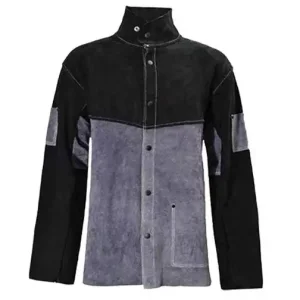
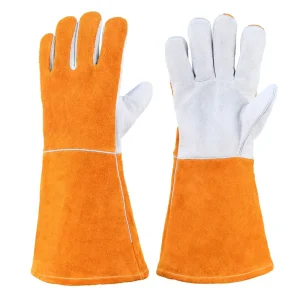
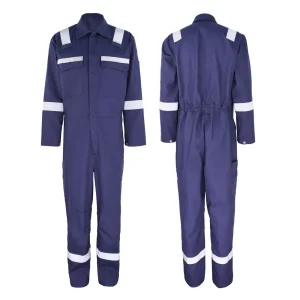
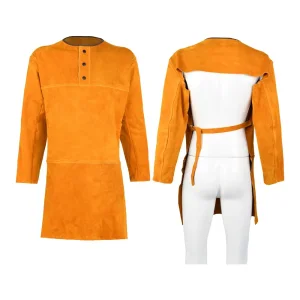
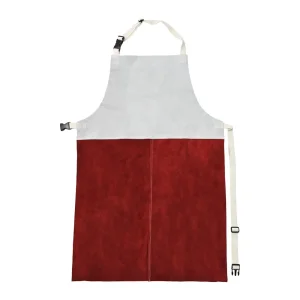
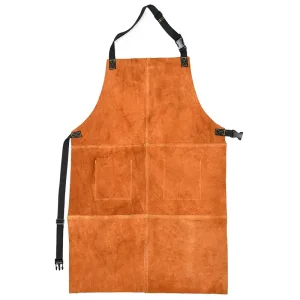
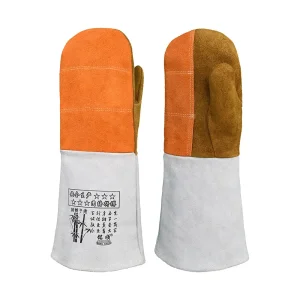
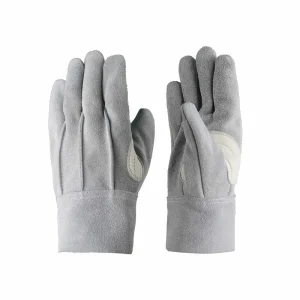
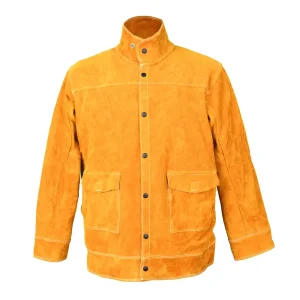
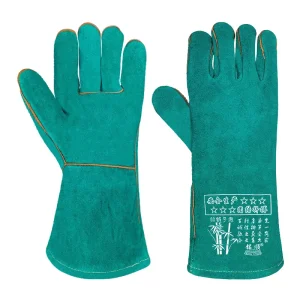
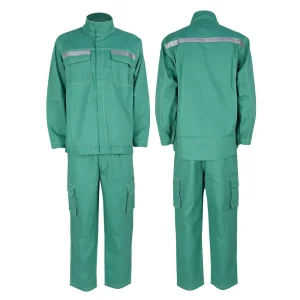
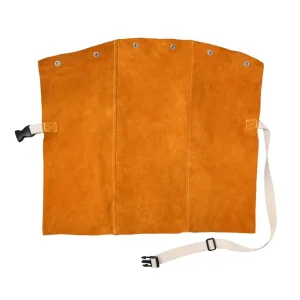
Explore initial core offerings crafted with grain cowhide, high-tensile aramid threading, and localized wear shields.
A technical examination of cross-laminated barrier engineering, merging natural dermal mechanical performance with synthetic ultra-high-molecular fibers.
The base structural substrate establishes natural resistance against shear forces. We selectively sort chrome-tanned side split cowhide (1.1mm–1.4mm) for high thermal-abrasion tasks, versus top-grain goatskin for superior tactile agility in structural assembly. Goatskin possesses tight interlocking lanolin lipids that prevent micro-shearing under jagged metal burrs, while heavyweight split leather offers substantial sacrificial mass against thermal friction.
Pure leather alone fails to deliver high-tier EN 388 Level E or ANSI Cut A6+ protection. Our facility integrates in-house continuous-filament HPPE (High-Performance Polyethylene), tungsten-infused steel cores, and spun Kevlar® aramid liners. The liner is mechanically bonded or whip-stitched to the interior leather shell to prevent slip, ensuring the liner does not bunch up or pull inside out during sweat-heavy shifts.
A cut glove's weakest failure point is consistently its perimeter seams. Ming Shun utilizes 4-ply aramid thread rated up to 420°C without melting. Gunn-cut patterns eliminate seams across the palm, while keystone thumbs offer anatomical flex. Every critical cut-prone zone (the thumb crotch and base index finger) incorporates split leather welting that encases thread lines, preventing sharp metal plates from shaving the stitch matrix.
Why Tier-1 industrial buyers, OEM distributors, and multinational PPE brands partner with Ming Shun's integrated processing campus.
Located in Gaozhou, Guangdong—the epicentre of global industrial leather processing—Ming Shun maintains full control over raw hide grading, degreasing, chrome tanning, and split leveling. Eliminating external intermediary tanneries mitigates thickness drift and removes toxic azo-dye risks.
With an operational workforce exceeding 1,000 factory-floor technicians, our production scaling supports seamless runs of 500,000+ pairs monthly. Peak seasonal orders avoid erratic lead time spikes via distributed modular sewing cells.
From CAD tech pack development to customized palm reinforcements (Kevlar padding, silicone anti-slip grip dots, high-vis impact TPR bumpers), we transition client blueprints into physical validation prototypes within 7 to 10 days.
Strategically situated near the major port facilities of Shenzhen and Guangzhou, our export shipping network ensures streamlined container drayage, FOB customs clearance, and structured pallet consolidation for North American and European destinations.
Cross-referencing ANSI/ISEA 105 (North America) and EN 388 / EN 407 (Europe) testing benchmarks across glove layers.
| Cut Resistance Tier | ANSI/ISEA 105 Weight (g) | EN 388 (ISO 13997) Force (N) | Primary Industrial Use-Case | Recommended Leather / Liner Spec |
|---|---|---|---|---|
| Medium (Cut A3 / Level C) | 1,000 – 1,499g | 10 – 14.9 N | Automotive sub-assembly, stamping warehouse handling | Premium Goatskin 0.8mm + 13-Gauge HPPE Core Liner |
| High (Cut A5 / Level D) | 2,200 – 2,999g | 15 – 21.9 N | Sheet metal fabrication, HVAC ducting, structural welding | A-Grade Cowhide 1.2mm + Kevlar® Steel Interlaced Lining |
| Extreme (Cut A7 / Level E) | 4,000 – 4,999g | 22 – 29.9 N | Glass processing, recycling sortation, heavy blanking | Split Cowhide 1.3mm + Tungsten-Aramid Matrix Shielding |
| Ultra (Cut A9 / Level F) | 6,000g+ | ≥ 30 N | Heavy demolition, salvage yard slitting, pipeline deburring | Double-Palm Chrome Split + Continuous Multi-ply Metal-Wire Knit |
Market intelligence analysis for supply officers navigating safety mandate shifts, smart materials, and ergonomic advances.
Traditional full-leather cut gloves often induced worker fatigue due to weight and poor thermal dispersion. Global industries now favor hybrid cut-resistant gloves: a tough split cowhide or goatskin palm combined with a breathable 13-gauge HPPE or aramid back. This layout retains high puncture and cut resilience at direct grip contact while drastically improving dexterity and airflow.
Historically, welders sacrificed cut protection for flame safety, using soft unlined cow split. Modern automated manufacturing—including laser metal cutting and high-speed robotic press brake operations—requires simultaneous EN 407 contact heat tolerance and ANSI Cut A5+ performance. The integration of permanent fire-retardant aramid weaves inside leather shells solves this challenge directly.
With digital HMIs (Human-Machine Interfaces) and industrial tablets managing automated shop floors, workers often remove protective gloves to interact with touchscreens—sparking hand injury risks. Ming Shun utilizes specialized conductive leather tanning finishes that integrate capacitive functionality into index fingertips and thumbs without degrading cut defense layers.
From heavy foundry floors to high-precision automotive lines, our custom gloves are deployed across global hazard zones.
Handling unhemmed door skins, hood panels, and sheared metal blanks requires high cut resistance alongside superior oil grip. Our chrome-tanned cow split with anti-slick grain finishes guards against sharp metal sheet edges while preventing micro-punctures from heavy structural stampings.
Handling rough I-beams, plasma-cut web plates, and structural angle iron demands thick split leather to manage deep friction, combined with an ANSI A6+ aramid liner to halt slivers and shearing forces during rigging, fit-up, and stick welding phases.
Large float glass transport demands a smooth, burr-free leather surface that will not scratch coatings, paired with Cut Level F (EN 388) composite knits to protect radial arteries along the wrist and forearm should a pane fracture under tension.
Clear, direct answers regarding leather cut ratings, custom manufacturing capabilities, certifications, and minimum ordering requirements.
Natural leather provides excellent abrasion resistance, puncture resistance, and sacrificial material mass, but limited cut resistance on its own. True cut-resistant leather gloves rely on a dual-barrier system: an outer shell of chrome-tanned cowhide or goatskin, mechanically laminated or whip-stitched to an internal engineered liner spun from para-aramid (Kevlar®), HPPE, or steel-core composite yarns. The leather blunts the knife or burr tip, while the underlying aramid matrix resists the sliding shearing force, achieving up to ANSI Cut Level A9.
Our standard MOQ for custom-branded, fully bespoke leather cut-resistant gloves begins at 1,200 to 2,400 pairs depending on the specialty leather grade and custom liner weight. Mass production runs are typically completed within 35 to 45 business days following final sample sign-off. Expedited repeat-order schedules can be coordinated through our continuous leather supply channels.
Yes. Ming Shun partners with recognized independent testing authorities including CTC, SATRA, and SGS. We provide comprehensive Type Examination Certificates and localized batch test reports for EN 388 (covering abrasion, blade cut, tear, and puncture) and ANSI/ISEA 105 cut compliance. Reports can be issued directly in your brand's private-label documentation package.
The choice depends on the specific operational hazard: Top-grain goatskin has high natural tensile strength per millimeter, making it ideal for tasks requiring fine motor dexterity (TIG welding, precision parts handling). Cowhide split leather is denser and more cost-effective, providing superior sacrificial thermal dissipation for heavy steel fabrication. Pigskin features a porous structure that stays supple and soft even after repetitive water or oil saturation cycles.
Liner separation is a common flaw in low-cost manufacturing. Ming Shun prevents this through two proprietary assembly techniques: first, a fingertip anchoring stitch that anchors the cut-resistant knit directly to the finger seams; second, an internal cross-hatch adhesive web that bonds the liner backing to the suede grain without reducing breathability or hand movement.
We provide comprehensive OEM branding services, including thermal heat-embossed logos on the leather cuff, high-definition woven labels, TPR back-of-hand impact bumpers molded with your brand geometry, customized color trims for size sorting, and complete retail packaging (branded hangtags, barcode polybags, and export display cartons).
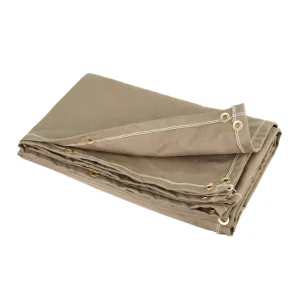
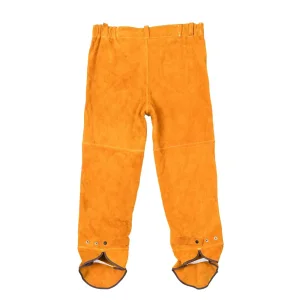
Explore our extended line of industrial protective gear, including heat-deflecting gloves, heavy split leather jackets, and spark-containment barriers.