Engineered to mitigate high convective and radiant thermal hazards in industrial structural manufacturing.
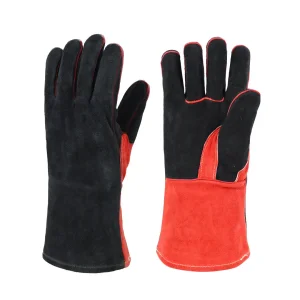
In modern high-amperage metallurgy, high-deposition automated MIG processes, and sub-zero structural bridge fabrications, standard Personal Protective Equipment (PPE) fails rapidly due to composite thermal breakdown and mechanical stitch degradation. As global fabrication codes—governed by the American Welding Society (AWS) and European EN frameworks—enforce stringent operator ergonomics and thermal safety parameters, the global demand for Heavy Duty Welding Gloves engineered with tight molecular consistency has accelerated significantly.
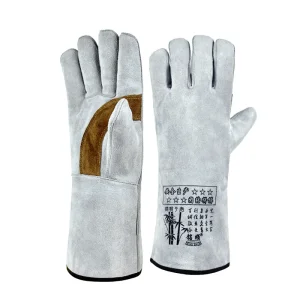
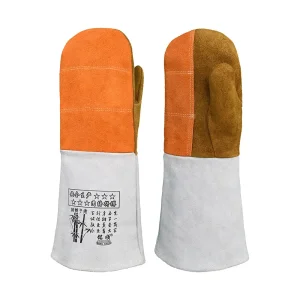
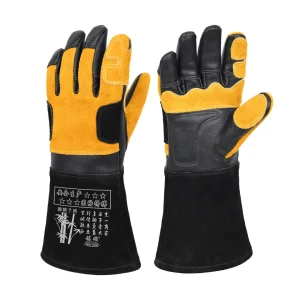
Heavy fabrication environments subject hand protection to multi-axial degradation mechanisms: continuous conductive heat exposure above 350°C, direct radiant energy from plasma arc operations, high-velocity molten metal splatter adhesion, and constant mechanical shearing from sharp structural steel beams. The selection of leather substrates (A-Grade Split Cowhide vs. Top-Grain Goat/Pigskin), internal composite linings (woven Kevlar®, meta-aramid felts, and aerogel barriers), and thermal seams (DuPont™ Kevlar® 4-ply thread with continuous welted boundaries) constitutes the fundamental difference between regulatory compliance and severe workplace lost-time injury (LTI).
Tailored engineering answering localized climatic, metallurgical, and occupational safety demands across global manufacturing hubs.
Cross-country mainline pipe welding demands extreme durability against cellulosic electrodes and open-atmosphere environments. In Northern Canada and Alaska, our gloves integrate moisture-resistant cryogenic grain linings combined with ultra-dense cowhide exteriors that preserve flexibility at -40°C while resisting radiant pipe heating during pre-heat passes.
Offshore marine engineering exposes safety wear to hypersaline coastal mist combined with rigorous FCAW (Flux-Cored Arc Welding). Our specialized oil-and-water repellent tanned splits prevent moisture absorption, eliminating the risk of steam scalding when welders handle hot multi-pass structural joints.
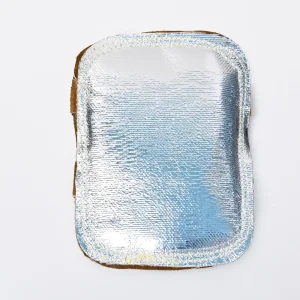
Working inside refinery reactor vessels under extreme ambient temperatures (50°C+) requires breathable, moisture-wicking FR linings paired with aluminized back-hand shields. The glove dissipates internal heat, minimizes hand sweat accumulation, and defends against high radiant flux during tube sheet TIG/MMA operations.
The transition toward decarbonized heavy industry, modular nuclear construction, and lightweight rail transport mandates next-generation mechanical properties in manual welding gear:
Operating from Gaozhou, Guangdong—the world's premiere leather PPE cluster—we offer unparalleled vertical raw material control, agility, and cost-to-performance efficiency.
Unlike trading outfits, we oversee hide grading, re-tanning, fatliquoring, and split extraction directly on site. This guarantees batch-to-batch tensile uniformity, eliminates raw hide thickness variation, and ensures consistent flame retardancy throughout volume shipments.
Equipped with high-precision hydraulic swing-arm die clickers and automated CNC laser nesting cutters. We achieve precise seam line alignment, reduce leather scrap, and pass significant economies of scale directly down to distributors and institutional brands.
Our direct-to-factory prototyping workflow transforms 2D CAD technical packs into physical counter-samples within 5–7 working days, fully branded with thermal embossing, customized cuff piping, woven tracking tags, and customized packaging.
Complete traceability and rigorous conformance to European and American occupational safety metrics.
Every lot of heavy-duty welding gloves exported from our factory undergoes stringent mechanical and flammability batch verification according to international PPE directives:
Field-proven ergonomic solutions engineered for production fabrication lines, structural rail, and pipeline crews.
Actionable answers to common technical, logistics, and private-label sourcing questions.
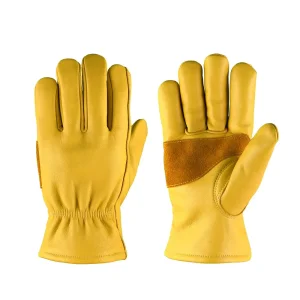
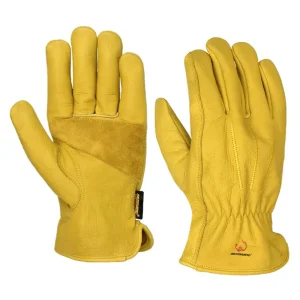
Heavy-duty Stick and MIG gloves require high-density split cowhide (thickness: 1.2mm–1.4mm) or shoulder grain leather. These selections offer superior resistance to molten spatter and prolonged conductive heat above 250°C. In contrast, TIG gloves prioritize thin, high-tensile top-grain goatskin or kidskin (0.8mm–1.0mm) to maximize tactile dexterity for filler rod manipulation at significantly lower spatter levels.
Standard synthetic threads melt or burn when hit with direct arc sparks or hot slag, leading to catastrophic seam failure. We exclusively use genuine DuPont™ Kevlar® 3-ply or 4-ply aramid threads that resist high temperatures without breaking. Additionally, fully welted seams incorporate an extra leather strip between structural joints, protecting the aramid stitches from surface abrasion and molten metal ingress.
Our standard production MOQ is typically 1,200 to 2,400 pairs per style for custom private-label branding, customized leather dyeing, and specialized cuff lengths. Prototyping and custom sampling require approximately 5 to 7 working days. Once the counter-sample and technical spec sheet are approved, standard 40HQ container manufacturing cycles average 35 to 45 calendar days.
Our integrated leather processing lines strictly adhere to zero-discharge standards, utilizing certified effluent treatment systems and automated chemical dosing. We completely avoid prohibited azo dyes, phthalates, and restricted aromatic amines. All production lots comply with European REACH annex XVII standards and California Proposition 65 directives for industrial leather protective apparel.
Yes. For cold-climate structural works (such as Northern European and North American pipeline projects), we configure our gloves with specialized grain leathers that remain supple at sub-zero temperatures. We combine these with multi-layer linings consisting of microfleece, Thinsulate™ or needled aramid felts, and waterproof-breathable membrane inserts to prevent sweat condensation from freezing while maintaining dexterity.