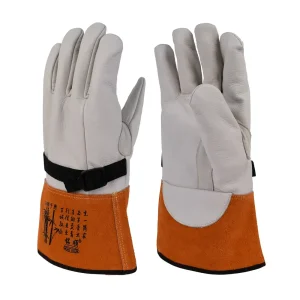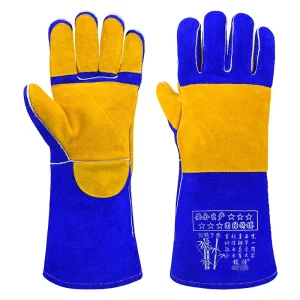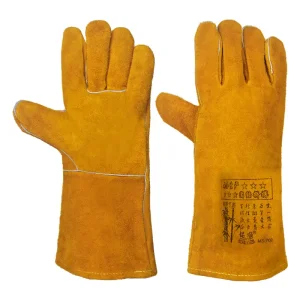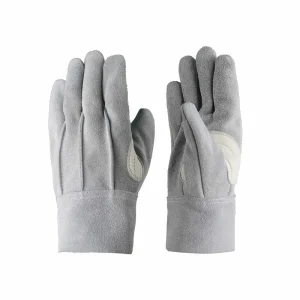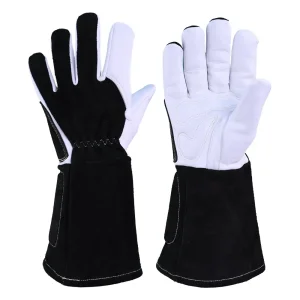
Direct factory inventory and build-to-order manufacturing programs developed with dual-side reinforcement, Kevlar® thread integrity, and specialized split leather configurations.
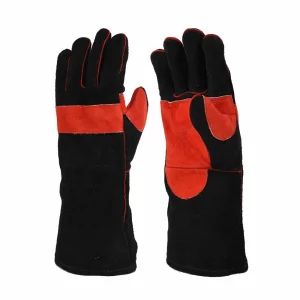
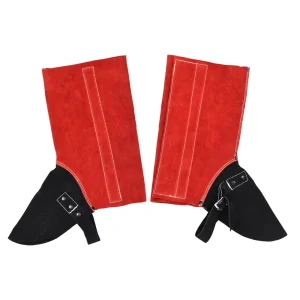
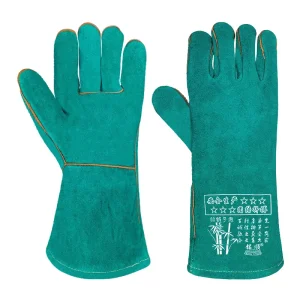
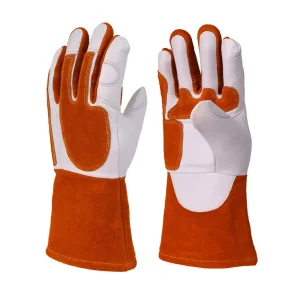
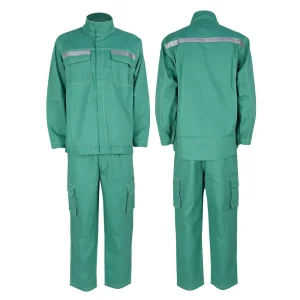
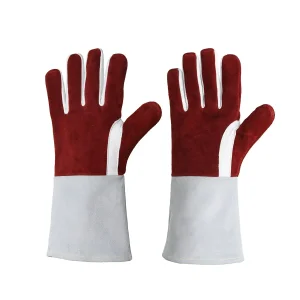
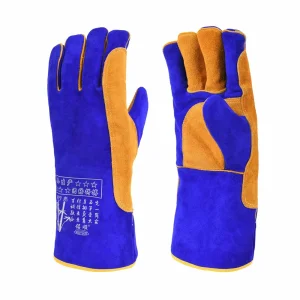
Across metallurgical smelting, high-amperage robotic fabrication, petrochemical turnaround maintenance, and heavy ship construction, industrial procurement strategies are pivoting from generic disposable PPE to high-durability, ergonomically mapped protective assets.
Global labor safety inspectorates (including OSHA and EU Notified Bodies) have tightened enforcement on radiant heat reflectance, convective resistance, and stitch seam combustibility. Tier-1 industrial buyers can no longer absorb the compliance risks of inconsistent non-certified leather items.
Traditional procurement favored low initial purchase costs. However, accelerated wear cycles, high stitch unraveling rates from spatter exposure, and micro-burn injury claims have triggered industrial enterprises to favor premium cowhide split and grain goatskin composites with 3x longer field longevity.
Modern automated fabrication demands operators maintain precise tactility while handling wire feeds, torch triggers, and molten materials. The convergence of supple goatskin palms with high-density cowhide split cuffs solves the historical challenge of hand fatigue versus high thermal insulation.
Thermal environments exhibit distinct thermodynamic behaviors. Our custom heat work gloves and protective garments are architected specifically to match radiant, conductive, and convective heat vectors across varied operational fields.
High exposure to all-weather extremes, wind shear, and multi-position stick/flux-core welding. Requires heavy split cowhide shells, Kevlar® thread structural welting, and moisture-wicking fleece linings.
Combines continuous conductive contact heat (250°C to 350°C) with sharp stamped sheet edges. Requires Level 4/5 cut-resistant aramid inner knits paired with goatskin abrasion overlays.
Severe radiant heat flux (exceeding 800°C back-of-hand exposure) alongside molten metal droplet splatter. Deploying aluminized backings, split leather shells, and wool insulation barriers.
High humidity, saline moisture degradation, and confined-space welding. Utilizes chrome-tanned hydrophobic split cowhide treated against oil permeability and premature stiffening.
Thin gauge exotic alloys (Titanium, Inconel) requiring micrometric filler-rod manipulation. Built with top-grain ultra-supple goatskin, seamless index finger triggers, and Kevlar® stitching.
Rigorous material selection underpins every glove batch. Below is our engineering comparison across primary substrates, mechanical ratings, and thermal deflection behaviors.
| Substrate / Composite | Tensile & Puncture Matrix | Contact Heat Limit (EN 407) | Radiant Heat Deflection | Tactile Dexterity Index | Optimal Factory Application |
|---|---|---|---|---|---|
| Heavy Split Cowhide (1.2 - 1.4 mm) | High tear (Level 4), superior puncture (Level 4) | Up to 350°C (>15s threshold) | Moderate (enhanced with cotton/foam lining) | Class 2 (Standard heavy manipulation) | MIG, Submerged Arc, Heavy Structural Grinding |
| Premium Grain Goatskin (0.8 - 1.0 mm) | Extreme tensile/flex ratio, moderate puncture | Up to 100°C - 150°C (rapid dissipation) | Low (optimized for tactile contact) | Class 4/5 (Maximum micrometric feel) | TIG Welding, Precision Aerospace Fabrication |
| Full Grain Cowhide (1.1 - 1.3 mm) | Balanced tear, exceptional oil/grease repulsion | Up to 250°C | Moderate to High | Class 3 (Balanced ergonomic manipulation) | Pipeline Welding, Valve Turnarounds, Gas Cutting |
| Split Leather + Aluminized Rayon Back | Level 4 abrasion with external shear barrier | Back reflects >95% radiant heat up to 1000°C | Critical radiant barrier shield | Class 1/2 (Heavy thermal focus) | Smelting Furnaces, Continuous Cast Billet Handling |
| Split Cowhide + Aramid/Glass Composite Liner | ANSI Cut A4 - A6, Extreme contact durability | Up to 500°C (with specialized felt interlayers) | High convective thermal attenuation | Class 2 (Medium handling flexibility) | Automotive Stamping, Plasma Cutting & Hot Slag Removal |
Located in Gaozhou, Guangdong—the world-renowned epicenter of leather PPE manufacturing—our facility integrates upstream raw hide sorting, specialized chrome/vegetable retanning, automated laser-guided pattern cutting, and skilled sewing lines under unified quality control.
Unlike assembly-only plants that outsource tanned hides, we maintain direct control over chemical formulation, pH balancing, chrome penetration, and dye bath consistency. This eliminates hide embrittlement, inconsistent color bleeding, and thickness fluctuations between production runs.
With over 1,000 skilled personnel operating across specialized production cells, our monthly output routinely exceeds 500,000 pairs of industrial welding gloves and garments. Peak season distributor demand surges are absorbed without lead time compromises.
Our centralized bulk inventory of raw cowhides and goatskins allows us to hedge against global leather commodity volatility. Long-term corporate procurement programs benefit from 12-month fixed pricing matrices without unpredictable raw material surcharges.
Located in Guangdong's primary transport corridor, finished cargo transitions directly to Shenzhen, Guangzhou, and Hong Kong international ports within hours. Expedited customs consolidation ensures reliable fulfillment of scheduled ocean container departures.
Every single pair of heat work gloves and FR garment components undergoes an unyielding 8-stage manufacturing workflow engineered to eliminate material defects, weak seams, and thermal leakage.
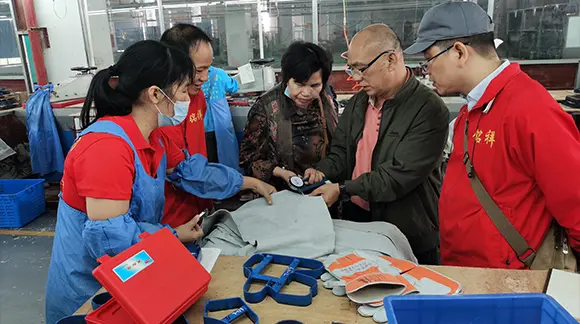
Hides are individually evaluated for structural fiber density, uniform thickness, and surface integrity prior to production allocation.
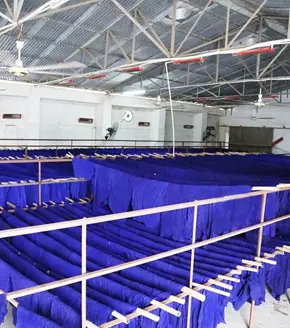
Specialized drum conditioning optimizes chrome balance, thermal resistance, and uniform brand-specific color penetration.
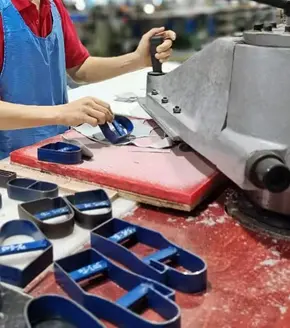
Computerized cutting matrices maximize grain orientation matching across all glove fingers, thumbs, and gauntlet cuffs.
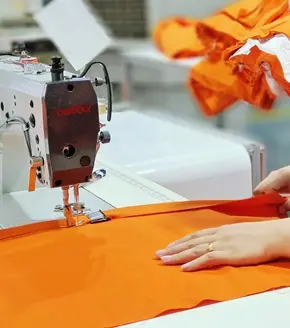
Skilled operators stitch pre-cut panels using flame-resistant Kevlar® aramid thread, integrating reinforced cowhide welts.
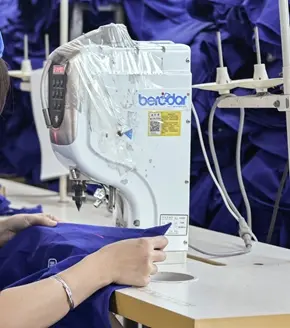
Corrosion-proof brass snaps, heavy-duty insulated rivets, and dielectric closures are securely integrated onto cuffs and jackets.
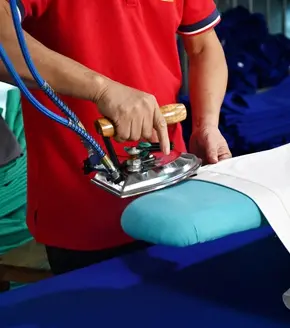
Thermal hand-forming molds establish natural ergonomic hand resting curvature, mitigating operational hand fatigue.
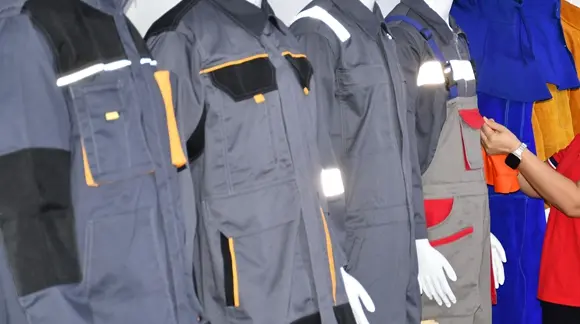
100% manual inspection verifies stitch density, seam tension, welt integrity, and dimensional tolerance against tech pack master files.
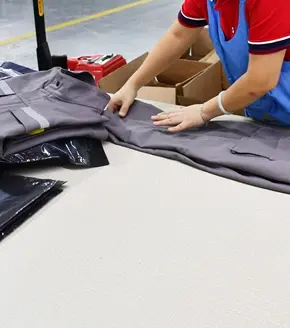
Private label hangtags, anti-humidity desiccant packets, and reinforced double-wall master export cartons ensure safe ocean transit.
Industrial work environments are experiencing accelerated automation, higher continuous welding duty cycles, and heightened sustainability mandates. Ming Shun's R&D division is driving four pioneering innovation initiatives.
Integrating silica aerogel composite non-woven barriers inside the palm and back-hand layers. Provides extreme 600°C contact heat protection while reducing glove profile thickness by up to 40%.
Developing bio-based vegetable and synthetic polymer tanning technologies that achieve zero hexavalent chromium (Cr VI) generation, exceeding impending EU REACH chemical safety thresholds.
Embedding micro-encapsulated thermochromic pigment indicators into high-risk back-of-hand panels. Operators receive instant visual color shifts prior to dangerous conductive heat threshold saturation.
3D biometric stitch articulation along the metacarpal and finger joints, reducing muscle exertion by up to 28% during prolonged 12-hour welding shifts on oil rigs and shipyard berths.
Exporting high-risk PPE into regulated jurisdictions requires verified laboratory test certs. Ming Shun provides complete compliance document packages matching your regional import standards.
Full CE certification under EU PPE Regulation (EU) 2016/425 (Category II and III). Complete testing coverage according to EN 12477 (Type A & B) for welding gloves, EN 388:2016+A1:2018 for mechanical risks, and EN 407:2020 for thermal hazards.
Full conformance documentation for ANSI/ISEA 105-2020 hand protection standards (Conductive Heat Levels 1-5, Cut Resistance A1-A9, and Puncture Resistance). Comprehensive NFPA 70E compliance support for electrical arc thermal protection.
Provision of standardized Declarations of Conformity (DoC), authorized EU Rep documentation, model-specific certified laboratory test reports (SGS, TUV, SATRA), and multi-lingual instruction leaflets (IFUs) configured for your distribution network.
Comprehensive engineering, customization, and logistical answers to support procurement managers, safety directors, and private-label brand owners.
Under EN 12477, Type A gloves provide higher thermal protection against heat, burns, and spatter, making them essential for heavy-duty MIG, stick, and plasma operations, though with lower flexibility. Type B gloves prioritize high dexterity and tactility with thinner leather (often premium goatskin), specifically tailored for precision TIG welding where filler rod control is paramount.
Yes. As a primary manufacturer controlling in-house tanning, we adjust leather split thicknesses from 0.8 mm up to 1.6 mm depending on duty cycle demands. Liners can be customized from simple flame-retardant cotton to wool fleece, cut-resistant Aramid/glass fiber knits, or reflective aluminized membranes.
Our standard MOQ for custom private-label branding (stamped leather logo, custom woven labels, and color choices) is typically 1,200 to 2,400 pairs per style. Bulk production lead time is approximately 40 to 50 days following tech pack sign-off and golden sample sign-off.
Factories relying on spot-market leather purchases frequently suffer from variance in hide softness, moisture content, and tensile strength. Because Ming Shun tans its own split cowhide and sheepskin raw material stocks, chemical ratios, fat-liquoring, and dye saturation remain strictly calibrated across every repeat container shipment.
We stitch our premium welding gloves and garments exclusively with 3-ply or 4-ply Kevlar® aramid thread. Furthermore, high-wear seam joints feature leather welting—protective leather strips sewn between panels that shield the thread from direct exposure to falling slag, molten spatter, and abrasion.
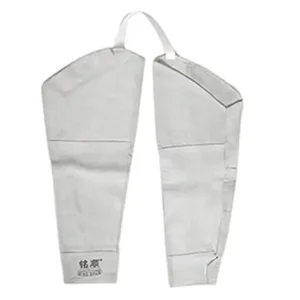
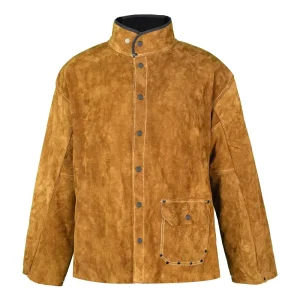
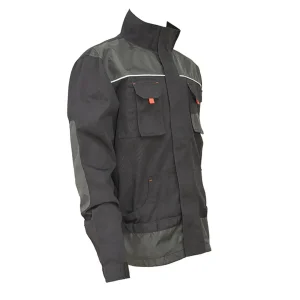
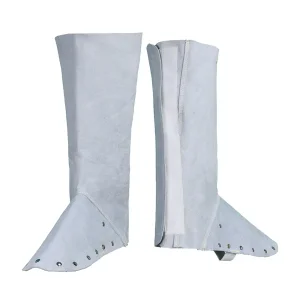
Comprehensive full-body thermal defenses engineered to pair with custom heat work gloves for high-heat industrial sites, utilities, and structural maintenance environments.