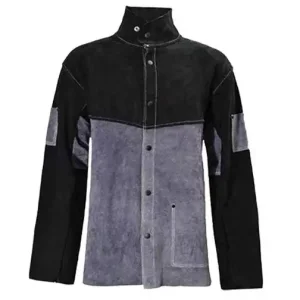
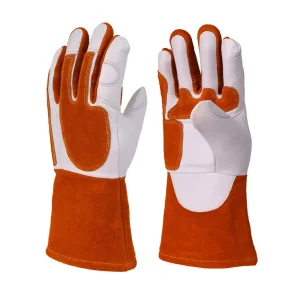
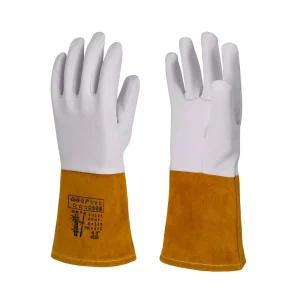
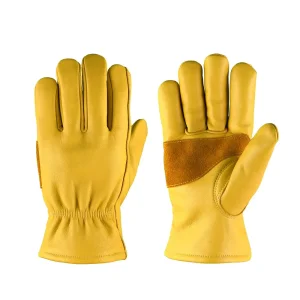
Direct factory supply manufactured to withstand spatter exposure, radiant heat surges, and heavy friction across automated and structural fabrication.
A data-backed examination of regulatory evolution, thermal performance thresholds, and material matrix innovations across global welding sectors.
The modern thermal protective outerwear market has transitioned from static, cumbersome leather garments to multi-layer, ergonomically engineered protective systems. Increased automation in heavy manufacturing, including robotic welding alongside human oversight, requires operators to maintain agile movement while facing severe localized radiant heat (up to 1,200°C momentary spark contact) and secondary arc-flash hazards. Consequently, industrial tier-one contractors increasingly demand certified compliance with EN ISO 11611:2015 and ASTM F1506 standards.
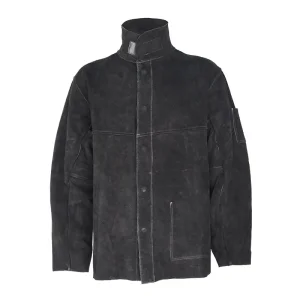
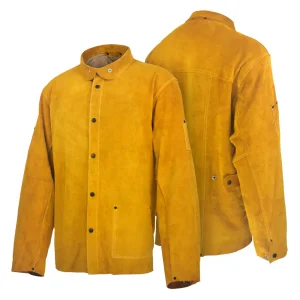
Standard grade split cowhide requires specialized chrome-tanning processes to prevent structural vitrification under extreme temperature differentials. Ming Shun selects A-grade side-split bovine leather (1.2mm - 1.4mm caliper) that preserves natural breathability while providing superior tensile strength and molten slag deflection.
Thermal jackets inevitably fail along mechanical seams when conventional threads combust. We exclusively utilize multi-ply Kevlar® (para-aramid) thread rated up to 425°C threshold decomposition, secured via welted stress-point stitching to mitigate unraveling in rigorous structural erection environments.
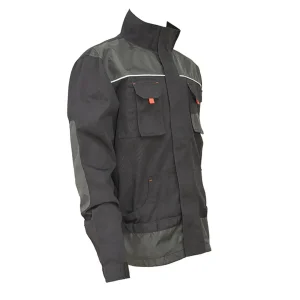
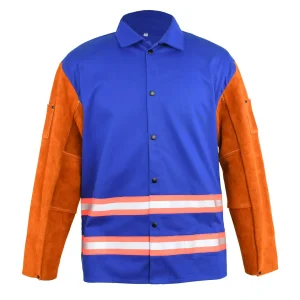
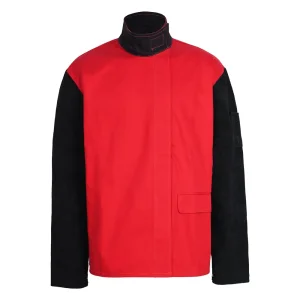
To reduce core heat fatigue in hot workshop climates, our hybrid lines integrate 9 oz flame-retardant treated sateen cotton through body zones. This configuration delivers full EN ISO 11611 Class 1 compliance while maintaining cowhide coverage across sleeves and chest where spatter vectors impact heavily.
| Material Configuration | Radiant Heat Threshold | Spatter Resistance | Weight / Comfort Factor | Ideal Industrial Execution |
|---|---|---|---|---|
| Full Heavy Split Cowhide (1.3mm+) | EN ISO 11611 Class 2 (>20 kW/m²) | Maximum Molten Penetration Drop >25 | Moderate (3.2 - 3.8 lbs per jacket) | Heavy Shipyard, Structural SMAW & Gouging |
| Hybrid Cowhide Sleeves + 9 oz FR Cotton | EN ISO 11611 Class 1 (>10 kW/m²) | Targeted Critical Zone Protection | High Ergonomic Flow (<2.1 lbs) | Production Line MIG / FCAW / Pipe Fabrication |
| Premium Grain Goatskin / Cowhide Outer | EN 12477 Type B / High Flexibility | Moderate Droplet Deflection | Lightweight & Tactile | High-Amperage Precision TIG & Orbital Welding |
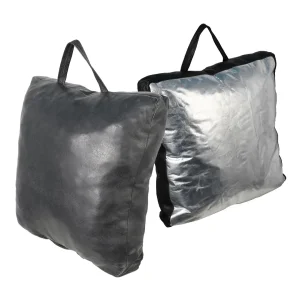
| Aluminized High-Temp Laminate Backing | Direct Radiant Heat up to 1000°C | Complete Liquid Metal Runoff | Specialized Rigid Barrier | Blast Furnace, Foundry Ladling & Glassworks |
How our vertically integrated Guangdong factory delivers dependable batch uniformity, rapid lead times, and global cost competitiveness for international brands.
Unlike trading assemblers reliant on third-party tanners, Ming Shun executes hide grading, uniform thickness splitting, anti-mold conditioning, and custom dyeing internally in Gaozhou. This upstream autonomy eliminates hide color mismatches and thickness discrepancies between successive containers.
Our pattern engineering facility utilizes precision CAD nest cutting systems. This minimizes textile and leather drop rates, ensuring exact panel consistency and ergonomic movement curves across all standard US and EU workwear sizes (S through 5XL).
Every lot undergoes 4-stage inspection: incoming hide raw assessment, sub-assembly seam tensile checks, hardware corrosion testing (die-cast anti-spark brass snaps), and final dimensional validation against client-approved master specifications.
Tailored protective envelopes engineered to withstand specific regional hazards, thermal patterns, and continuous duty cycles.
Corrosive, damp marine environments combined with overhead arc gouging. Split cowhide treated with hydrophobic surface barriers prevents salt absorption and fiber stiffness, safeguarding welders during hull assembly.
Repetitive manual spot welding and robotic assist zones. Requires hybrid FR cotton jackets featuring articulated gusseted underarms to ensure arm flexibility without pulling open the waist enclosure.
Open-trench overland pipeline crews exposed to changing outdoor weather. Outerwear combines puncture-proof split cowhide with wind-resistant dual-closure flaps (zipper plus hook-and-loop leather over-placket).
Continuous molten metal transfer and high radiant heat exposure. Specialized heavy-weight cowhide split designs combined with neck-protecting stand-up mandarin collars to prevent falling slag traps.
Actionable guidance for safety equipment importers, wholesale brands, and enterprise MRO procurement executives navigating international compliance.
Tier-one purchasers are shifting analysis from initial unit cost to Total Cost of Ownership (TCO). High-tenacity cowhide tanned with uniform fatliquors resists cracking over repetitive laundry and cleaning cycles, lowering garment replacement frequencies by up to 35% compared to discount hides.
Safety regulations increasingly mandate consolidated protection. Modern PPE programs require jackets that harmonize mechanical cut/puncture thresholds (EN 388) with thermal radiant barriers (EN ISO 11611) and static dissipative attributes (EN 1149-5) for volatile petrochemical fabrication yards.
Wholesale brand distributors rely on precise factory branding to build client retention. Ming Shun provides complete custom OEM programs: debossed leather logos, high-definition embroidery, flame-retardant printed neck tape, customized retail hangtags, and barcoded individual packaging.
In-depth technical answers addressing material selection, testing protocols, custom sampling, and container volume deliveries.
Class 1 covers lower-hazard manual welding processes that produce smaller amounts of spatter (e.g., TIG, micro-plasma, gas welding) and requires radiant heat resistance exceeding 10 kW/m². Class 2 covers high-hazard welding conditions with heavy spatter generation (e.g., SMAW, flux-cored arc welding, carbon arc gouging) and mandates radiant heat resistance above 20 kW/m². Ming Shun full cowhide jackets meet Class 2 requirements, while our hybrid leather/FR cotton models are certified to Class 1.
Unlike synthetic thermoplastic polymers that can melt, shrink, or degrade under direct molten metal contact, quality split bovine leather forms an insulating carbonized crust without melting onto the skin. The structural collagen matrix delivers natural cut, tear, and abrasion resistance that synthetic fabrics cannot easily duplicate in rigorous heavy fabrication.
Custom OEM prototypes and sample sets matched to your tech pack are prepared and shipped within 7 to 10 working days. Full container orders (20GP / 40HQ) typically ship in 35 to 45 calendar days following pre-production sample sign-off, supported by our 1,000+ employee capacity across dedicated production cells.
Because we operate our own leather tanning and conditioning lines in Gaozhou, raw hides are sorted by weight, substance, and tensile density before processing. We control dye-vat chemistry, drying cycles, and fatliquor formulas in-house, maintaining consistent hand-feel, shade accuracy, and thermal performance across reorders.
Yes. We adjust sizing layouts to suit your destination market, whether tailored to broad American workwear cuts (incorporating roomier armholes and extended back lengths) or contoured European profiles. Custom sleeve lengths, extra gusseting, and extended tall sizes are handled in our CAD pattern room.
We supply full product compliance documentation upon request, including EN ISO 11611 test reports, CE declaration certificates, EN 388/EN 12477 test metrics, REACH chemical compliance declarations, and factory ISO 9001 certified documentation for customs and safety regulatory validation.
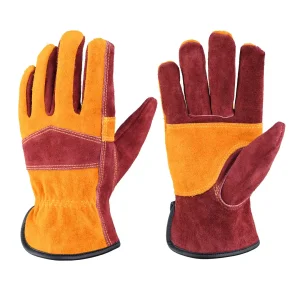
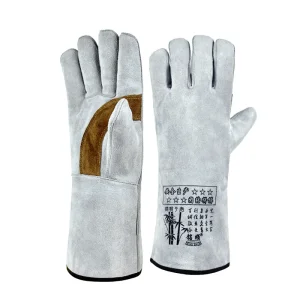
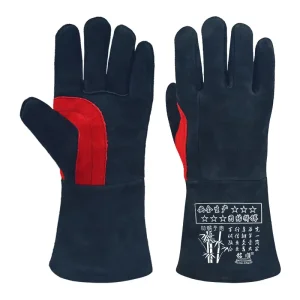
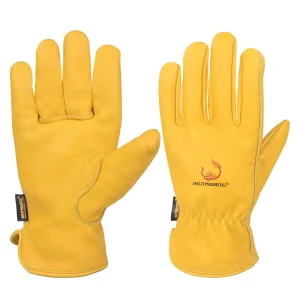
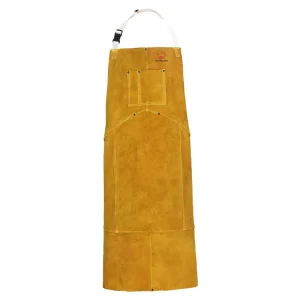
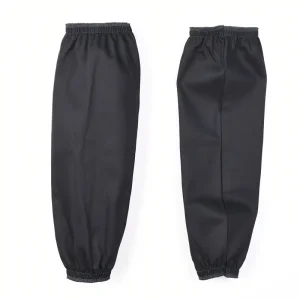
Complementary leather accessories, heat-reflective shields, aprons, and gloves designed for complete industrial welder protection.