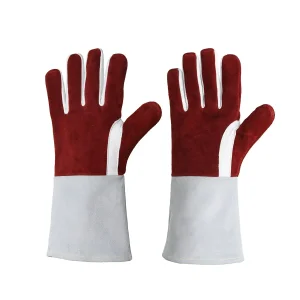
Engineered at our integrated Gaozhou manufacturing hub with over 25 years of technical expertise. Certified according to international safety directives.
An exhaustive analysis of occupational hand injuries, regulatory enforcement, total cost of ownership (TCO), and supplier consolidation across global manufacturing sectors.
Across the global manufacturing landscape, mechanical trauma, thermal exposure, electrical arc discharges, and chemical contact represent substantial operational hazards for workers. According to the US Bureau of Labor Statistics (BLS) and European Agency for Safety and Health at Work (EU-OSHA), over 23% of all disabling occupational incidents involve injuries to the fingers, palms, and wrists. Beyond direct medical payouts, a hand injury introduces lost workdays, reduced operational throughput, and significant workers' compensation escalations.
In response, tier-one multinational enterprises, industrial distributors, and safety procurement managers have moved decisively away from commodity off-the-shelf gloves. Sourcing protocols now mandate custom-tailored industrial hand protection designed for exact tactile tolerances, specific heat thresholds, cut resistance metrics, and localized operational tasks. At Guangdong Ming Shun Labour Protective Products Co., Ltd. (operating from Plant 2, Industrial Avenue, Pukang Industrial Park, Gaozhou City, Guangdong), our quarter-century pedigree as an integrated OEM/ODM manufacturer allows us to engineer solutions from raw hide tanning to precision Kevlar-reinforced seam construction.
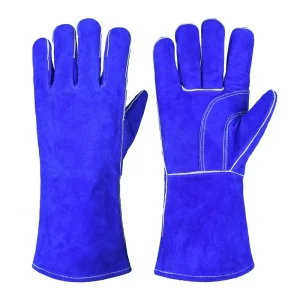
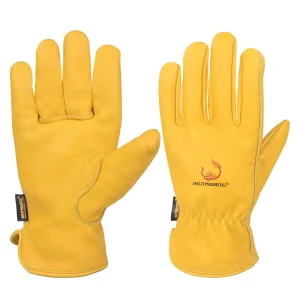
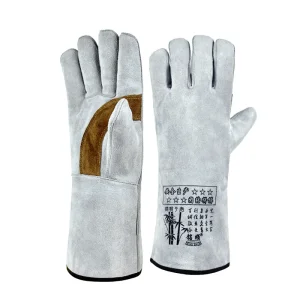
Initial unit cost is no longer the decisive metric. Safety directors benchmark procurement via glove lifecycle, tear durability, and seam integrity. Low-grade gloves wear out in days; our split cowhide with reinforced keystone thumbs lasts weeks under intense slag abrasion, reducing replacement cycles by up to 60%.
Strict auditing under CE Category II / Category III, EN ISO 11611 (welding protective wear), EN 12477 (welding hand wear Type A/B), and ANSI/ISEA 105 cut/puncture scale requires transparent batch documentation and physical lab certifications that trading companies simply cannot guarantee.
Importers and brands cannot afford intermediary markups and uncontrolled subcontractors. Direct alignment with our 1,000+ worker Gaozhou factory guarantees dedicated production lines, transparent batch tracking, and factory-level traceability.
How sustainable tanning, engineered synthetic fibers, biomechanical 3D patterning, and digital quality monitoring are driving next-generation worker safety.
Global environmental regulations such as REACH (Annex XVII) prohibit Hexavalent Chromium Cr(VI) due to dermatological allergic sensitization. Ming Shun enforces controlled vegetable-chrome hybrid tanning protocols ensuring zero detectable Cr(VI) release under prolonged heat, sweat, and friction.
Traditional flat-cut patterns force the hand into continuous muscular tension, provoking carpal stress and worker fatigue. We integrate pre-curved 3D fingers, wing-thumb or keystone-thumb geometries, and flexible fourchette panels that mimic the natural resting human hand grasp.
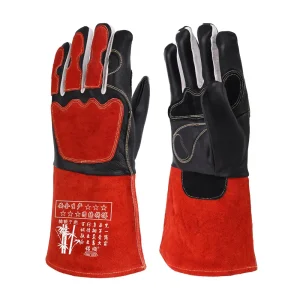
Heavy split cowhide handles radiant heat and molten droplet splash, but lacks agility. Modern configurations merge full-grain goatskin on the palms for sub-millimeter tactile sensitivity, backed by 9 oz flame-resistant treated cotton or aluminized reflective glass-fiber drapes.
From automated automotive stamping lines to offshore oil rigs and structural shipbuilding, hand protection must be dialed precisely into operating temperatures and kinetic hazards.
| Industrial Domain | Primary Hazards Identified | Recommended Leather & Substrate | Seam & Thread Spec | Applicable Standards |
|---|---|---|---|---|
| Heavy SMAW / Stick Welding | Extreme molten splatter, high convective heat, heavy slag abrasion | A-Grade Heavy Split Cowhide (1.2–1.4mm) with insulated fleece liner | DuPont™ Kevlar® 4-ply, fully welted seams | EN 12477 Type A, EN 407 (413X4X), EN 388 (4244X) |
| Precision GTAW / TIG Welding | High radiant arc glare, demands fine wire feed dexterity, low spatter | Ultra-supple top-grain Goatskin or deerskin palm with pigskin gauntlet | Continuous filament Kevlar®, seamless index finger | EN 12477 Type B, EN 388 (2121X), ANSI A1 Cut |
| Automotive Stamping & Assembly | Razor sheet-metal shear edges, stamping oil lubricants, impact pinch | Grain cowhide palm reinforced with HPPE / basalt fiber inner lining | Double Kevlar® lock-stitch, TPR dorsal metacarpal pads | ANSI/ISEA 105 A4 Cut, ANSI Impact Level 2, EN 388 (4X43DP) |
| Cryogenic & Cold-Chain Logistical Work | Sub-zero surface chill, frostbite, damp ice slippage, mechanical abrasion | Water-resistant treated cowhide with multi-layer Thinsulate™ fleece | Bonded waterproof nylon/polyester thread with sealed internal barrier | EN 511 (12X), EN 388 (3232X), Water Impermeable |
| Structural Metallurgy & Foundry Work | Radiant foundry infrared heat up to 1000°C, slag explosions | Aluminized composite back with heavy split leather palm & wool felt lining | Heavy-gauge braided para-aramid thread with steel core | EN 407 (4444XX), ASTM F1060 Thermal Conduction |
In heavy engine machining and mechanical workshops, smooth surfaces coated in cutting lubricants present acute crush risks. Custom hand gloves can be manufactured with specialized pebble-grain leather or porous nitrile micro-foam palm overlays to evacuate fluid film and lock onto tooling safely.
Welding and casting operators face internal skin sweat accumulation that causes skin maceration and drops glove insulation value. Ming Shun solves this through breathable FR cotton backing (such as our 9 oz flame-retardant twill) paired with localized leather gauntlets where sparks bounce off.
Traditional gloves layer bulky cotton that destroys fine manual manipulation. Utilizing laminated aramid felt lining paired with high-tensile goatskin allows TIG operators to manipulate 1.6mm filler rod precisely while guarding against continuous contact heat up to 250°C.
How digital sensing, smart coatings, circular leather reclamation, and advanced automation are establishing modern benchmark manufacturing standards.
Application of fluorocarbon-free hydrophobic and oleophobic nano-dispersions across outer split leather pores. Repels hydraulic fluids, moisture, and slag droplets without suffocating natural trans-dermal water vapor permeability.
R&D development of embedded flexible thermal diodes and strain-gauge piezoresistive sensors inside gauntlet seams. Alerts safety systems if cumulative thermal absorption exceeds safe human exposure limits or if worker hands approach high-voltage danger zones.
Factory-floor reclamation of edge cut-offs converted into pulverized bonded leather bases for protective welders' cushions, tool holders, and thermal insulation underlays, driving our Gaozhou factory closer toward zero landfill waste.
Digitally calibrated multi-ply CNC oscillating knife and laser bed cutting systems ensure dimensional tolerances within ±0.3mm across every glove panel, eliminating manual cutting discrepancies between initial approval samples and 500,000-pair container shipments.
A systematic framework resolving vendor audits, private label branding, testing validation, and tariff-optimized global shipping.
Our engineering team works directly from your CAD vector technical drawings, physical benchmark samples, or performance briefs. We formulate exact bill-of-materials (BOM), leather grain selection (cowhide, goatskin, pigskin), reinforcement mapping, thread specifications, and cuff styling.
No bulk production order begins without signed physical counter-samples. Each revision is accompanied by a documented quality spec report stating tensile break force, pH stability, seam density, and dimensional grading across sizes 7/S through 12/3XL.
Full suite branding execution: thermal heat-transfer logo stamping, deep leather heat embossing, high-definition woven brand cuffs, barcodes, multilingual user instruction booklets (CE/UKCA mandatory leaflets), and retail header cards.
Inspection does not happen only at the shipping dock. Raw hide grading, post-tannery pH checks, dye bleed testing, computerized cut panel validation, seam welt tension inspection, and 100% manual needle detection occur on-site before boxing.
With 1,000+ factory employees, dedicated lines for FR cotton workwear and heavy leather PPE, and output exceeding 500,000 glove pairs per month, Ming Shun protects clients from capacity crunches during seasonal peak demands.
Our factory-direct sales engineering team handles technical documentation, customs classification, HS codes, freight forwarding (FOB, CIF, DDP), and provides prompt answers via phone and WhatsApp within standard business hours.
Clear, direct answers regarding custom leather glove manufacturing, minimum order quantities (MOQ), compliance standards, and factory lead times.
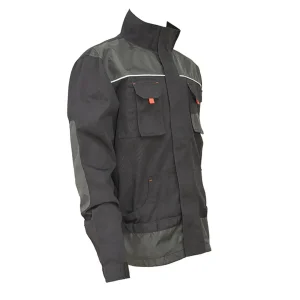
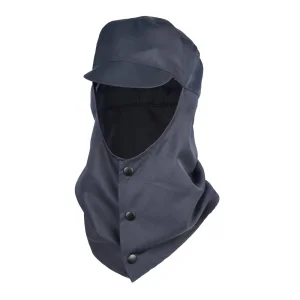
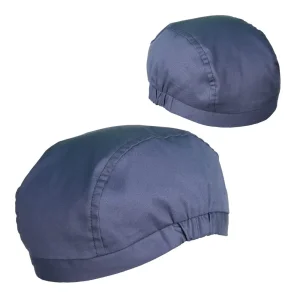
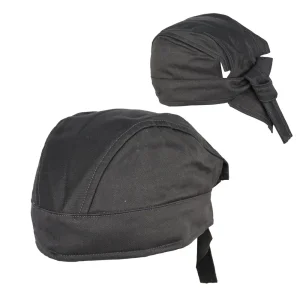
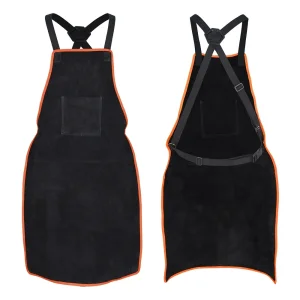
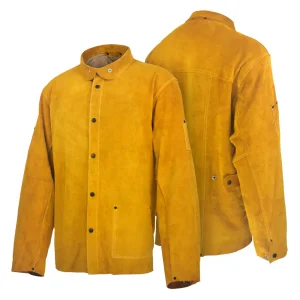
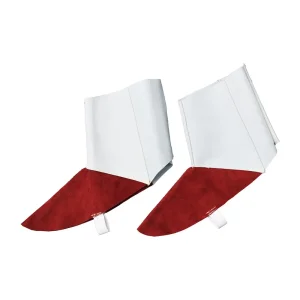
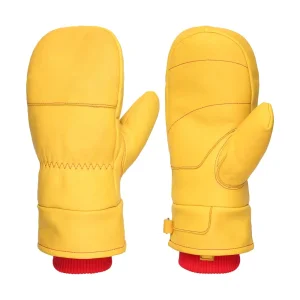
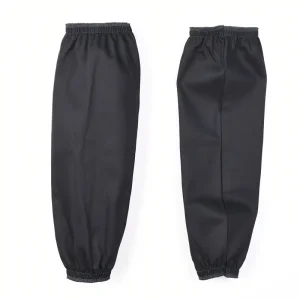
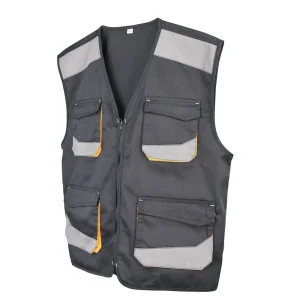
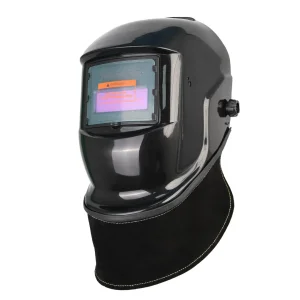
Complete your fleet safety and distributor assortments with genuine split leather welding jackets, spats, fleece winter mittens, and FR protective accessories.