Factory-direct thermal barrier solutions tested under severe hot-work operations, spatter zones, and radiant heat hazards.
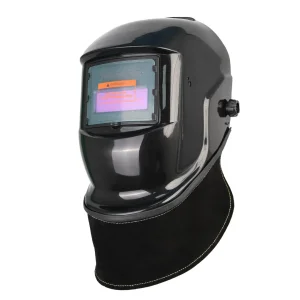
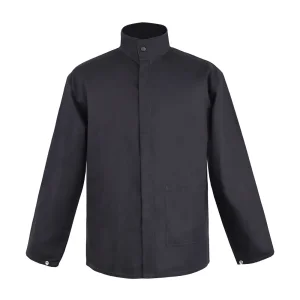
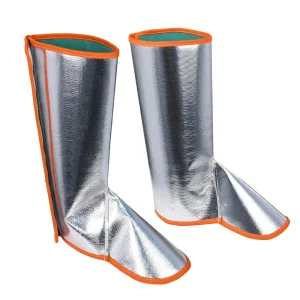
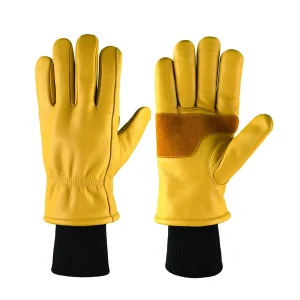
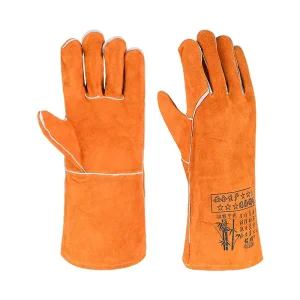
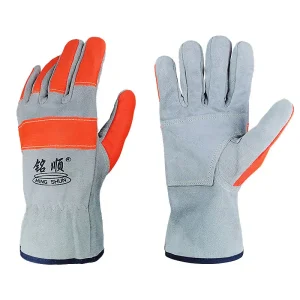
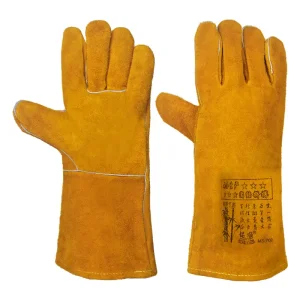
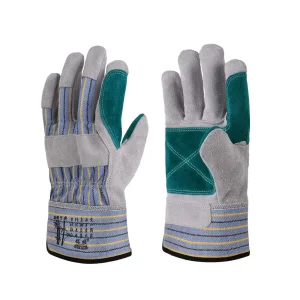
Analyzing vertical tannery integration, technical FR textile treatment clusters, and cost predictability for Tier-1 safety importers.
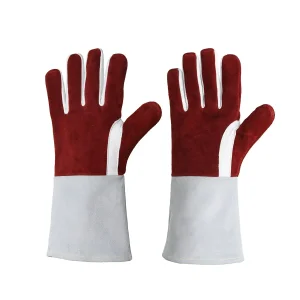
Unlike trading assemblers reliant on volatile hide brokers, our Gaozhou manufacturing campus maintains dedicated split cowhide, goatskin, and grain pigskin treatment operations. We calibrate chromium tanning agents, density grading, and mechanical split thicknesses (1.1mm to 1.4mm) internally, ensuring unvarying tensile strength and spatter resilience batch-to-batch.
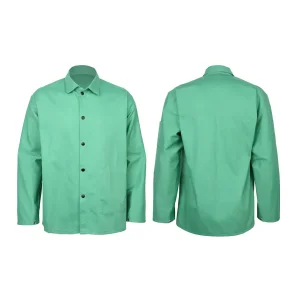
Our flame resistant cotton matrices employ long-staple 7 oz, 9 oz, and 11 oz twill formulations bonded with reactive organophosphate polymers (Proban & Pyrovatex chemistry equivalent). The flame-retarding agent penetrates the molecular core of the cellulosic fiber, guaranteeing wash durability beyond 50+ commercial wash cycles while preserving ergonomic breathability.
Supported by more than 1,000 skilled garment technicians and mechanized sewing cells, Ming Shun eliminates bottleneck vulnerabilities. Output exceeds 500,000 glove pairs and tens of thousands of hybrid welding garments monthly, shortening delivery schedules down to predictable ~45-day cycles even through seasonal surges in global industrial procurement.
Critical engineering metrics required by technical safety officers and corporate procurement buyers when auditing flame-resistant welding jackets.
Meeting EN ISO 11611 Class 1 and Class 2 standards demands zero flaming after-burn, no molten drip formation, and char lengths strictly limited under 100mm during 10-second edge and surface ignition exposures.
Standard nylon or polyester threads incinerate instantly upon molten splash contact. We construct load-bearing seams with 3-ply to 5-ply para-aramid Kevlar thread, reinforced by concealed rivets at pocket and armscye stress anchors.
Secondary electrical shock protection requires zero metal-to-skin conduction pathways. Snap fasteners on our MS series feature non-conductive, heat-insulated resin coatings and double-front storm plackets to repel spark ingress.
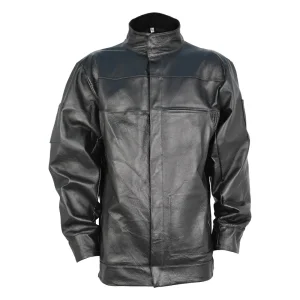
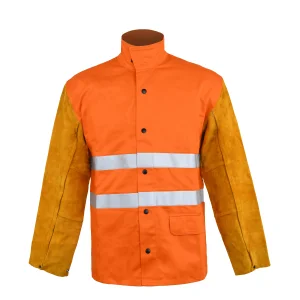
Full-cowhide jackets cause muscle fatigue in high-ambient environments. Our hybrid designs place durable split leather on sleeves and chest aprons, paired with 9 oz breathable FR cotton on back panels to lower thermal stress.
Guangdong Ming Shun Labour Protective Products Co., Ltd. operates enterprise facilities in Pukang Industrial Park, Gaozhou, backing industrial brands with verifiable laboratory performance.
Navigating regional workplace safety legislation with documented audit trails, third-party laboratory verification, and localized supply partners.
For US and Canadian distributors, welding apparel must reconcile OSHA 1910.252 hot work mandates with NFPA 2112 flash fire specifications and ASTM F1506 arc rating thresholds. Ming Shun provides third-party accredited laboratory test documentation covering ATPV/HAF arc thermal ratings and vertical flame flammability resistance.
Supplying EU importers demands stringent Category II PPE compliance under EN ISO 11611:2015 (Protective clothing for use in welding and allied processes). We deliver complete technical documentation files (TCF), EU Declarations of Conformity, Notified Body type-examination certificates, and REACH Annex XVII chemical safety guarantees (Azo dyes, pH balance, Chromium VI limits).
Our bilingual export engineering desk offers localized tech pack translations, tariff code (HS code) optimization, palletization blueprints, and drop-ship logistics consolidation. We customize sizing charts (US Big & Tall, EU ergonomic fit, Asian proportions) directly at the CAD pattern phase prior to serial tooling.
How automation, sustainability mandates, and advanced material sciences are reshaping PPE design over the next business cycle.
Global environmental ESG initiatives are driving transition toward aldehyde-based and vegetable-retanned split leathers. Ming Shun is deploying zero-chrome tanning lines that reduce heavy metal effluents while maintaining high heat deflection temperatures.
Moving beyond treated topical finishes, modern high-heat industrial sites increasingly procure aramid blends (Nomex®, Kevlar®) and modacrylic-cotton weaves. These fabrics offer permanent flame retardancy unaffected by harsh laundering agents or chemical contact.
As automated welding cells proliferate, human technicians transition from continuous torch holding to setup, slag chipping, and robotic programming. Garment designs demand hybrid agility: lighter flex-zones, high-abrasion forearms, and high-visibility EN 20471 accents.
Prototype development centers are piloting jackets embedded with passive RFID asset trackers and heat stress indicators, assisting heavy fabrication yards and shipbuilders in monitoring worker thermal loading in confined spaces.
Tailoring garment cut, leather thickness, and textile weight to the exact physical stressors of distinct work environments.
Salt air, cramped double-bottom tanks, and vertical overhead welding require ultra-heavy cow split jackets with stand-up welder collars. Leather-sleeved hybrid jackets ensure technicians maintain upper body movement while protecting shoulders and arms from dripping overhead slag.
Refinery shutdown turnarounds combine flash fire risks with heavy pipe spool fabrication. Procurement programs mandate dual-certified NFPA 2112 / EN 11611 anti-static FR cotton coveralls and jackets equipped with heavy brass snaps covered by protective flame-retardant flaps.
High-elevation structural welders face both spatter and sharp structural beams. Our MS-280 Hi-Vis series blends heavy split cowhide sleeves with high-visibility fluorescent yellow FR cotton torso sections and 3M Scotchlite reflective stripes, keeping riggers visible to crane operators.
From raw hide classification to final container loading, every step is governed under strict ISO 9001 quality assurance.
Hides and technical textiles undergo tensile, thickness, and surface defect inspections before routing to cutting tables.
Internal dyeing vats yield color-stable leathers compliant with AZO and hexavalent chromium international limits.
Computerized dies cut panels with precision tolerances, maintaining uniform grain matching across garment fronts.
Heavy-duty compound feed machines assemble structural panels with 3-ply Kevlar aramid thread for heat-proof durability.
Dielectric snap closures and anti-tear stress rivets are seated into stress zones with automated pneumatic presses.
High-pressure steam presses form collars and cuffs into clean, retail-ready presentations suitable for distribution chains.
100% of finished lots undergo dimensional checks, pull-force verification on snaps, and seam consistency screening.
Garments are bagged with desiccant packets, labeled with client SKU barcodes, and boxed in reinforced export cartons.
Straightforward answers regarding OEM customizations, testing data, material choices, and container shipping.
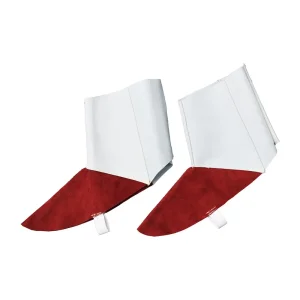
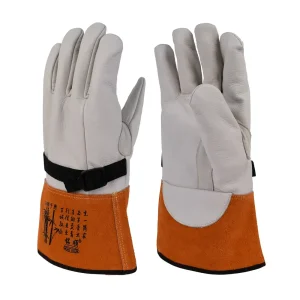
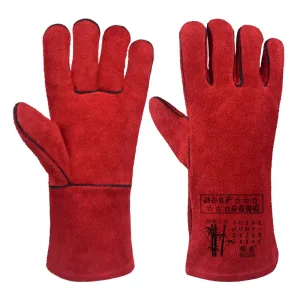
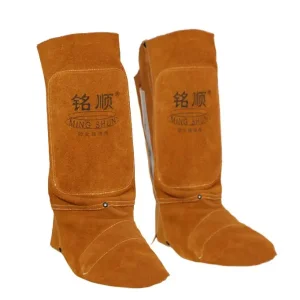
Expanding protection across extremities, lower limbs, and core torsos with specialized cowhide, pigskin, and multi-ply composite accessories.