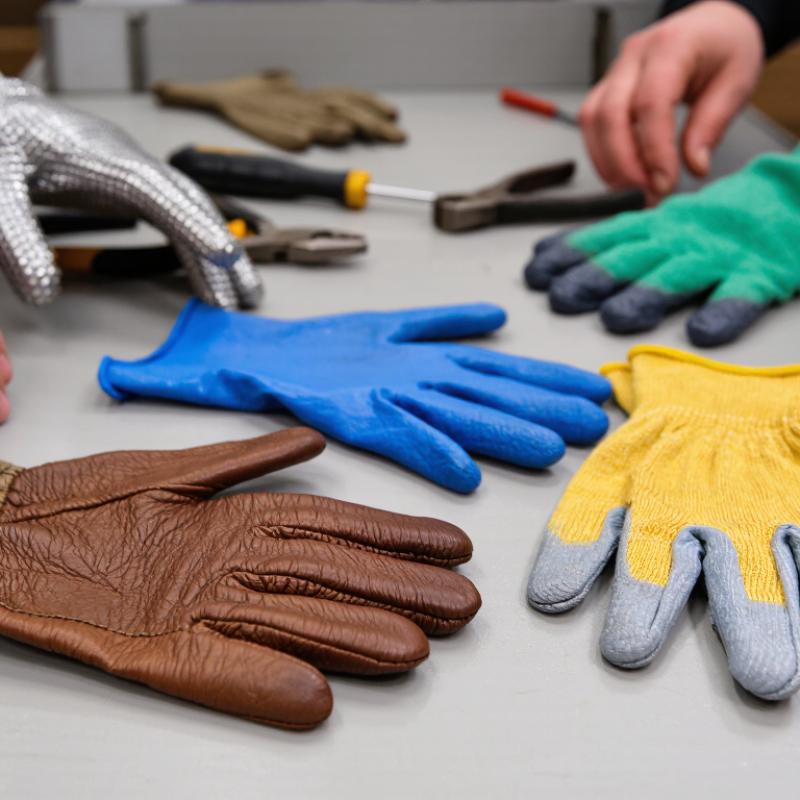
A glove can look dependable on a product page and still fail the task in front of it. A thin, flexible pair may help with fine assembly, while rough handling can demand stronger abrasion resistance. Chemicals, heat, sharp edges, grip, fit, and wear time all change the decision. Safety Gloves are not interchangeable, and a label alone cannot tell the whole story.
Dr. John Howard, a physician and longtime NIOSH director, has emphasized the role of protective equipment within broader hazard control. Put as a paraphrase: “PPE is a final layer, not a substitute for controlling hazards.” That distinction matters. Buyers should consider the work itself, confirm the glove’s tested performance against relevant hazards, and ask suppliers for current technical documents. Check sizing with the people who will wear the gloves; a loose cuff or cramped fingertips can undermine comfort and control. Small details count.
Fit matters. So does training. Global purchasing adds practical complications: product specifications may vary, samples may feel different from bulk orders, and replacement stock may arrive later than expected. Compare evidence, not just price. Ask how the gloves perform after repeated use, whether workers can handle tools securely, and what conditions require replacement. A neat spreadsheet helps, but it cannot fully reproduce a wet handle, a stiff seam, or a long shift. Buyers should test assumptions with users, document decisions, and revisit them when tasks change. These ten buying tips offer a grounded starting point, not a universal answer. Some choices remain imperfect; recognizing that is part of buying responsibly.
Before comparing glove prices, define the hazard: rough cartons, sharp sheet edges, or repeated handling create different risks. EN 388:2016+A1:2018 rates abrasion from 0 to 4 and the coup cut test from 0 to 5. Its abrasion thresholds rise from 100 to 8,000 test cycles across levels 1–4. Coup cut thresholds rise from an index of 1.2 at level 1 to 20 at level 5. These are standard test results, not promises of a glove’s working life (CEN, EN 388:2016+A1:2018). Small numbers matter.
A high abrasion score may suit workers repeatedly moving coarse boxes, but it does not prove strong cut protection. Likewise, a coup score alone may mislead if a blade dulls during testing. Check the full EN 388 marking; where relevant, compare the separate ISO 13997 TDM cut result, shown as levels A–F. Then trial gloves on the actual task: a dry carton edge feels different from oily sheet metal. Fit matters. A loose fingertip can catch, while a thick glove can reduce grip. I would not choose from the label alone; real handling conditions deserve a second look.
When comparing cut ratings, do not treat ISO letters and ANSI numbers as interchangeable. Under ISO 13997, the cut-resistance force is reported in newtons and grouped into levels A–F: A begins at 2 N, B at 5 N, C at 10 N, D at 15 N, E at 22 N, and F at 30 N or more. ANSI/ISEA 105 uses A1–A9, measured in grams of force under ASTM F2992: A1 covers 200–499 g, A4 covers 1,500–2,199 g, and A9 starts at 6,000 g. Check the test method, not just the label.
The scales use different units and classification bands, so a quick letter-to-number conversion can mislead. ISO 13997:1999 specifies a method that measures force during a blade-cut test; ANSI/ISEA 105-2016 sets the A1–A9 classification ranges using grams of force. These standards provide useful comparison data, but neither rating alone captures every workplace risk.
A glove rated A5 may suit sheet-metal handling, while sharp burrs, oily surfaces, and repeated gripping can change what feels safe in practice. Ask suppliers for test-standard details and review glove performance against the actual task.
One uncomfortable truth: workers may remove a glove that restricts finger movement, even when its rating looks impressive.
A chemical-resistance type is a screening clue, not a promise that a glove protects against every substance. Under EN ISO 374-1, Type A means the glove passed the required test against at least six listed chemicals, with each reaching a breakthrough time of at least 30 minutes. Type B requires at least three listed chemicals at that threshold. Type C requires at least one listed chemical and a breakthrough time of at least 10 minutes. Check the chemical codes beside the type; the number alone leaves out important detail.
Match those codes to the chemicals your workers actually handle. A glove tested against one solvent may perform differently with another, even if the names sound similar. Compare the test list with the product’s safety data sheet, and consider concentration, temperature, contact time, and whether the task involves splashes or full immersion. Permeation is not always visible. The material may look unchanged while chemicals pass through it.
Ask for test documentation when a claim is unclear, and confirm that the glove material and thickness suit the task. A high type can look reassuring, perhaps too reassuring. Real conditions vary, and laboratory results do not settle every question. Check fit and dexterity too; workers may remove an awkward glove, which defeats its purpose.
Under EN ISO 374-1, Type A requires at least 30 minutes of resistance against at least 6 listed chemicals; Type B requires at least 30 minutes against at least 3; and Type C requires at least 10 minutes against at least 1. Check the glove’s test results against the specific chemicals and conditions in your application.
Use ISO 21420:2020 as a sizing baseline, not a fit guarantee. The standard relates glove size to hand length and circumference, while its dexterity test uses five performance levels. Test results distinguish the smallest pin a wearer can pick up, from 11 mm at Level 1 to 5 mm at Level 5. These measurements offer buyers a useful comparison point, but they cannot predict comfort during every task.
Measure the wearer’s dominant hand, then trial gloves while gripping the actual tools used on site. Check that fingertips do not bunch, seams do not press into joints, and the palm does not pull tight when making a fist. Small details matter. A loose fingertip can hinder delicate assembly; an overly tight glove can tire the hand during repeated work. ISO 21420 sizing charts help narrow options, but hand shape varies, and a chart is not a hand. Ask suppliers for the glove’s size data and ISO 21420 dexterity test results. Then compare samples with realistic tasks, such as picking up a washer or turning a small fastener. One trial may not represent every worker. Keep notes on fit, grip, and fatigue across different hand sizes before placing a large order.
EU market access starts with matching each glove to the hazards it is designed to control. Under EU Regulation 2016/425, PPE falls into Categories I, II, or III. The category reflects risk severity, not the glove’s material, thickness, or price. A thin glove may still need a higher category if it protects against serious hazards.
Category I covers minimal risks, such as superficial mechanical injury.
Category II covers risks outside Categories I and III, including many common industrial hazards.
Category III applies to risks that may cause death or irreversible harm, such as exposure to harmful chemicals or extreme heat.
Check the product’s EU Declaration of Conformity and technical documents. For Category III, verify EU type-examination and ongoing production surveillance, plus the notified body number beside the CE mark. Paperwork can still leave gaps. Match the exact model and intended use.
Tips: Identify the workplace hazard; confirm the category; check the glove’s scope of protection; review the Declaration of Conformity; verify Category III certificates and surveillance; inspect CE marking; compare model details; ask for test information; check sizing and dexterity; reassess after work conditions change. A neat certificate is useful, but it cannot replace a practical fit and hazard review.
EN 388 rates abrasion from 0 to 4. Higher levels require more test cycles, from 100 to 8,000. It does not predict exact glove life.
No. Abrasion and cut resistance measure different hazards. A glove handling rough cartons may still need a separate cut assessment. Labels can be misleading.
It rates cut resistance from 0 to 5. The test thresholds range from an index of 1.2 at level 1 to 20 at level 5.
Coup testing can be affected by blade dulling. Where relevant, compare the separate ISO 13997 TDM result, rated from A to F. Small details matter.
Try it on the actual material. A dry carton edge differs from oily sheet metal. Check fit and grip; loose fingertips can catch.
Type A passed tests against at least six listed chemicals for 30 minutes each. Type B requires three chemicals at that time. Type C requires one chemical for at least 10 minutes.
No. Check the chemical codes beside the type and compare them with the substances workers handle. Similar-sounding solvents may behave differently.
Consider concentration, temperature, contact time, and whether the task involves splashes or immersion. Ask for test documents if claims are unclear. Permeation may not be visible.
An awkward glove can reduce grip, and workers may remove it. That defeats its purpose. I would still pause before trusting a label alone.
Choosing Safety Gloves starts with identifying the hazards workers may face, such as abrasion, cutting, or chemical contact. Compare protection ratings carefully: EN 388 assesses abrasion and coup-cut resistance, while ISO 13997 grades cut resistance from A to F and ANSI/ISEA 105 uses levels A1 to A9. For chemical protection, review the EN ISO 374-1 type and the number of chemicals tested: Type A covers six, Type B three, and Type C one.
Protection should also work in practice. Check sizing and dexterity against ISO 21420 requirements so gloves fit comfortably and allow the tasks to be performed effectively. For products intended for the European market, verify the applicable PPE Regulation 2016/425 category, which groups risks into Categories I, II, and III. By matching documented performance, fit, and risk category to the job, buyers can make more informed selections.