In 2026, Welding Safety is not a poster beside the shop door. It is how each shift is planned, checked, and adjusted. A bright arc can hide a damaged lead, a loose ground clamp, or fumes drifting across a worker’s face. Small oversights matter. So do routines that feel boring. A strong safety plan connects people, equipment, ventilation, and the actual task—not just a checklist completed at daybreak.
Michael K. McCawley, an occupational hygienist whose research includes welding-fume exposure, offers a useful evidence-based lens. A paraphrase, not a verbatim quotation, of the lesson his work supports is: “Control fumes at the source, then verify protection where the welder breathes.” That principle should shape the guide ahead: hazard assessment, ventilation, protective equipment, fire prevention, electrical checks, training, and emergency readiness. Measure airflow. Inspect cables. Keep combustibles clear. These details are practical, not decorative.
Still, no procedure catches every lapse. A hood may fit poorly; a fan may run yet move too little air. An experienced welder may skip a check during a rushed repair. That is uncomfortable, and worth admitting. This guide focuses on steps supervisors and welders can verify in the work area, along with questions teams should revisit when processes or materials change. It is not a substitute for site-specific risk assessment or qualified safety advice. The aim is simple: fewer assumptions, clearer controls, and safer work before the arc is struck.
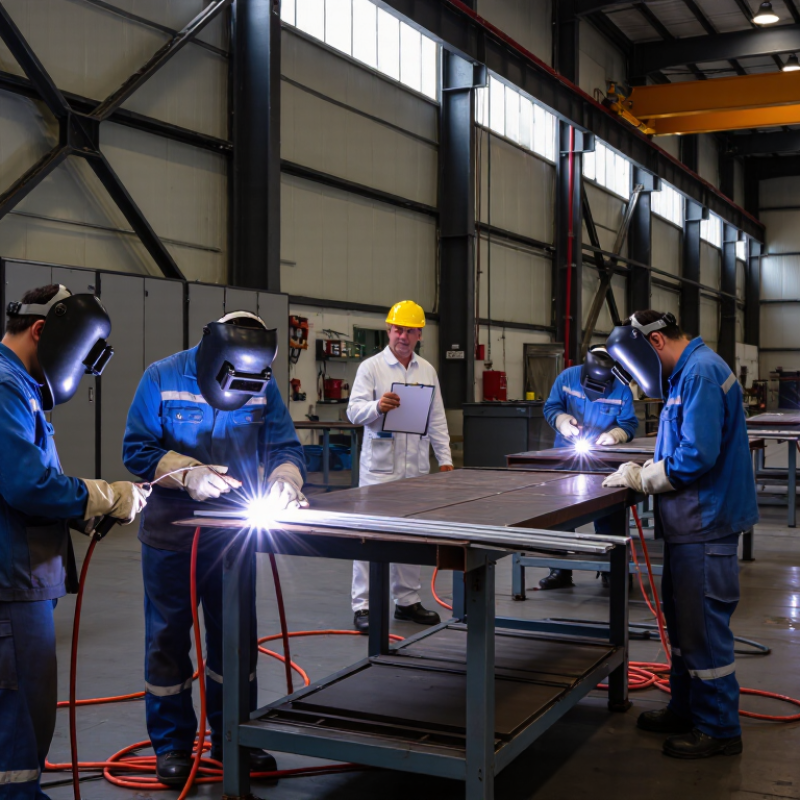
Welding hazards are not limited to visible sparks. OSHA reports that more than 500,000 workers are employed in welding in the United States, making routine exposure controls important. A welding arc can emit intense ultraviolet radiation, causing painful eye injuries and skin burns. Sparks may also ignite nearby dust, solvents, or clothing. A small gap in a screen can expose a coworker across the shop.
Fumes deserve particular attention. The International Agency for Research on Cancer classified welding fumes as carcinogenic to humans in its 2017 evaluation. Stainless-steel work can release compounds containing chromium and nickel; the exact exposure depends on the material, process, and ventilation. Local exhaust close to the arc helps capture fumes before they reach a worker’s breathing zone. Still, a fan across the room is not the same thing.
Electric shock, noise, and heat add further risks, especially around wet floors, damaged leads, or cramped work areas. OSHA’s welding and cutting guidance identifies fire, electric shock, and harmful exposures as key hazards. Check cables, screens, and extraction before striking an arc. And check again. I have seen people focus on the weld bead and overlook a blocked extraction hood; that is an easy habit to rationalize, but a poor one.
How to Ensure Welding Safety in 2026?
Assessing the Work Area Before Welding
A safe weld starts with a careful walk-through, not with the arc. Check the floor, nearby walls, overhead surfaces, and spaces behind partitions. Sparks can travel farther than expected. OSHA’s welding standard identifies combustible materials within 35 feet as a potential hazard. Move them away or protect them with noncombustible covers. Look above, too.
Inspect cracks, drains, ducts, and wall openings where sparks or heat could pass. Check that gas cylinders are upright, secured, and clear of hot work. Confirm that ventilation removes fumes from the welder’s breathing zone. A fan alone may not be enough if airflow carries fumes toward other workers. Small gaps matter.
The scale of the risk is measurable. In its report on hot-work fires from 2013 to 2017, the National Fire Protection Association estimated an annual average of 4,580 U.S. structure fires involving hot work. These fires caused an estimated 22 civilian deaths and 171 injuries per year. A tidy work area can still hide hazards, so pause when conditions change. A new draft, open container, or moved screen deserves another check.
| Assessment Area | What to Check | Safe Condition / Action | Stop Work If |
|---|---|---|---|
| Combustible materials | Look for paper, wood, packaging, flammable liquids, dust, and other materials that could ignite from sparks or hot metal. | Remove combustibles within 35 ft (10.7 m) where practicable; otherwise protect them with suitable fire-resistant guards or covers. | Combustibles cannot be removed or adequately protected from sparks, heat, or slag. |
| Fire protection and watch | Confirm suitable fire-extinguishing equipment is available and accessible. Determine whether a fire watch is needed based on the work area and ignition risk. | Assign a trained fire watch when required; maintain observation during the work and for at least 30 minutes afterward when OSHA hot-work rules apply. | Required fire protection is unavailable, the fire watch cannot perform the duty, or hidden areas cannot be monitored. |
| Flammable atmospheres | Check for fuel vapors, gases, leaking lines, residues, and combustible dust. Use a properly selected and calibrated gas monitor when the hazard assessment calls for testing. | Eliminate the source and test the atmosphere as required by the hot-work permit and site procedures. In permit-required confined spaces, follow applicable atmospheric limits and testing requirements. | A flammable atmosphere is detected, the source is unknown, or required atmospheric testing has not been completed. |
| Confined spaces | Identify tanks, vessels, pits, and other spaces with restricted entry or limited ventilation. Check permit, isolation, attendant, communication, and rescue arrangements. | Follow the confined-space entry program. Where applicable, verify oxygen is within the permitted range; OSHA defines oxygen below 19.5% or above 23.5% as oxygen-deficient or oxygen-enriched. | Required permits, isolation, ventilation, monitoring, attendant, or rescue provisions are missing or ineffective. |
| Ventilation and fumes | Assess airflow, nearby workers, and the materials being welded, including coatings or residues that may produce hazardous fumes. | Provide effective general or local exhaust ventilation and respiratory protection as determined by the exposure assessment and applicable requirements. | Fumes cannot be controlled, ventilation is inadequate, or workers lack required exposure controls. |
| Nearby people and operations | Check for other workers, visitors, traffic, overhead work, and operations that could expose people to arc flash, sparks, noise, or hot metal. | Use welding screens, barriers, warning signs, and coordination with affected work groups; keep unauthorized people out of the hazard area. | People remain exposed to welding hazards and cannot be protected or moved clear of the area. |
| Electrical hazards and equipment | Inspect the welding machine, cables, electrode holder, connections, and work lead. Check for wet conditions, damaged insulation, and electrical hazards nearby. | Use equipment in good condition, maintain sound connections, keep cables clear of walkways and hot surfaces, and follow electrical isolation procedures where needed. | Equipment is damaged, connections are loose, or electrical exposure cannot be controlled. |
| Access, footing, and housekeeping | Inspect the floor or platform for oil, water, clutter, trip hazards, unstable surfaces, and safe access or egress. | Clear walkways, stabilize the work position, manage hoses and leads, and keep exits unobstructed. | The welder cannot work from a stable position or safe access and exit are not maintained. |
| Permit and final review | Review the hot-work permit, job hazard assessment, required PPE, emergency contacts, and any site-specific controls with the work team. | Authorize work only after hazards are controlled, required approvals are complete, and workers understand the controls and emergency procedures. | The work scope changes, conditions become unsafe, or a required control or approval is absent. |
Use this checklist alongside applicable regulations, the employer’s hot-work and confined-space procedures, and the site-specific hazard assessment.
Choosing protective gear starts with the specific welding task, not a general checklist. Select a properly rated helmet with a suitable shade, and check that its lens is clean and free of cracks. Wear flame-resistant clothing that covers exposed skin. Keep cuffs closed, and choose dry welding gloves that fit securely. Safety glasses should remain on beneath the helmet. Small gaps matter.
Inspect the equipment before striking an arc. Look for damaged cable insulation, loose connections, worn torch parts, and leaking or kinked gas hoses. Check that the work clamp makes firm contact with clean metal. Confirm ventilation is working and positioned to draw fumes away from your breathing zone. Follow the equipment maker’s instructions for setup and maintenance. A quick visual check can miss hidden damage, so stop and investigate anything unusual rather than assuming it is harmless. That pause is easy to skip when a job feels routine.
Tips: Keep a simple inspection log near the work area. Replace damaged gear; do not patch it with tape. Recheck gloves and sleeves if sparks have burned or soaked through them. Safety checks help, but they cannot make a poor setup safe.
Safe welding starts before the arc is struck. Read the job procedure, check the equipment manual, and confirm the material and task are suitable for the setup. Inspect the cables for cuts, verify connections are secure, and keep the work area dry. Small checks matter. Wear a properly fitted helmet with the correct shade, plus safety glasses, gloves, flame-resistant clothing, and sturdy footwear. Cover exposed skin; sparks can slip through small gaps.
Clear combustible materials from the work zone, including oily rags and cardboard. If they cannot be moved, use suitable fire-resistant covers and follow the site’s hot-work controls. Keep an appropriate fire extinguisher accessible, and arrange a fire watch when the procedure requires one. Check ventilation before welding, especially in enclosed or poorly ventilated spaces. Do not rely on an open door alone to remove fumes. Pause when unsure.
During welding, keep leads out of walkways and avoid touching energized parts with wet gloves. Stop if equipment behaves unusually, ventilation fails, or conditions change. Let the work cool in a controlled area, mark hot metal clearly, and inspect the finished job before removing barriers. Even experienced welders can rush familiar tasks; a pause to reassess is useful, not wasted time.
How to Ensure Welding Safety in 2026? Managing fumes, fire risks, and emergencies starts before the arc is struck. Welding fumes can contain hazardous metals and gases, depending on the process and materials. In 2017, the International Agency for Research on Cancer classified welding fumes as carcinogenic to humans. Use local exhaust ventilation close to the weld, and check airflow before work begins. A respirator may be needed when ventilation cannot adequately control exposure. The plume can look thin and still matter.
Fire prevention needs equal attention. NFPA reported an average of 4,580 U.S. structure fires involving hot work each year from 2013 to 2017. Those fires caused an estimated 22 civilian deaths annually. Clear combustible materials from the work area, shield nearby openings, and keep suitable extinguishing equipment within reach. Small sparks travel. Assign someone to watch for fire during work and after the arc stops; hidden embers can smolder.
Tips: Check ventilation, hoses, and electrical leads before starting. Keep exits clear, and make sure workers know the alarm and evacuation procedure. If fumes build up or a fire starts, stop work and follow the site emergency plan. Review near misses, too. They may reveal gaps that a checklist missed.
Selected U.S. OSHA permissible exposure limits (PELs) for airborne contaminants that may be encountered during welding. Lower limits mean less airborne exposure is permitted.
Safety note: These limits apply to different averaging periods: hexavalent chromium and lead are 8-hour time-weighted averages; manganese fume is a ceiling limit. They are not directly equivalent measures of overall risk. Use suitable ventilation, exposure monitoring, and respiratory protection based on a qualified assessment. Fire prevention and emergency planning are also essential parts of a welding safety program.
Sources: OSHA Hexavalent Chromium Standard; OSHA Lead Standard; OSHA Air Contaminants Table Z-1.
The arc can injure eyes and burn skin. Sparks may ignite dust, oily rags, or clothing. Fumes, electric shock, noise, and heat are risks too.
Position local exhaust close to the arc, drawing fumes away from your breathing zone. A fan across the room may not capture them effectively.
Use a properly rated helmet with a clean, uncracked lens and a suitable shade. Wear safety glasses underneath, dry gloves, flame-resistant clothing, and sturdy footwear. Cover exposed skin.
Inspect cable insulation, connections, torch parts, and gas hoses. Check the work clamp and ventilation. Stop and investigate anything unusual.
Move combustible items, such as cardboard and oily rags, away from the work zone. Keep a suitable extinguisher accessible, and follow site hot-work procedures.
Not necessarily. Check that ventilation captures fumes near the arc, especially in enclosed or poorly ventilated spaces. Pause if it fails.
Keep the work area dry and avoid touching energized parts with wet gloves. Check leads for damage and keep them out of walkways.
Let the metal cool in a controlled area and mark it clearly as hot. Inspect the finished work before removing barriers. I still catch myself treating familiar jobs as risk-free; that is a mistake.
Welding Safety in 2026 starts with understanding the risks involved, including intense light, heat, sparks, electric shock, and airborne fumes. Before work begins, assess the area for flammable materials, poor ventilation, trip hazards, and other people who may be exposed. Make sure the workspace is orderly and suitable for the task.
Choose protective gear that covers the eyes, face, hands, and body, and inspect the welding equipment, cables, and connections for damage. Follow established safe procedures throughout the job, keep a clear path to emergency equipment, and stay alert to changing conditions. Control fumes with effective ventilation, reduce fire risks by clearing nearby combustibles, and know how to respond if an accident or fire occurs. Careful preparation, consistent checks, and prompt action help make welding work safer from start to finish.


